

12 mins read

Best 8 Cloud Purchase Order System that Cut PO Cost 70%

mekari expense cloud based purchase order system featured image

Mekari Insight

  • Manual PO processing costs around $107 on average, nearly 3x more than the $32 cost achieved with cloud automation. Beyond direct costs, manual workflows contribute to delayed approvals (up to 48 hours vs. 5 hours), off-contract spending, and compliance gaps that compound over time. Up to 70% lower processing costs with automation.
  • The right system goes beyond PO creation, it connects procurement to financial control. Features like three-way matching, OCR invoice scanning, real-time budget dashboards, and ERP integrations transform procurement into a strategic function, enabling finance teams to catch discrepancies, prevent overspending, and reduce manual workload by up to 40%. 
  • For businesses in Indonesia, Mekari Expense offers the most complete solution on the market. While global tools require additional setup for local compliance and payments, Mekari Expense delivers end-to-end procurement, from purchase requests to multi-currency vendor payments, natively integrated with Mekari Jurnal for accounting and Mekari Talenta for HR, all within a single ISO 27001-certified platform. 

Most businesses still manage purchase orders the old way, relying on endless email chains, scattered spreadsheets, and manual approval processes. The result is costly bottlenecks, frequent errors, and little to no visibility into company spending. What many donโ€™t realize is just how expensive this inefficiency is. 

Manually processing a single purchase order costs around $107 on average, while cloud-based automation can reduce that to just $32, according to PairSoft, cutting costs by up to 70%. 

Thatโ€™s not just incremental improvement, itโ€™s a transformation. In this guide, we break down the 8 best cloud purchase order systems that can help businesses of any size streamline procurement, reduce costs, and gain full control over their spending.

What is a cloud based purchase order system?

A purchase order (PO) is a formal document issued by a buyer to a seller that confirms what is being purchased, at what price, and under which terms. It acts as a key control point in the procurement cycle, helping businesses track orders, manage budgets, and maintain accurate financial records.

A cloud-based purchase order system digitizes this entire process into a centralized platform that can be accessed anytime through a browser or mobile app. It removes the need for manual tools and replaces them with a more structured, automated workflow.

To better understand the difference, hereโ€™s how it compares in practice:

  • Traditional PO process:
    Managed through emails, spreadsheets, or paper forms, often leading to slow approvals, duplicate entries, and poor visibility over spending
  • Cloud-based PO system:
    Automates request creation and approvals, centralizes purchasing data, and provides real-time tracking of orders and budgets

Because it is cloud-based, the system does not require local servers or complex IT setup and is typically offered through a subscription model. 

This makes it easy to adopt and scale, whether for small teams that are just starting to organize their purchasing or larger companies that need tighter control and coordination across departments.

Key benefits and real ROI of cloud based purchase order solutions

Adopting a cloud-based purchase order system is no longer just about convenience, it is a measurable business decision with clear financial and operational impact. From cost savings to faster approvals, the data shows that companies moving away from manual processes gain a significant advantage.

Cost and time savings as business ROI

  • Up to 70% lower processing costs: Average per-PO cost drops from $107 to $32 with automation (PairSoft)
  • Higher processing capacity: Organizations handle more than 2x as many POs per month compared to manual teams
  • Lower operational procurement costs: Digitizing source-to-pay can reduce costs by 30โ€“50% and automate up to 60% of manual tasks (McKinsey)
  • Savings on total procurement spend: Companies save 5โ€“15% on overall procurement spend after automation (The Hackett Group)
  • Time saved on operations: Automated spend management can save up to 150 hours per month

Error reduction and compliance

  • Reduced off-contract spending: Digitized procurement catalogs lower off-contract purchases by 35% on average (PwC)
  • Higher accuracy and faster processing: Automation enables 100% PO match rates and 93% faster invoice processing (Stampli)

Read more: Procurement Compliance & Governance Framework Guide

Faster approvals and better spend visibility

  • Shorter procurement cycle times: Top-performing organizations generate a PO in around 5 hours, while lower performers take up to 48 hours (APQC)
  • Faster decision-making: 55% of procurement leaders report improved decision speed after automation (Ardent Partners 2024)
  • Reduced manual workload: Automation cuts manual procurement work by 40% (PLANERGY 2024)
  • Proven enterprise impact: Cisco reduced cycle times by 40%, while IBM achieved $100 million in annual savings through procurement automation

Overall, these results show that cloud-based PO systems are not just operational upgrades, but strategic investments that directly impact cost efficiency, accuracy, and financial control.

Essential features to look for in a cloud purchase order system

Choosing the right cloud purchase order system is not just about digitizing your process, it is about selecting a tool that can support control, scalability, and financial visibility as your business grows. To evaluate different options effectively, here are the key features to look for:

  • Customizable multi-level approval workflows: Ensures every purchase follows your companyโ€™s approval hierarchy and spend limits, reducing unauthorized spending
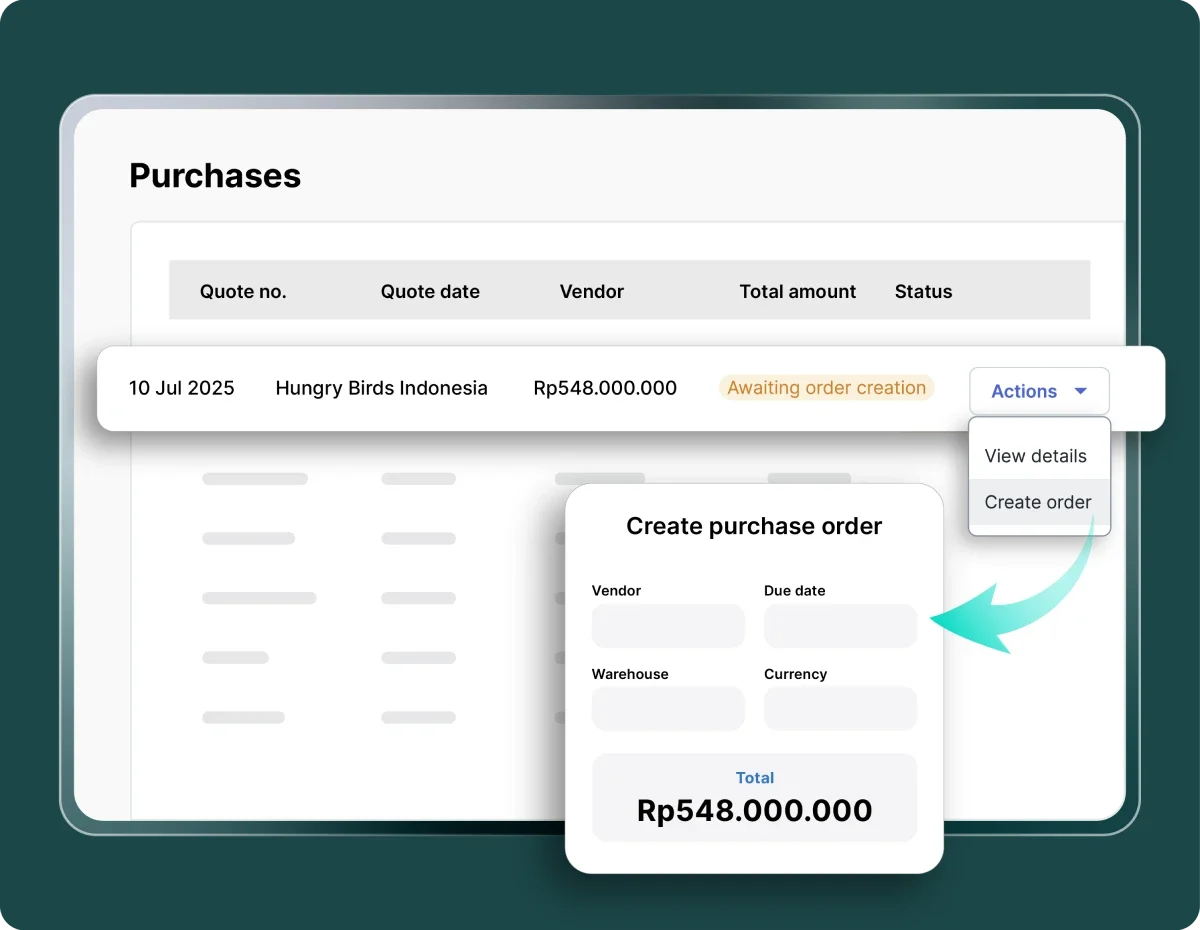
  • Automated PO generation: Converts approved purchase requests into standardized purchase orders instantly, eliminating manual creation and reducing errors
  • Three-way matching (PO, goods receipt, invoice): Automatically verifies that what was ordered, received, and billed all match, helping prevent overbilling and discrepancies
  • OCR-powered invoice scanning: Extracts key data such as vendor name, date, and amount from uploaded invoices, reducing manual input and improving accuracy
  • Real-time budget tracking and spend dashboards: Provides up-to-date visibility into spending across teams, helping finance monitor budgets and avoid overspending
  • Vendor and supplier management portal: Centralizes vendor onboarding, verification, and performance tracking to ensure transactions only happen with approved suppliers
  • Integration with accounting and ERP systems: Automatically syncs PO and invoice data with tools like QuickBooks, NetSuite, Xero, or Mekari Jurnal for seamless financial reporting
  • Mobile accessibility: Allows users to create, approve, and track purchase orders from any device, enabling faster decision-making even on the go
  • Audit trail and compliance reporting: Maintains a complete digital record of all activities for easier audits, internal reviews, and regulatory compliance
  • Multi-currency and international payment support: Supports transactions with global vendors, including currency conversion and cross-border payments

By prioritizing these features, businesses can ensure they are not just adopting a digital tool, but implementing a system that improves control, efficiency, and long-term financial management.

Best cloud based purchase order solutions in 2026

Not all cloud purchase order systems are built the same. Some focus on simplicity, while others offer full procurement automation with deep financial control. Choosing the right one depends on how complex your purchasing process is and how much visibility you need over spend.

Here are the top cloud based purchase order solutions in 2025, starting with the most comprehensive option.

ToolBest ForKey PO FeaturesIntegrations
Mekari Expense โ˜… Top PickAll business sizes โ€” startups to multinational enterprises; especially businesses in IndonesiaEnd-to-end procurement: purchase requests, multi-level PO approvals, automated PO generation, OCR invoice scanning, three-way matching, vendor portal, direct local and international vendor payments, warehouse managementMekari Jurnal (auto accounting sync), Mekari Talenta (HR), corporate cards; ISO 27001 certified. Free trial available.
PrecoroSMBs needing a focused, easy-to-adopt cloud PO toolStreamlined PO creation, real-time budget tracking, customizable approval workflowsQuickBooks, NetSuite, Xero
ProcureDeskMid-sized businesses with complex PO workflowsDrag-and-drop workflow builder, automated three-way matching, catalog integration, vendor portalsQuickBooks, NetSuite, Sage
TradogramSMBs and project-based teams (construction, services)Full P2P: requisitions, approvals, PO tracking, invoice matching, budgeting. Free plan available.QuickBooks, Xero, custom API
Coupa ProcurementLarge enterprises with complex, multi-entity procurementAutomated PO generation based on inventory rules, advanced spend analytics, contract lifecycle managementSAP, Oracle, NetSuite
Sage IntacctSMBs wanting cloud accounting + PO in one platformTop-rated for functionality; automated approval workflows, multi-currency, real-time financial reportingSalesforce, Avalara, ADP, open API
Kissflow ProcurementBusinesses with unique or non-standard purchasing workflowsHighly customizable approval flows, purchase request management, vendor onboardingSAP, NetSuite, Coupa, Google Workspace, Gmail
SpendfloScaling companies with high SaaS and vendor spendAI-powered PO + vendor management, spend intelligence, expert-led negotiation support; claims 25โ€“30% cost savingsSlack, Jira, major ERPs, SSO

1. Mekari Expense 

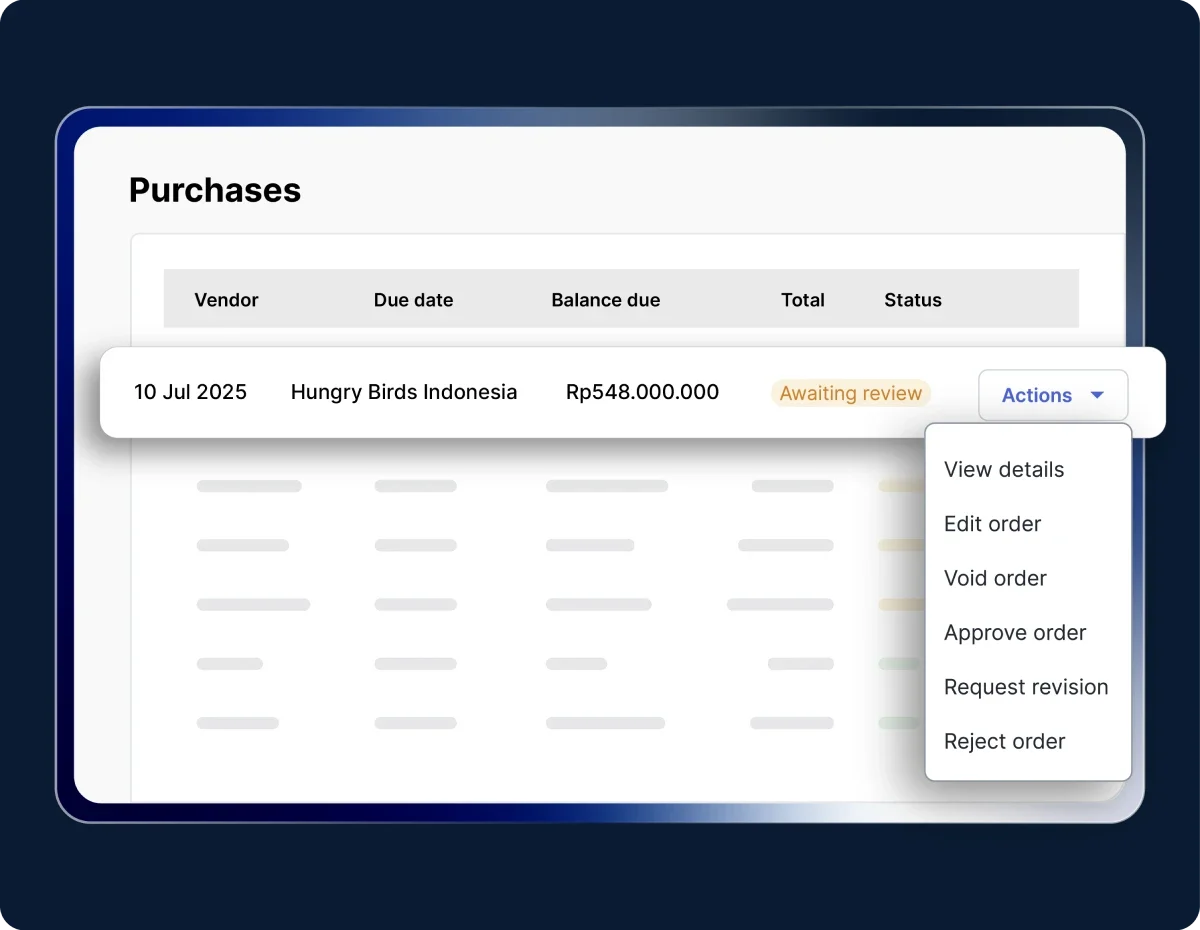
mekari expense cloud based purchase order system

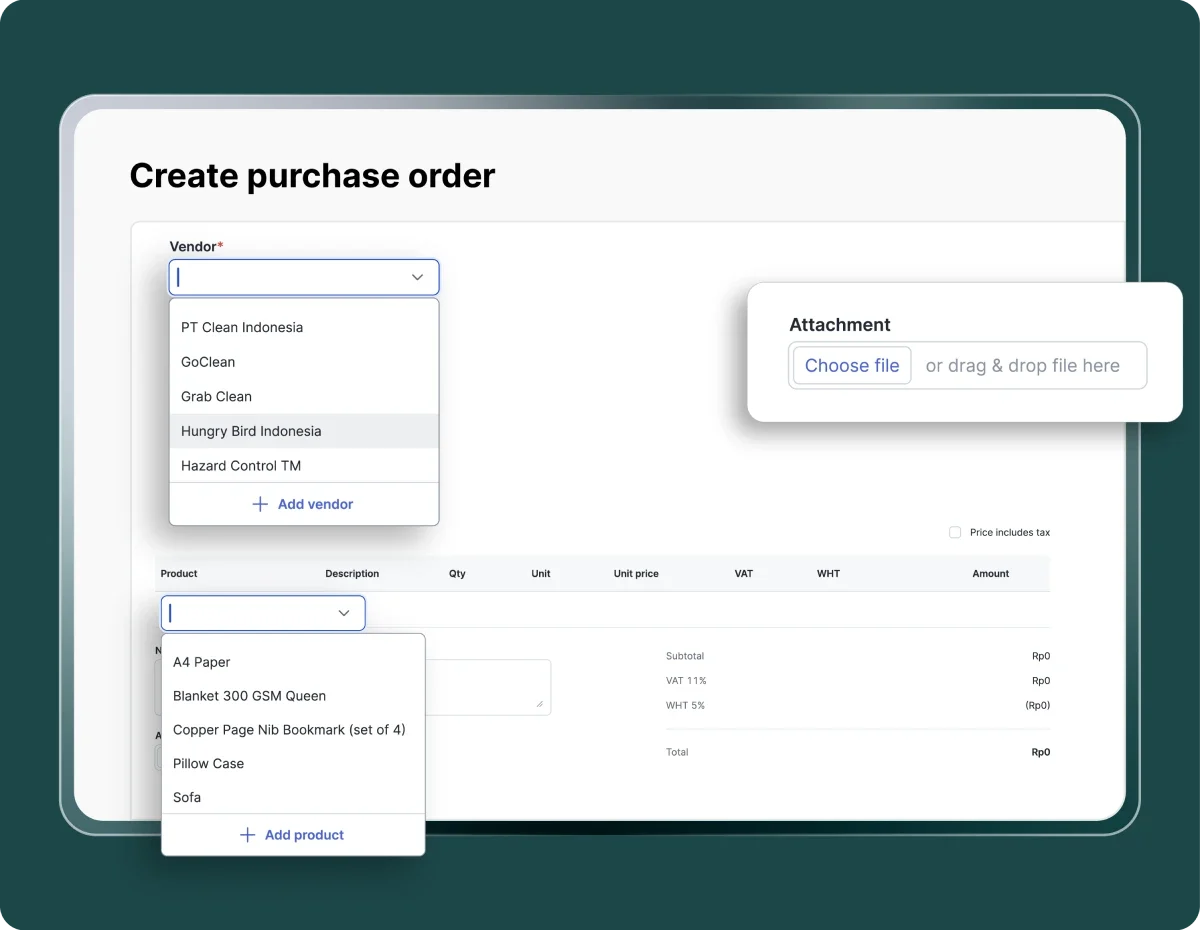
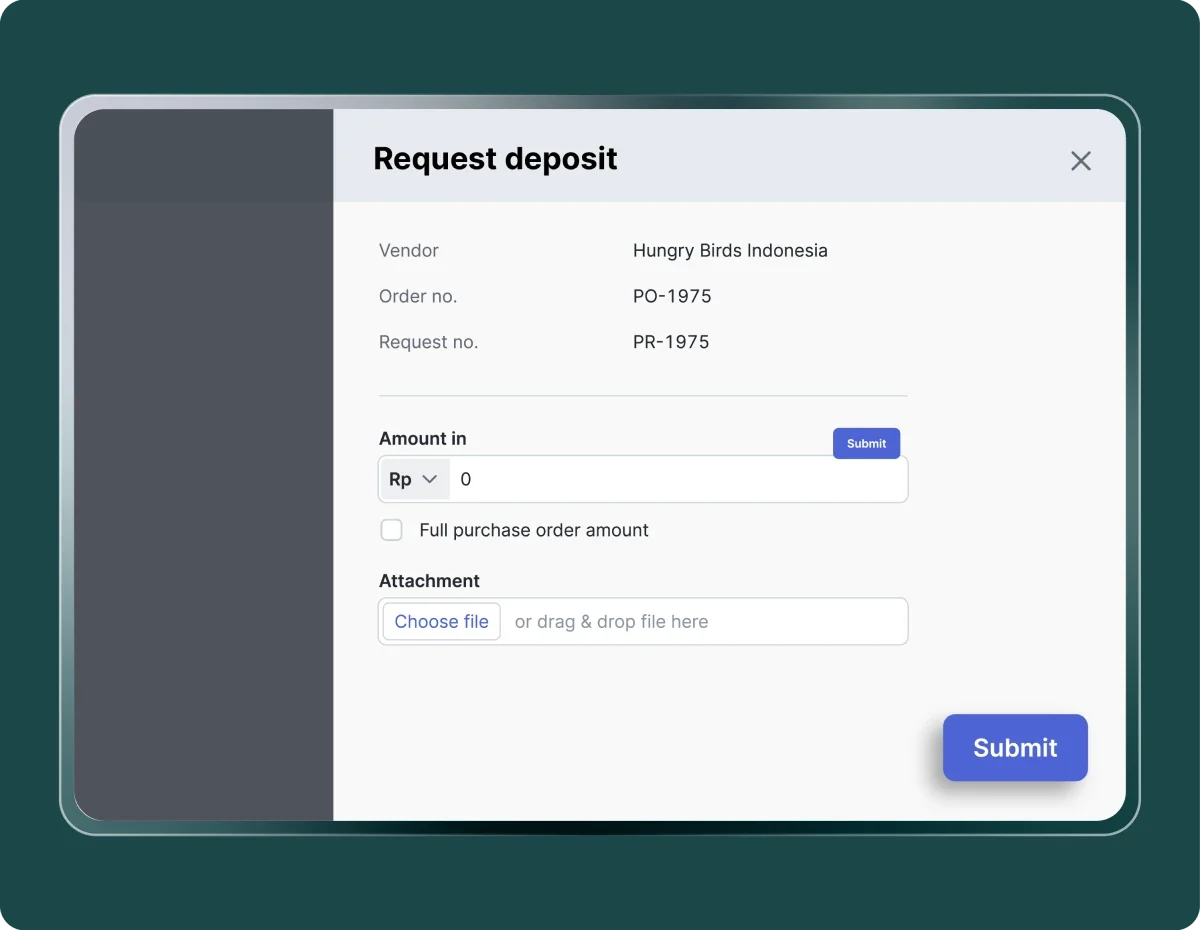
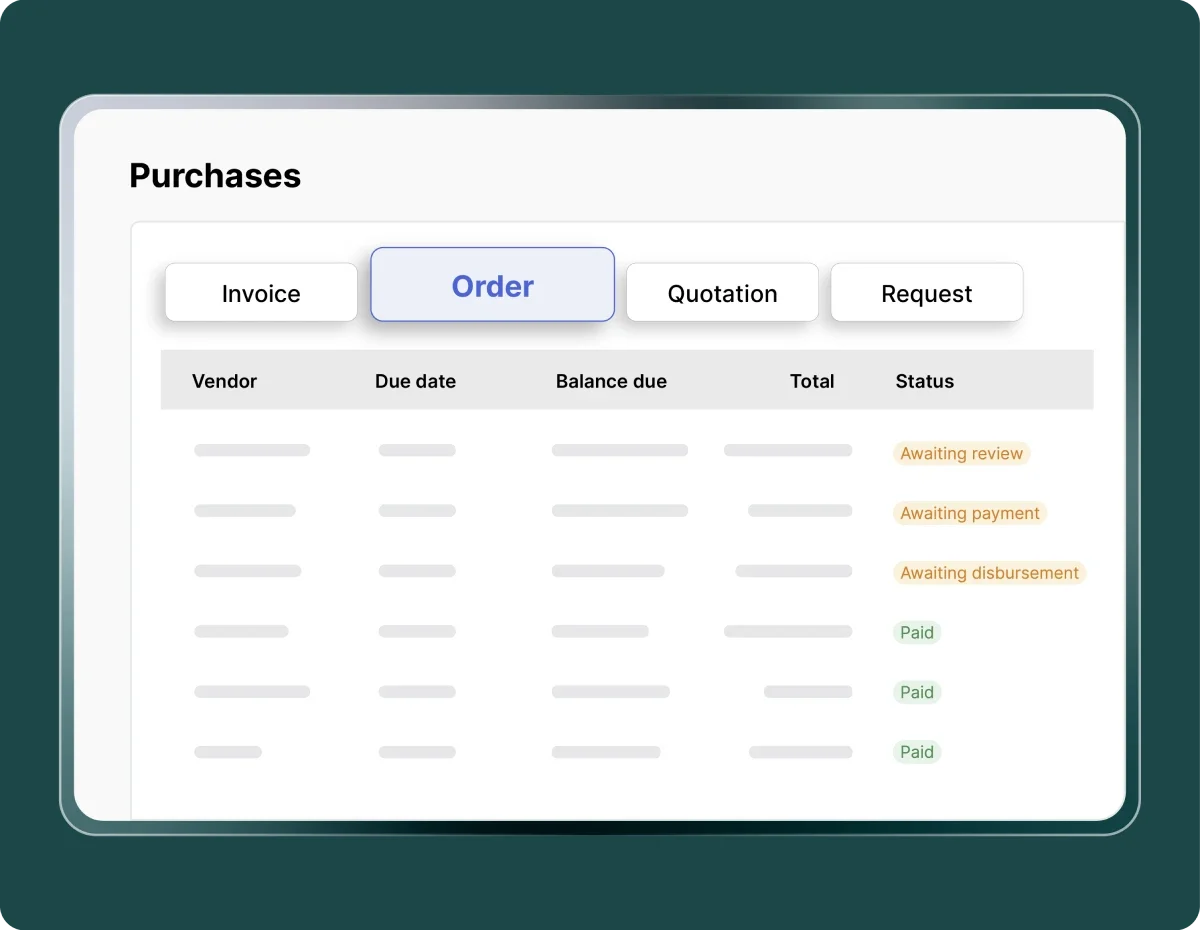
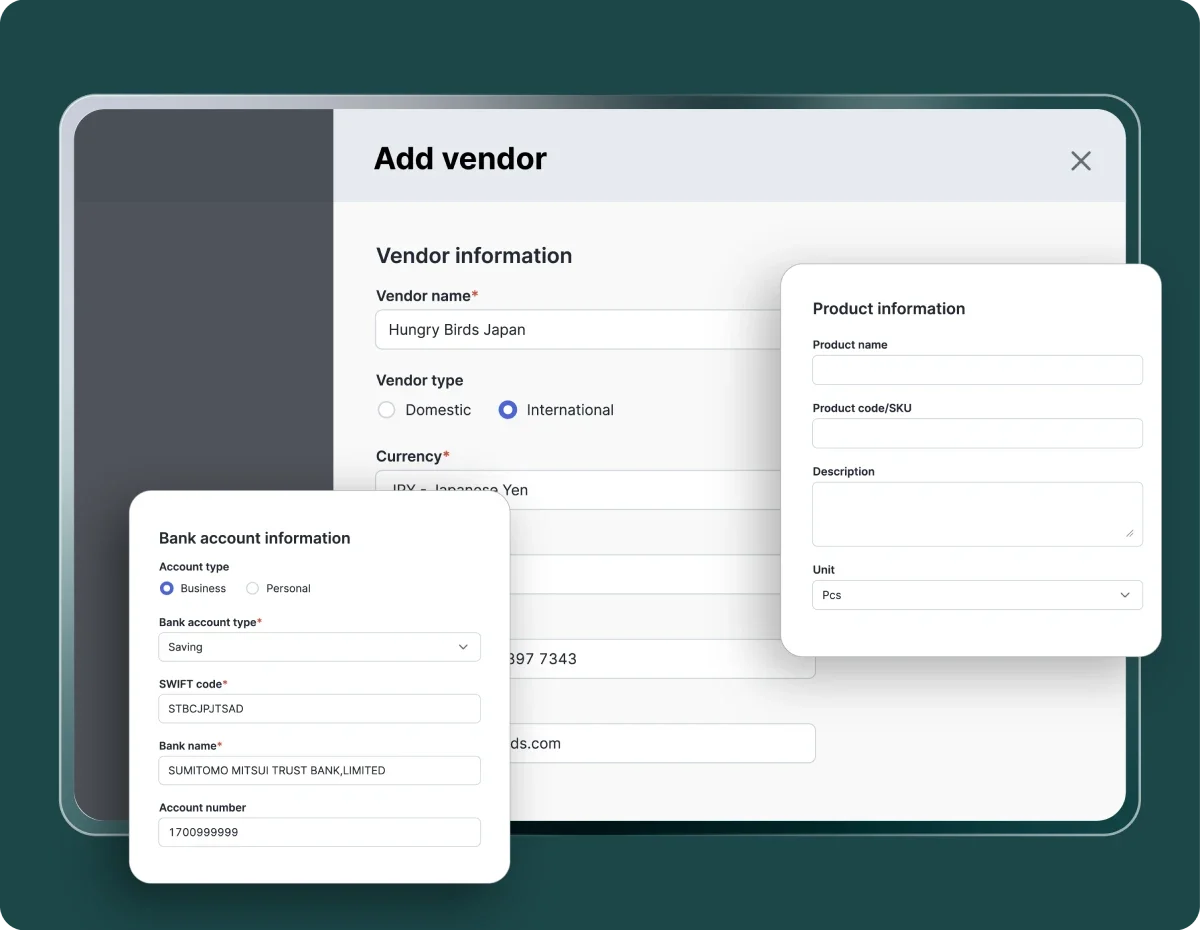
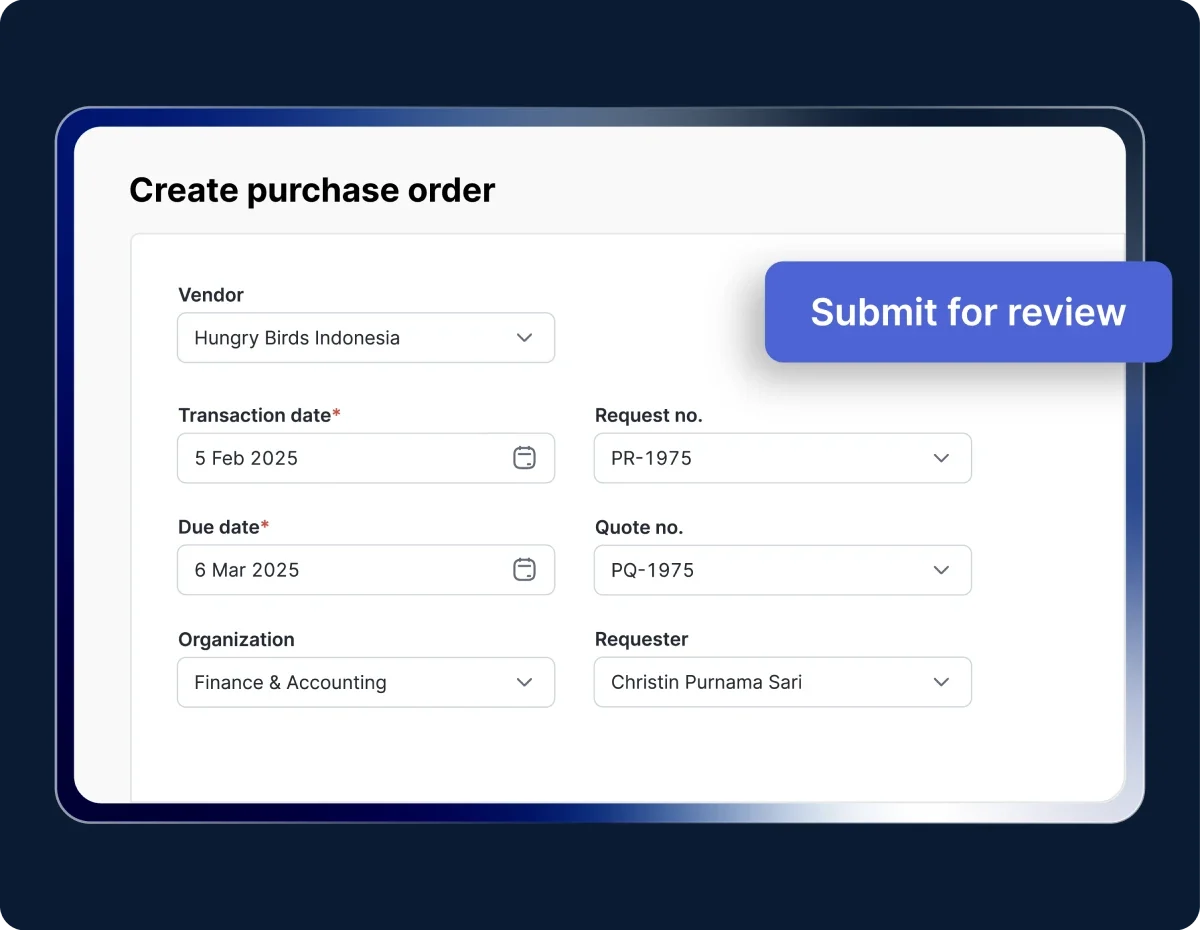
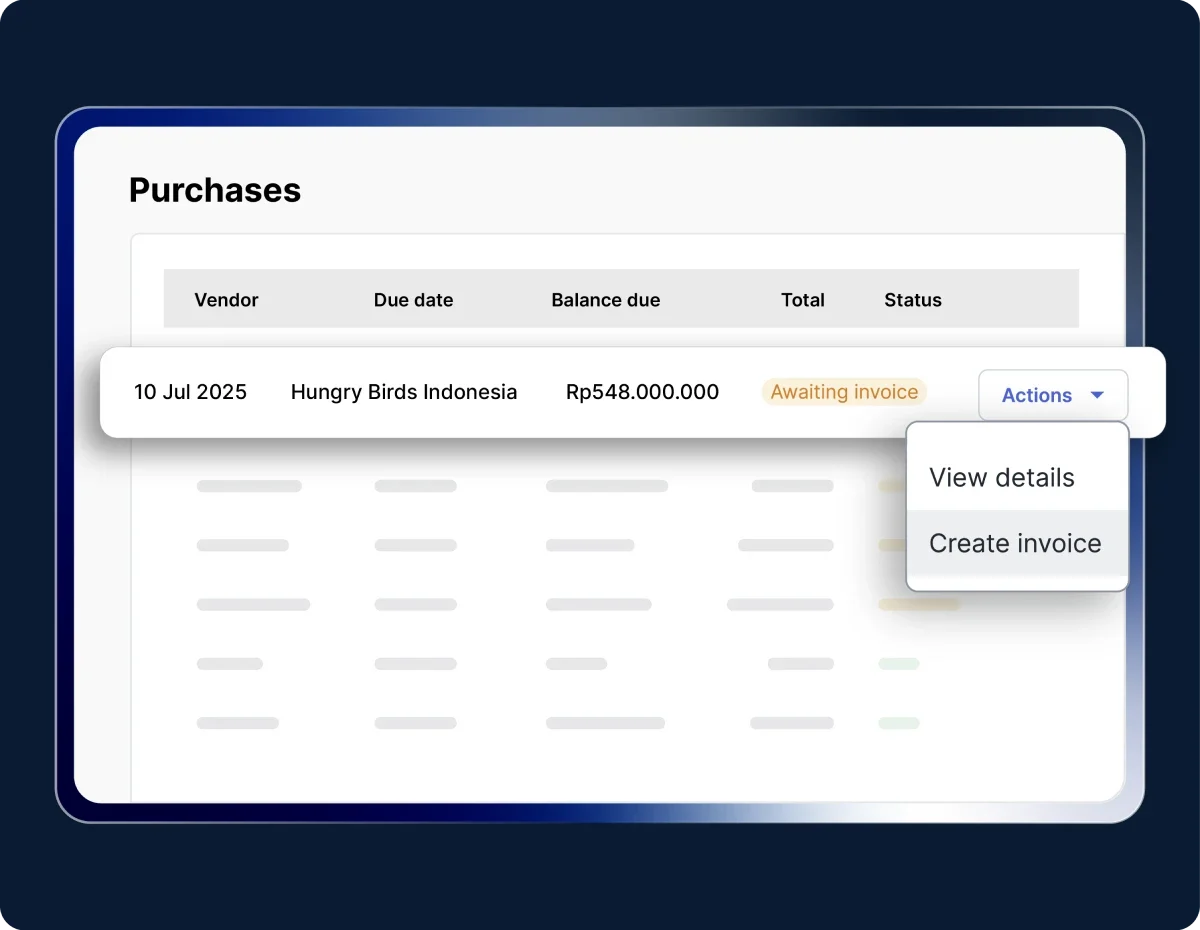
Mekari Expense is an end-to-end spend management platform that covers the full procurement lifecycle, from purchase requests to vendor payments, in one unified system.

Key PO features:

  • Purchase request and multi-level approvals:
    Requests are submitted digitally and routed through customizable approval layers based on roles, departments, or spending thresholds, ensuring full control before any purchase is made
  • Automated PO generation:
    Approved requests are instantly converted into standardized purchase orders, reducing manual work and ensuring consistency across all transactions
  • OCR invoice scanning:
    Upload invoices and automatically extract key data such as vendor name, amount, and date, minimizing manual input and reducing errors
  • Three-way matching:
    Automatically matches purchase orders, goods receipts, and invoices to detect discrepancies and prevent overbilling
  • Vendor portal and management:
    Centralizes vendor onboarding, verification, and performance tracking, ensuring only approved suppliers are used
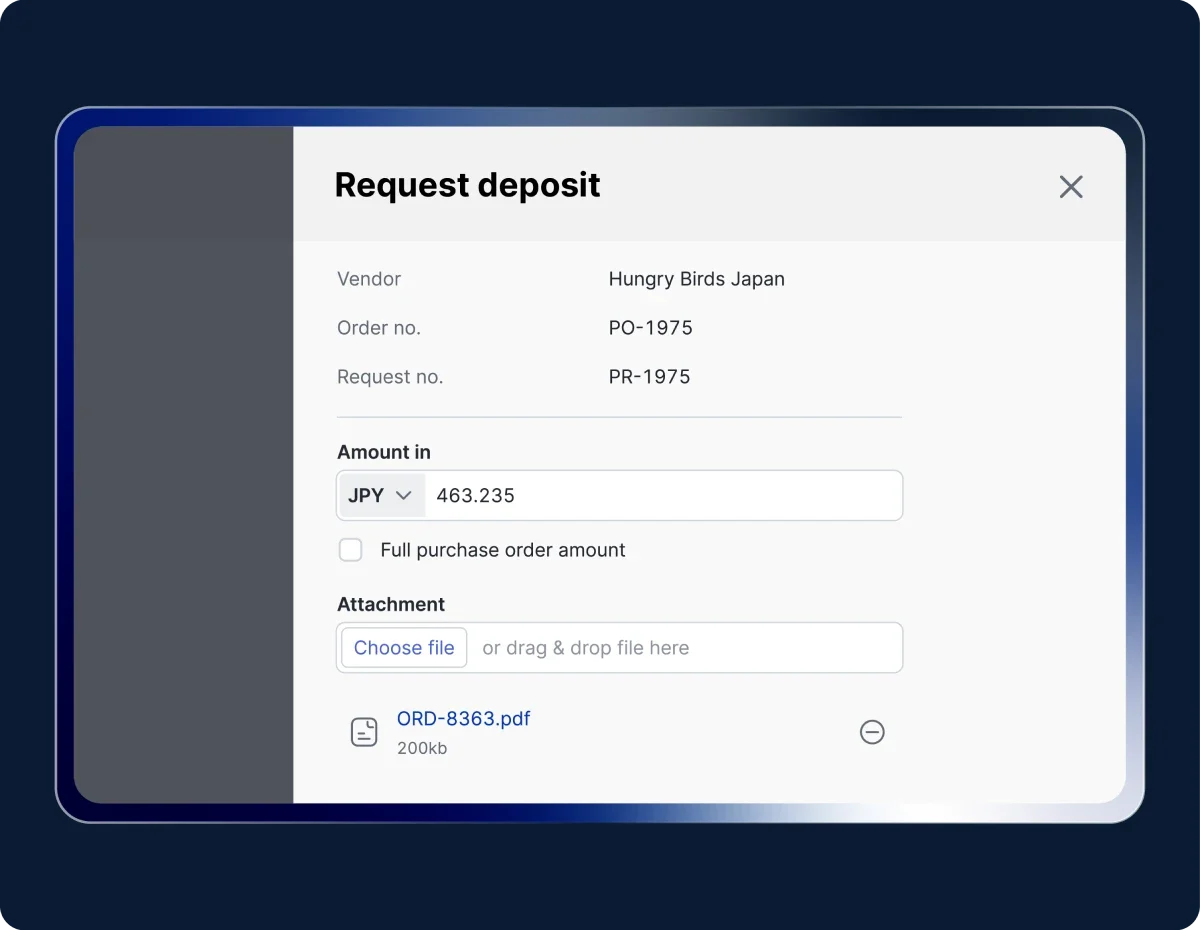
  • Integrated payments (local and international):
    Pay vendors directly from the platform with support for multi-currency transactions and real-time exchange rates
  • Warehouse and inventory tracking:
    Monitor goods across multiple locations and link procurement activity with inventory movement

Integrations:

  • Mekari Jurnal (accounting sync)
  • Mekari Talenta (HR)
  • Corporate card ecosystem
  • ISO 27001 certified

Best for: Businesses of all sizes, especially companies operating in Indonesia that need a fully integrated procurement and payment system

Read more: Purchase Order Automation: Complete Guide to PO Workflows

2. Precoro

precoro purchase order

Precoro is a user-friendly procurement platform designed to help businesses quickly replace manual PO processes with a structured and easy-to-manage system.

Key PO features:

  • Simple PO creation and tracking:
    Create and manage purchase orders in a clean interface, reducing reliance on spreadsheets and emails
  • Real-time budget tracking:
    Track spending against budgets as requests are created and approved, helping prevent overspending
  • Custom approval workflows:
    Set approval rules based on team structure or spending limits to maintain control without slowing down operations
  • Centralized procurement records:
    Store all purchasing data in one place for easier tracking and reporting

Integrations:

  • QuickBooks
  • NetSuite
  • Xero

Best for: SMBs that want a straightforward, easy-to-adopt cloud PO system

Read more: Top 7 Procurement Automation Software to Streamline Procurement Cycle

3. ProcureDesk

procuredesk purchase order

ProcureDesk is built for companies that need more structured procurement workflows and tighter control over purchasing activities.

Key PO features:

  • Drag-and-drop workflow builder:
    Customize approval flows to match internal processes, reducing bottlenecks and manual coordination
  • Three-way matching automation:
    Automatically validate invoices against POs and receipts to prevent discrepancies
  • Catalog-based purchasing:
    Allow employees to order from pre-approved vendor catalogs with predefined pricing
  • Vendor portal:
    Enable suppliers to interact directly with the system for better communication and order tracking

Integrations:

  • QuickBooks
  • NetSuite
  • Sage

Best for: Mid-sized businesses with more complex procurement workflows

4. Tradogram

Tradogram purchase order

Tradogram offers a flexible procure-to-pay solution that works well for teams managing purchases across projects or departments.

Key PO features:

  • End-to-end procurement flow:
    Covers requisitions, approvals, purchase orders, and invoice matching in one system
  • Budget control tools:
    Track spending at project or department level to maintain financial discipline
  • PO tracking and reporting:
    Monitor order status and generate reports for better visibility
  • Flexible deployment with free plan:
    Suitable for businesses starting with limited budgets

Integrations:

  • QuickBooks
  • Xero
  • Custom API

Best for: SMBs and project-based teams that need budget-driven procurement

5. Coupa Procurement

Coupa is an enterprise-grade procurement platform designed for organizations with complex, large-scale purchasing operations.

Key PO features:

  • Automated PO generation:
    Create purchase orders automatically based on predefined rules or inventory triggers
  • Advanced spend analytics:
    Gain deep insights into company-wide spending patterns for better decision-making
  • Contract lifecycle management:
    Manage supplier contracts alongside purchasing activities to ensure compliance
  • Enterprise procurement controls:
    Standardize procurement processes across multiple entities or regions

Integrations:

  • SAP
  • Oracle
  • NetSuite

Best for: Large enterprises with global and multi-entity procurement needs

Read more: 10 Best Inventory Invoice Software to Manage Stock and Billing

6. Sage Intacct

Sage Intacct combines financial management and procurement capabilities, making it ideal for finance-driven organizations.

Key PO features:

  • Automated approval workflows:
    Ensure all purchases go through proper validation before execution
  • Multi-currency support:
    Handle transactions across different currencies for global operations
  • Real-time financial reporting:
    Connect procurement activity directly to financial data for accurate reporting
  • Integrated accounting and purchasing:
    Reduce reconciliation work by linking PO data directly with the general ledger

Integrations:

  • Salesforce
  • Avalara
  • ADP
  • Open API

Best for: SMBs that want accounting and PO management in one platform

7. Kissflow Procurement

Kissflow focuses on flexibility, allowing businesses to design procurement workflows that match their internal processes.

Key PO features:

  • Customizable approval workflows:
    Build approval logic tailored to different teams, departments, or scenarios
  • Purchase request management:
    Standardize how requests are submitted and processed across the organization
  • Vendor onboarding:
    Simplify supplier registration and ensure compliance before transactions
  • Workflow automation:
    Automate repetitive tasks in non-standard procurement processes

Integrations:

  • SAP
  • NetSuite
  • Coupa
  • Google Workspace
  • Gmail

Best for: Businesses with unique or non-standard procurement workflows

8. Spendflo

Spendflo is designed for companies that want to optimize vendor and SaaS spending alongside procurement.

Key PO features:

  • AI-powered PO and vendor management:
    Automates purchasing decisions and provides insights into vendor performance
  • Spend intelligence:
    Analyze spending patterns to identify savings opportunities
  • Vendor cost optimization:
    Includes negotiation support to reduce vendor expenses
  • Centralized vendor tracking:
    Manage all vendor relationships and contracts in one place

Integrations:

  • Slack
  • Jira
  • Major ERPs
  • SSO

Best for: Scaling companies with high SaaS and vendor spend

Start automating your purchase order process today

Managing purchase orders manually is no longer sustainable for growing businesses. The data is clear. Switching to a cloud-based PO system can reduce processing costs by up to 70%, shorten approval cycles from 48 hours to just 5, and save up to 150 hours per month on purchasing and expense operations. 

More importantly, it gives finance teams real-time visibility and control over company spending, something that is nearly impossible to achieve with spreadsheets and email-based workflows.

If you are looking for a solution that goes beyond basic PO automation, Mekari Expense stands out as the most complete option. It brings together procurement, expense management, vendor payments, and accounting integration in one unified platform, helping businesses streamline operations while staying compliant and scalable.

Instead of managing fragmented processes, now is the time to move to a system that gives you speed, accuracy, and full control over your purchasing.

References

Pairsoft. โ€˜โ€™Research Data Reveals the Real ROI of Procurement Automationโ€™โ€™
Planergy. โ€˜โ€™Procurement Trends 2025: Automation, Analytics & Strategyโ€™โ€™
Spendflo. โ€˜โ€™PO Management Software | Centralize & Automateโ€™โ€™

FAQ

1. What's the actual cost difference between manual and cloud-based purchase order processing?

1. What's the actual cost difference between manual and cloud-based purchase order processing?

Manually processing a single purchase order costs around $107 on average, while cloud-based automation reduces that to just $32, a reduction of up to 70%. Beyond per-PO costs, companies using automated procurement handle more than twice as many orders per month, and top-performing organizations generate a PO in around 5 hours versus up to 48 hours in lower-performing setups. (Source. PairSoft, APC)

2. Is a cloud purchase order system suitable for small businesses, or is it mainly for enterprises?

2. Is a cloud purchase order system suitable for small businesses, or is it mainly for enterprises?

Cloud-based PO systems are built for businesses of all sizes. Because they run on a subscription model with no local servers or complex IT setup, they’re particularly accessible for SMBs. Tools like Tradogram offer a free plan for teams starting out, while platforms like Mekari Expense scale from startups to multinational enterprises.

3. How does a cloud PO system integrate with existing accounting software?

3. How does a cloud PO system integrate with existing accounting software?

Most cloud PO systems offer native integrations with popular accounting and ERP platforms. Precoro, ProcureDesk, and Tradogram connect with uickBooks, NetSuite, and Xero. Mekari Expense integrates natively with Mekari Jurnal for automatic accounting sync, important for businesses in Indonesia using a locally compliant platform. These integrations eliminate manual data entry by syncing PO and invoice data directly into the general ledger, reducing reconciliation time and improving reporting accuracy.

WhatsApp Icon WhatsApp sales