





Vendor Negotiation Strategy: Get Better Deals & Cut Cost 10%

Mekari Insight
- Companies without structured negotiation processes overspend on vendor contracts by 20–30% annually – a gap that is recoverable through preparation and data, not harder bargaining.
- Negotiating a better price is only half the job. Organizations lose 3–7% of contracted savings each year simply because agreed terms are not tracked or enforced after signature.
- Mekari Expense Procurement connects vendor data, purchase requests, approval workflows, and payments in one platform – so teams negotiate with complete visibility and enforce every term they agreed to.
Most procurement teams leave money on the table in vendor negotiations. Not because they lack ambition, but because they lack preparation. Scattered spend data, a price-only mindset, and no systematic way to enforce what was agreed all compound into predictable losses year after year.
Statistic
Companies overspend on vendor contracts by 20–30% annually due to weak negotiation practices. (Spendflo, 2025)
This guide covers what vendor negotiation actually involves, how to negotiate price and contract terms effectively, the skills and tactics that make the difference, and how Mekari Expense gives procurement teams the data and control to negotiate and enforce better deals.

What is vendor negotiation?
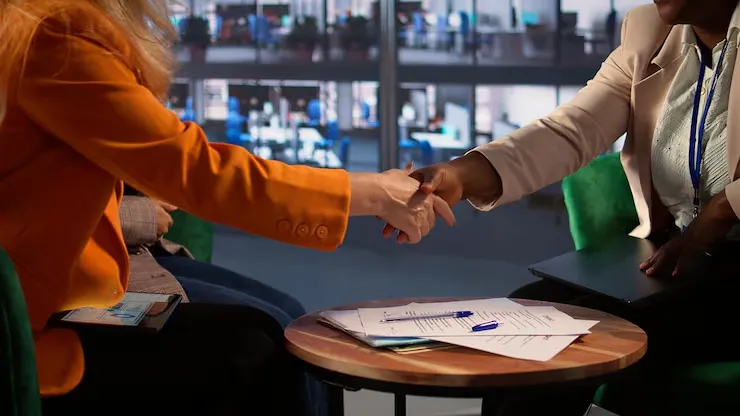
Vendor negotiation is the structured process of reaching mutually beneficial agreements with suppliers on price, payment terms, SLAs, warranties, renewal clauses, and performance standards. It goes well beyond a one-time price conversation.
A useful way to think about it: vendor negotiation is not a single event. It is a process that begins at the first engagement with a supplier and continues through every contract renewal, performance review, and renegotiation.
Three core principles apply to every vendor negotiation, regardless of category or scale:
- There is a learnable set of principles and tactics. Negotiation skill is not innate: it is built through preparation and practice.
- There is no single negotiating style. Different vendors, categories, and stakes require different approaches.
- Every interaction is a negotiation opportunity. From the first email to the renewal notice, each touchpoint either builds or reduces your leverage.
Read more: Vendor Onboarding Process: A Complete Guide for Businesses
Why vendor negotiation matters
The financial case is clear.
Statistic
Procurement accounts for 50–80% of a company’s total cost base, according to McKinsey – making every vendor negotiation a direct impact on margins. (Precoro, citing McKinsey)
Reducing direct material costs by just 1% correlates with a 0.8% increase in EBITDA margin at median-performing organizations (APQC 2025 Procurement Benchmarking). Even marginal negotiation improvements compound into meaningful financial results.
Poor contract management adds another layer of risk. Businesses that do not actively manage their vendor contracts can lose up to 9% of annual revenue through missed terms, off-contract spend, and unenforced SLAs.
And the leakage does not stop at signature: organizations lose 3–7% of negotiated savings every year simply because contracted terms are not tracked or enforced after the deal is signed.
Vendor negotiation is not a procurement nicety. It is a recurring revenue protection discipline.
How to negotiate price with a vendor
Price negotiation is the most visible dimension of vendor management, and the one where preparation makes the biggest difference.
Here is a practical framework procurement teams can apply:
1. Benchmark before you open
Research market rates, what comparable companies pay for similar categories, and what competing vendors charge. Data-backed requests shift the conversation from opinion to evidence and are far harder for vendors to dismiss.
2. Anchor early and deliberately
The first number on the table disproportionately shapes where the final agreement lands. Make your opening position a deliberate strategic choice, not a reactive response.
Statistic
Research shows up to 50% of variance in negotiation outcomes is attributable to the initial offer anchor. (Procurement Tactics, 2025)
3. Define your BATNA
Your Best Alternative to a Negotiated Agreement (BATNA) is your walk-away point. Knowing it before you engage prevents urgency-driven concessions and gives you the confidence to hold firm when needed. If you have no alternative vendor in mind, your leverage is limited.
4. Bundle requests
Instead of negotiating line items in isolation, group volume commitments, payment terms, and scope into a package deal. Bundling gives both sides more room to trade value rather than simply exchanging price cuts.
5. Negotiate non-price terms
Payment terms, delivery schedules, warranty length, and SLAs often deliver more sustained financial value than a percentage price reduction. Extending payment terms from Net 30 to Net 60 improves working capital without touching the unit price. Early payment discounts such as 2/10 Net 30 yield roughly 36% annualized return when captured consistently.
6. Use volume as leverage
Consolidated purchasing – across categories, departments, or business units – creates negotiating power. Supplier consolidation programs routinely deliver 5–10% cost savings by reducing fragmented spend across too many vendors.
7. Time the conversation strategically
Vendors are more flexible near their own quarter-end or fiscal year close. Approaching a renewal 6–12 months early gives procurement leverage before auto-renewal locks in last year’s pricing on the vendor’s terms.
How to negotiate a contract with a vendor
Securing a better price is the opening move. The contract is where that value is protected – or lost.
The following terms are the ones procurement teams must negotiate actively, not accept as-is:
| Contract Term | What to Negotiate |
| Payment terms | Net 30/60/90; early payment discounts (2/10 Net 30) |
| Price escalation clauses | Cap annual increases to a defined % or an objective index |
| SLAs and KPIs | Uptime guarantees, delivery windows, quality standards, reporting cadence |
| Renewal and auto-renewal | Require 90-day written notice to cancel; remove silent auto-renewals |
| Penalty and exit clauses | Define remedies for non-performance; set clear exit rights |
| Liability caps | Limit vendor liability to contract value or a defined multiplier |
| Benchmarking rights | Preserve the right to benchmark pricing against the market mid-contract |
Statistic
One critical gap that is easy to overlook: 75% of vendor contracts reviewed in an independent analysis did not include an exhaustive set of KPIs and a reporting process tied to total cost of ownership. (HyperStart, 2026) Without defined performance metrics in the contract, there is no enforceable standard to hold vendors to.
Also worth noting: the 2025 Contracting Benchmark Report found that vendor agreements are negotiated 70% of the time. Standard contracts are a starting point, not a final offer. Procurement teams should treat every vendor’s standard template as an opening position.
Vendor negotiation skills your team needs
Tactics work when they rest on the right foundation of skills. The capabilities that separate effective procurement negotiators from average ones include:
- Preparation and spend data literacy. Reviewing past invoices, vendor performance history, and category spend before engaging gives teams a factual base that vendors cannot easily counter.
- Active listening. Understanding what matters most to the vendor – whether it is payment speed, contract length, or cross-selling opportunity – allows procurement to trade value rather than simply press for lower prices.
- Clear, structured communication. Summarizing agreed points in writing after each session prevents misunderstanding and provides a paper trail if disputes arise later.
- Flexibility with defined boundaries. Enter negotiations knowing the must-haves and the areas of flexibility. All-or-nothing positions rarely produce the best outcomes for either side.
- Relationship management. Vendors extend better terms to clients they respect and trust. On-time payments, responsive communication, and professional conduct build a track record that pays off at renewal.
- The discipline to walk away. BATNA is not just a concept – it is an operational standard. If a deal does not meet minimum requirements, declining protects margins and signals that procurement operates with standards.
Read more: Approved Vendor List (AVL): Definition, Benefits, and How to Build One
Common vendor negotiation mistakes to avoid
Knowing what not to do is as important as knowing the right tactics.
- Focusing only on price. Unit price is one dimension. Payment terms, SLAs, and renewal structure often deliver more compound value over the contract lifetime.
- Accepting standard contracts without review. As noted above, 70% of vendor agreements are negotiated. The standard contract is where the vendor starts – not where you have to end up.
- Missing renewal windows. Auto-renewal clauses lock in prior-year pricing without any competitive review. Every contract expiry date is a negotiation opportunity with a hard deadline.
- No documented BATNA. Entering a negotiation without a credible alternative means the vendor holds the leverage.
- Not enforcing what was agreed. Negotiating a favorable contract and then not enforcing it is the most common source of value leakage in procurement. Organizations lose 3–7% of negotiated savings annually to non-compliance with their own contracts.
- Negotiating without spend data. Requests made without supporting data are easy to decline. Fact-based proposals shift the dynamic.
Read more: Vendor Compliance: A Complete Guide for Finance Teams
How Mekari Expense strengthens your vendor negotiation
Mekari Expense is the spend management platform that connects vendor data, procurement workflows, and payment controls in one integrated system, giving procurement teams both the intelligence to negotiate well and the infrastructure to enforce what they agreed.
Key capabilities that directly support better vendor negotiation:
- Vendor Portal: Centralized vendor profiles managed with OCR technology. Every vendor’s data, documents, and transaction history is available in one place – so teams always negotiate with complete, current information.
- Integrated PR to PO workflow: Manage purchase requests, approvals, and purchase orders in a single automated flow. Full visibility into what is being bought, from whom, and at what price.
- Multi-level approval workflows: Enforce procurement policies and spending thresholds so negotiated terms are respected at the point of purchase, not just on paper.
- OCR invoice processing: Automatically capture invoice data and match it against contracted terms, reducing the risk of overpaying beyond agreed rates.
- Real-time spend dashboard: Monitor budget utilization, vendor spend, and category trends – the data layer that makes every negotiation fact-based.
- International remittance: Pay vendors in multiple currencies at real-time exchange rates, with automatic reconciliation into Mekari Jurnal.
- Mekari Jurnal integration: Every payment syncs automatically to accounting, keeping financial reporting accurate and audit-ready.
Ready to negotiate vendor contracts from a position of strength? Mekari Expense gives your procurement team the spend data, vendor management tools, and approval controls to secure better terms and enforce every clause you agreed to.
FAQ
1. What is vendor negotiation?
1. What is vendor negotiation?
Vendor negotiation is the structured process of reaching mutually beneficial agreements with suppliers on price, payment terms, SLAs, contract clauses, and performance standards. It is a continuous discipline across the vendor relationship lifecycle, from initial onboarding through contract renewal.
2. What are the most effective vendor negotiation strategies?
2. What are the most effective vendor negotiation strategies?
The most effective strategies combine thorough preparation (spend data, market benchmarks, BATNA), a collaborative mindset (understanding the vendor’s priorities), and a focus on total contract value rather than unit price alone. Bundling requests, negotiating non-price terms, and timing negotiations ahead of vendor quarter-end consistently deliver the strongest outcomes.
3. How do I negotiate price with a vendor?
3. How do I negotiate price with a vendor?
Start by benchmarking the market rate for what you are buying. Set a deliberate opening anchor, know your walk-away point, and focus on bundling volume, payment terms, and scope into a package deal. Use historical spend data to back every request with evidence, and never accept the first offer as final – vendor agreements are negotiated 70% of the time.
4. What contract terms should I always negotiate with a vendor?
4. What contract terms should I always negotiate with a vendor?
At minimum, negotiate payment terms (Net 30/60/90 and early payment discounts), price escalation caps, SLA standards and KPIs, auto-renewal clauses, performance penalty terms, and benchmarking rights. These terms often deliver more long-term value than a headline price reduction.
5. What mistakes do procurement teams make in vendor negotiations?
5. What mistakes do procurement teams make in vendor negotiations?
The most common mistakes are focusing only on price, accepting standard contracts without negotiation, missing renewal windows, failing to document a BATNA, and not enforcing what was agreed post-signature. The last one is particularly costly: organizations lose 3–7% of contracted savings annually because negotiated terms are not tracked.