





Business Trip Fraud: How to Prevent 5% Revenue Losses

Mekari Insight
- Business trip fraud covers any intentional attempt to claim, divert, or manipulate travel-related funds, ranging from inflated mileage and duplicate receipts to fake booking websites and phishing attacks targeting corporate accounts, and is distinct from honest errors that stem from unclear policies or manual processes.
- The financial impact is significant and growing: expense fraud accounts for 14.5% of all fraud uncovered globally, companies lose up to 5% of annual revenue to expense fraud and policy violations, and by 2028, business travel expense fraud could account for $200 billion in global losses.
- Mekari Expense addresses business trip fraud through its Fraud AI Checker powered by Airene AI, automatically analyzing every trip submission across three detection layers: unusual amount detection, unusual vendor detection, and duplicate transaction detection, before any claim reaches the approval stage.
Understanding what business trip fraud actually looks like and why it continues to happen is the starting point for building an effective prevention strategy.
The risk is not limited to dishonest employees. It also includes external actors who deliberately target business travelers through phishing attacks, fake booking platforms, and compromised devices.
The scale of the problem is harder to ignore than ever, some estimates project that business travel expense fraud could reach $200 billion in global losses by 2028, equivalent to up to 10% of total global business travel spending. BTN Europe
This guide explains the different types of business trip fraud, the motivations behind them, and the real financial impact they can have on your company. It also highlights key red flags that finance teams should watch for, along with a practical prevention framework you can implement.

What is business trip fraud?
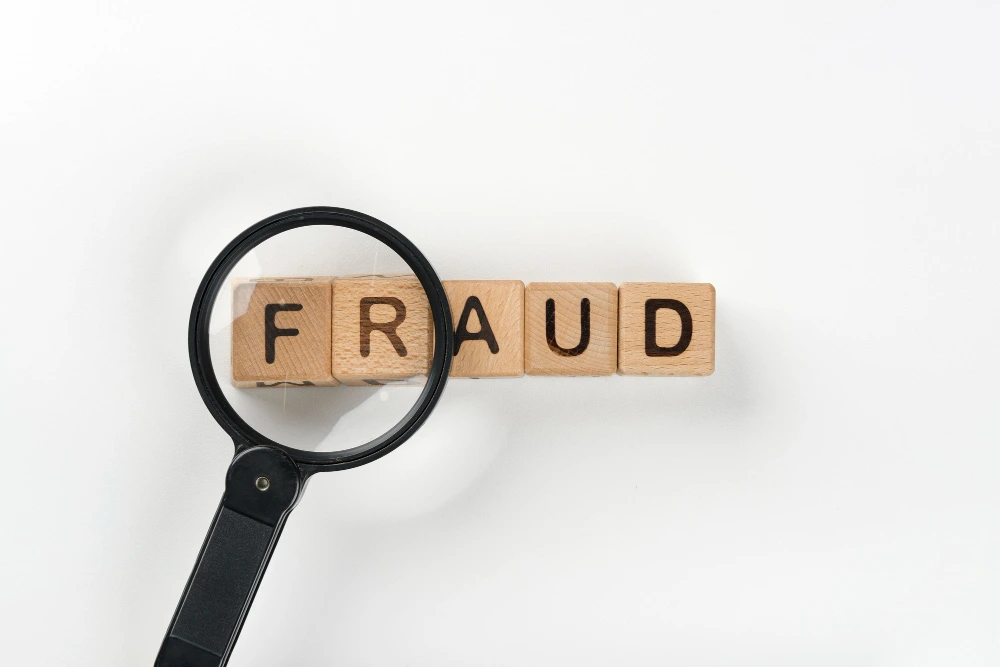
Business trip fraud refers to any intentional attempt by employees or external actors to claim, divert, or manipulate funds related to business travel expenses.
This can take many forms, including inflating expense reports, submitting falsified receipts, exploiting phishing schemes, or misusing corporate payment tools during or after a business trip.
Expense fraud alone accounts for 14.5% of all fraud uncovered globally, making it one of the most prevalent forms of employee misconduct organizations face today. – Perk
It is important to distinguish fraud from genuine human error. Not every inaccurate expense claim is done with malicious intent. In many cases, employees may enter incorrect amounts, record the wrong dates, or lose original receipts.
These mistakes are especially common in organizations that still rely on manual or paper-based expense management processes. While each error may seem minor on its own, repeated inaccuracies can accumulate into significant financial leakage over time.
Understanding this distinction is critical for building an effective prevention strategy. Honest mistakes typically point to gaps in process clarity or system usability, which can be addressed through better policies and streamlined tools. Fraudulent behavior, on the other hand, requires stronger detection mechanisms, audit controls, and enforcement measures. Most organizations need a balanced approach that addresses both risks simultaneously.
Read more: Business Travel Expenses Guide: How to Manage & Tracking
Why does business trip fraud happen?
Business trip fraud rarely occurs because employees are inherently dishonest. In most cases, it is driven by a combination of opportunity, rationalization, and weak internal controls.
The financial impact reflects this: companies lose up to 5% of revenue annually to expense fraud and policy violations, losses that accumulate quietly across individual claims before they become visible. – isolved.
Understanding these underlying factors is essential for organizations aiming to reduce fraud risk more effectively.
Workplace culture also plays a significant role. When employees observe colleagues submitting questionable claims without consequences, such behavior can quickly become normalized. In some cases, expense fraud also reflects dissatisfaction, where employees view it as a way to offset what they perceive as inadequate compensation.
External factors further increase the risk. Economic pressure, rising living costs, or financial stress can lead otherwise compliant employees to make small adjustments to travel claims that feel insignificant individually but accumulate over time. At the same time, the fast-paced nature of business travel can blur the line between personal and business spending, making errors or misuse more likely, even without clear intent.
Common types of business trip fraud

Business trip fraud comes from two directions, internally from employees, and externally from fraudsters targeting business travelers.
Internal expense fraud
- Mischaracterized expenses: Personal costs are submitted under business categories, such as a family dinner claimed as a client meeting or a spa treatment listed as professional development.
- Fictitious expenses: Employees submit fake receipts for purchases or trips that never occurred. With the help of design tools and digital templates, creating realistic-looking receipts has become increasingly easy.
- Overstated expenses: Legitimate expenses are inflated beyond the actual amount spent, such as exaggerating mileage, rounding up distances, or reporting higher tips than were actually given.
- Duplicative transactions or reimbursements: The same receipt is submitted multiple times across different claim cycles. High claim volumes and manual review processes make this type of fraud difficult to detect.
- Fabricated mileage claims: Employees report significantly more distance than was actually traveled, such as claiming 100 miles for a trip that was only 20 miles.
- Over-the-limit meal expenses: Meal receipts exceed company policy limits and are often justified vaguely as client entertainment or business discussions.
- Bills for trips never taken: Receipts from canceled flights or hotel bookings are submitted for reimbursement even after refunds have been issued, allowing employees to benefit twice.
External fraud
- Fake booking websites: Fraudsters create counterfeit versions of legitimate hotel or travel agency websites. Travelers unknowingly make payments to these platforms, only to arrive and discover that no reservation exists.
- Phishing emails: These messages often impersonate airlines, hotels, or booking platforms and create urgency through alerts such as flight changes or payment verification requests. Once credentials are entered, attackers gain access to corporate accounts.
- Travel document scams: Fraudsters pose as visa or passport service providers, offering faster processing or lower fees. Travelers often discover the fraud only upon arrival when documents are invalid.
- Credit card fraud: Skimming devices on POS terminals or ATMs capture card data, while data breaches and malware-based card testing further expose travelers, especially in unfamiliar locations.
- Fake ride-share and taxi scams: Fraudulent QR codes at airports or public areas redirect users to payment-skimming pages. In some cases, impersonators pose as legitimate drivers to capture payment information.
Baca Juga: Credit Card Fraud Detection: How It Works and Best Practices
How to identify red flags of business trip fraud
Detecting business trip fraud requires an understanding of recurring patterns and anomalies in expense submissions, especially in high-volume environments where manual review cannot cover every claim.
Finance teams should watch for the following red flags:
- Claims submitted just below approval thresholds a tactic used to avoid additional scrutiny from reviewers
- Multiple receipts for the same trip submitted by a single employee particularly when there are overlaps in amounts, vendors, or dates
- Expenses claimed outside business hours or on weekends without a clear and documented business justification
- Mileage claims that are inconsistent with reported meeting locations where the distances do not match the expected routes between origin and destination
- Receipts with visual inconsistencies such as altered fonts, mismatched logos, or signs of digital manipulation
- Vendor details that do not align with the expense category such as restaurant charges listed under office supplies or unfamiliar merchant names
- Sudden spikes in claim volume or value during peak travel periods which can help conceal fraudulent submissions within legitimate activity.
However, identifying all of those red flags manually is more difficult than most of people think. To do it automatically, you can implement the systems below or use tools like AI fraud detection software.
How to prevent business trip fraud
Preventing business trip fraud requires a combination of clear policies, the right tools, behavioral reinforcement, and cybersecurity awareness to address both internal and external risks.
1. Build a clear and fair expense policy
A well-defined expense policy is the first line of defense. It should clearly outline which expenses are reimbursable, set spending limits by category, require itemized receipts with proper justification when needed, and define the approval workflow. Regular communication of the policy is essential, as employees are less likely to violate rules they clearly understand.
2. Provide employees with the right tools
Employees who rely on paper receipts are more prone to errors and fraud, both intentional and accidental. Digitizing the expense process helps reduce this risk by enabling electronic receipt capture, automated submissions, and mobile-first workflows. These tools also create a consistent audit trail from submission to approval.
3. Implement corporate card controls
Corporate cards improve visibility into spending at the transaction level. Companies can monitor card activity in real time, review monthly reports, and apply restrictions by vendor or category before spending occurs, rather than identifying issues after reimbursement.
4. Conduct targeted audits
Audits help reinforce compliance and detect irregular patterns. Organizations can audit the first ten expense claims from new employees to establish baseline behavior, followed by periodic sampling such as every tenth claim. Trend analysis can also help identify patterns like repeated small claims just below approval thresholds.
5. Strengthen HR and managerial oversight
Expense fraud can spread through workplace behavior and normalization. Managers should clearly communicate the consequences of fraudulent activity and consistently model compliance. Leadership behavior plays a critical role in setting organizational standards.
6. Secure devices before and during travel
Corporate devices should be protected with VPN enforcement, encryption, disabled auto-connect Wi-Fi settings, and remote wipe capabilities. Employees should also be trained to verify the legitimacy of public Wi-Fi networks, especially in airports, hotels, and conference venues.
7. Train employees on external fraud risks
Pre-travel security training is a simple but effective preventive measure. It should cover phishing awareness, verification of booking platforms, procedures for reporting compromised cards, and escalation channels during suspicious activity.
8. Establish a fraud response plan
A clear incident response plan ensures fast action when fraud occurs. This includes protocols for reporting compromised cards, escalating suspicious communications, isolating potentially infected devices, and documenting incidents for investigation and compliance purposes.
Read more: 7 Tips on How to Choose Corporate Travel Solutions
Preventing business trip fraud with Mekari Expense
When travel volumes grow and expense submissions increase, manual review alone cannot provide consistent coverage across every transaction. That is where technology becomes essential.
As an AI-native spend management platform, Mekari Expense integrates fraud detection directly into the expense workflow, covering every submission across claims, business trips, and purchases before they reach approval. Beyond detection, Mekari Expense also enables finance teams to enforce structured spend policies through its Custom Policy feature:
- Multi-policy: Create and manage different policies for various types of claims or specific business trips.
- Flexible rules: Set policies based on claim type, expense category, spending limits, eligibility, and required documents.
- Real-time validation: The system automatically validates claims and trips according to policy upon submission.
- Company card integration: Connect policies directly with multi-level approval flows and the Virtual Corporate Card.
On top of policy enforcement, the Fraud AI Checker powered by Airene AI automatically analyzes every submission across three detection layers:
- Unusual amount detection, which flags transaction amounts that deviate from historical spending patterns.
- Unusual vendor detection, which checks for mismatches between vendors, expense categories, and associated accounts.
- Duplicate transaction detection, which identifies duplicate claims or similar transactions submitted within the same period.
Together, these layers help finance teams catch suspicious business trip claims automatically, before they reach the approval stage.
So, ready to strengthen your company’s defense against business trip fraud? Explore how Mekari Expense helps finance teams detect anomalies, enforce policy, and protect spend across every submission.
References and methodology
Methodology
Methodology
Articles published by Mekari Expense are developed using trusted sources, including official data, company reports, academic research, and insights from industry practitioners. Whenever possible, we refer directly to primary sources before drawing conclusions. Our editorial team reviews and verifies the information to ensure accuracy and relevance. All references are listed so readers can trace each piece of information back to its original source.
Our editorial standards
Our editorial standards
- Primary source first: We consult official product documentation and pricing pages directly, not secondhand summaries or aggregator sites.
- Fact-checking: All product features, pricing, and claims are cross-verified against each platform’s official website at the time of writing.
- No paid placement: Tools are selected based on relevance and fit for Indonesian businesses, not commercial arrangements. Mekari Expense is included as a first-party product and is transparently labeled as such.
- Regular review: Articles are periodically updated to reflect product changes or shifts in market relevance.
References
References
Isolved. “The Rising Risk of Business Travel Fraud”
BTN Europe. “The tech helping combat costly fraud”
FAQ
What is business trip fraud?
What is business trip fraud?
Business trip fraud refers to any intentional attempt by employees or external actors to claim, divert, or manipulate funds related to business travel expenses. This includes inflating expense reports, submitting falsified receipts, exploiting phishing schemes, or misusing corporate payment tools during or after a business trip.
What is the difference between business trip fraud and honest expense mistakes?
What is the difference between business trip fraud and honest expense mistakes?
Honest mistakes typically occur due to gaps in process clarity or system usability, such as entering incorrect amounts or losing receipts, and are especially common in organizations using manual processes. Fraud, on the other hand, involves deliberate intent to manipulate claims for personal gain and requires stronger detection mechanisms and enforcement measures. Most organizations need a balanced approach that addresses both risks simultaneously.
How can companies prevent business trip fraud effectively?
How can companies prevent business trip fraud effectively?
Prevention requires a combination of clear expense policies, digitized expense tools with automated workflows, corporate card controls, targeted audits, managerial oversight, and employee training on both internal compliance and external fraud risks such as phishing and fake booking platforms. A fraud response plan should also be established for fast action when incidents occur.
How does Mekari Expense help prevent business trip fraud?
How does Mekari Expense help prevent business trip fraud?
Mekari Expense integrates AI-powered fraud detection directly into the expense workflow through its Fraud AI Checker powered by Airene AI, which automatically analyzes every trip submission for unusual amounts, vendor mismatches, and duplicate transactions before they reach approval. Combined with OCR receipt digitization and automated policy enforcement, finance teams can detect irregularities systematically without relying on manual review.