





Top 5 Enterprise Spend Management Software


Mekari Insight
- Unmanaged spending costs more than most companies realize. Research shows businesses lose 5–16% of procurement savings to uncontrolled purchases. Without a centralized system, those losses compound quietly across every department: In SaaS subscriptions, vendor payments, and employee reimbursements.
- By giving teams clear budgets, streamlined approvals, and accurate real-time data, ESM reduces the operational friction that slows decision-making and drains resources. Companies that get spending under control free up capital for things that actually move the business forward.
- For Indonesian businesses, local fit matters as much as feature depth. A global platform may offer impressive capabilities but still require significant customization to handle Indonesian tax structures, approval norms, and reporting standards. Mekari Expense is purpose-built enterprise spend management: With native support for Rupiah, local compliance requirements, and integrations with the accounting and HR systems Indonesian businesses already use.
Managing business spending across dozens of departments, vendors, and categories is one of the most underestimated operational challenges a company faces.
Enterprise spend management gives finance and procurement teams a single, connected system to see and control exactly where the money is going, before it becomes a problem.
This article explains how enterprise spend management works, why it matters, and which software solutions are best suited for businesses in Indonesia.

What is enterprise spend management?
Enterprise Spend Management or enterprise spending platform is a systematic approach to overseeing every type of business expenditure, from procurement and vendor contracts to SaaS subscriptions, employee expenses, and small recurring purchases that often go unnoticed (commonly called “tail spend”).
The goal is straightforward: give businesses full visibility and control over all spending across every department so they can:
- Identify savings that have been quietly going to waste
- Reduce unnecessary purchases, including small recurring ones that add up fast
- Ensure all spending aligns with internal policies and regulatory requirements
- Make financial decisions based on accurate, real-time data
How is this different from regular expense management? Expense management deals with individual employee spending, things like travel reimbursements or meal allowances. Enterprise spend management covers the entire organization: vendors, procurement cycles, software subscriptions, and operational budgets at every level.
Why enterprise spend management matters
When spending is fragmented across teams, tools, and approval chains, financial control breaks down quietly. ESM addresses this by giving companies a unified view of where their money goes and the tools to act on it.
Key business benefits include:
- Full spending visibility: See all expenditures across employees, vendors, and software subscriptions in one place, not scattered across spreadsheets and inboxes. Only 6% of chief procurement officers say they have full transparency across their entire supply chain, the rest are operating with significant blind spots (Supply Chain Dive).
- Finding waste before it compounds: Vendor consolidation and smarter procurement strategies often reveal significant savings hiding in plain sight. Organizations that actively manage tail spend can realize 5–10% cost savings on that spending alone (BCG)
- Built-in compliance: Every transaction runs through defined approval workflows, reducing the risk of policy violations or regulatory exposure.
- Faster, cleaner processes: Streamlined approvals and procurement workflows reduce delays and eliminate manual back-and-forth.
- Real-time financial data: Management gets the current picture, not last quarter’s spreadsheet. McKinsey research found that less than 20% of available procurement data is actually being used by most organizations — a gap ESM directly addresses.
- Better vendor relationships: Organized contracts and consistent payment processes build trust with suppliers and create leverage in negotiations.
- Employee spending that stays on budget: Guardrails and clear policies keep team expenses aligned with business objectives.
- Stable growth: Disciplined spending frees up capital for strategic investment instead of plugging financial leaks.
Core modules in an enterprise spend management system
A well-built enterprise spending platform connects several functional areas that would otherwise operate in silos. Here’s what a complete system typically covers:
Travel & expense management
- Expense management: Tracks and enforces policies on employee reimbursements, petty cash, and operational budgets
- Budget planning & forecasting: Projects costs aligned with business targets so spending doesn’t drift past approved limits
- Business travel: Handles trip requests, approvals, and post-trip reporting in a single documented flow
Procurement
- Procurement & sourcing: Manages the full supplier selection and contract compliance process
- Purchase requests: Ensures every purchase need is reviewed and approved before being acted on
- Purchase orders: Formalizes and records every purchase with a proper approval chain
- Vendor/supplier management: Monitors supplier performance across quality, cost, and delivery
Accounts payable
- Invoice & payment processing: Automates verification and vendor payment to prevent delays or duplicate payments
- International remittance: Handles cross-border payments with accuracy and compliance
- OCR (Optical Character Recognition): Extracts invoice data automatically from physical or digital documents
Spend control
- Spend analysis: Classifies spending patterns to surface inefficiencies and savings opportunities
- Reporting & analytics: Produces data-driven insights that support faster, more confident financial decisions
Supporting features
- Corporate & virtual corporate cards: Enable controlled digital transactions with real-time monitoring
- Budgeting: Allocates and tracks budgets per division or project transparently
- Workflow approval: Ensures every expense passes through the right authority before being processed
When these modules work together, companies can track every dollar: Without gaps, without guesswork.mengawasi setiap rupiah yang dikeluarkan, tanpa kehilangan jejak, tanpa pemborosan.
Top enterprise spend management software
Here’s a breakdown of the leading enterprise spending platform available, with a focus on fit for Indonesian businesses.
1. Mekari Expense
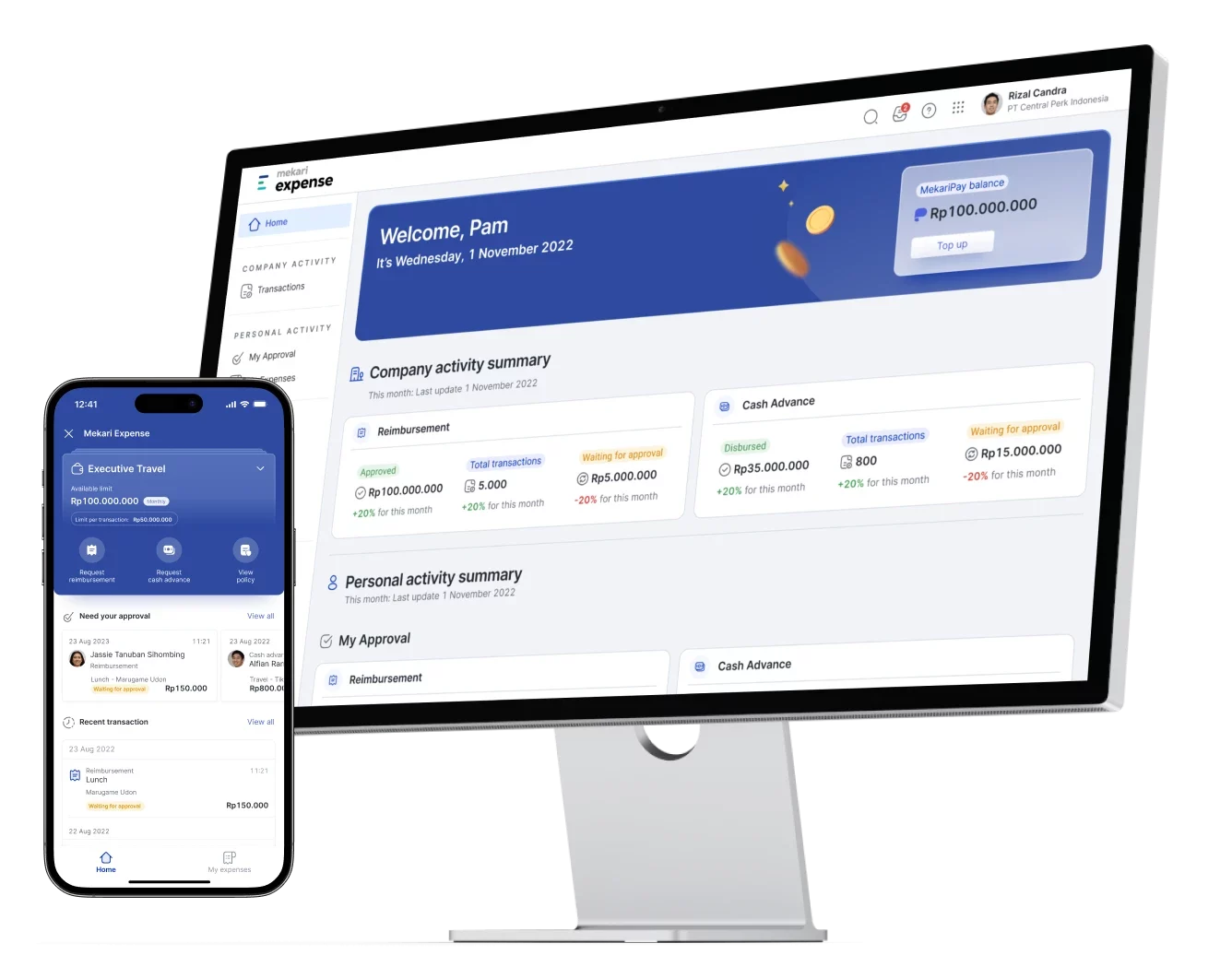
Mekari Expense is Indonesia’s only local enterprise spend management platform, consolidating reimbursements, procurement, and budget allocation in one integrated system. It connects directly with Mekari Jurnal (accounting) and Mekari Talenta (HR software), giving finance teams a seamless view across operations and payroll.
Core features:
- Travel & Expense (T&E): Digital receipt-based reimbursements, cash advance management, and travel cost tracking
- Accounts payable: Automated invoice recording and payment, with real-time budget monitoring
- Sourcing management: Vendor data management including legality validation and performance tracking
- Spend control: Virtual corporate cards, custom spending policies, multi-level approval, and budget management by account or business unit
Key advantages:
- Designed specifically for Indonesian businesses: Rupiah support, local tax compliance, and domestic workflows built in
- Real-time spend predictability with automatically updated exchange rates
- Card controls that prevent budget overruns before they happen
- Multi-tier approval flows that reduce the risk of unauthorized spending
Read more: Top 8 Spend Management Software for Better Cost Control
2. Coupa
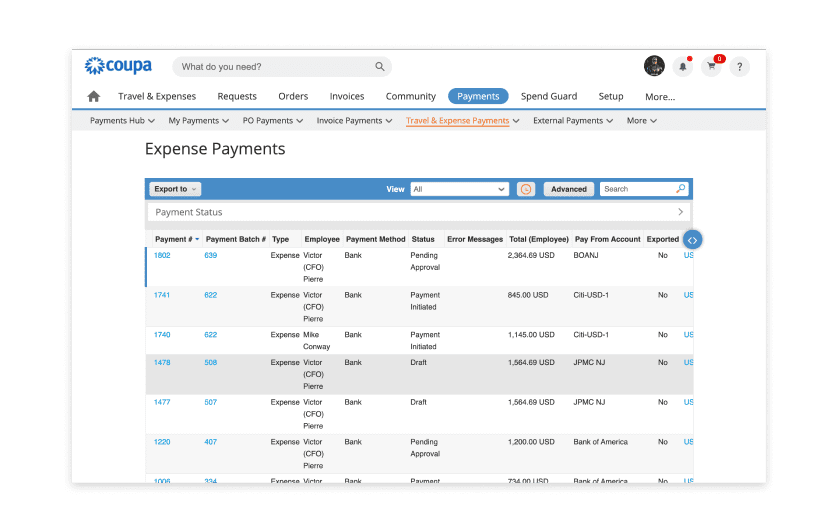
Coupa is a globally recognized enterprise spending platform that unifies purchasing, payments, and spend analysis across the organization. It automates procurement workflows, simplifies invoice management, and gives real-time visibility into spending patterns to help companies spot inefficiencies and act on them quickly.
Key features:
- Procurement automation: Streamlines the full purchasing process for goods and services and enables better supplier collaboration
- Expense control: Records and manages employee spending against internal policies, making it easier to audit and control
- Invoice management: Simplifies vendor invoice processing and payment with automated approval flows
- Spend analytics: Provides real-time visibility into spending patterns so companies can identify inefficiencies and act on them
- Vendor & contract management: Manages supplier relationships and contract lifecycles in one connected system
3. Spendesk
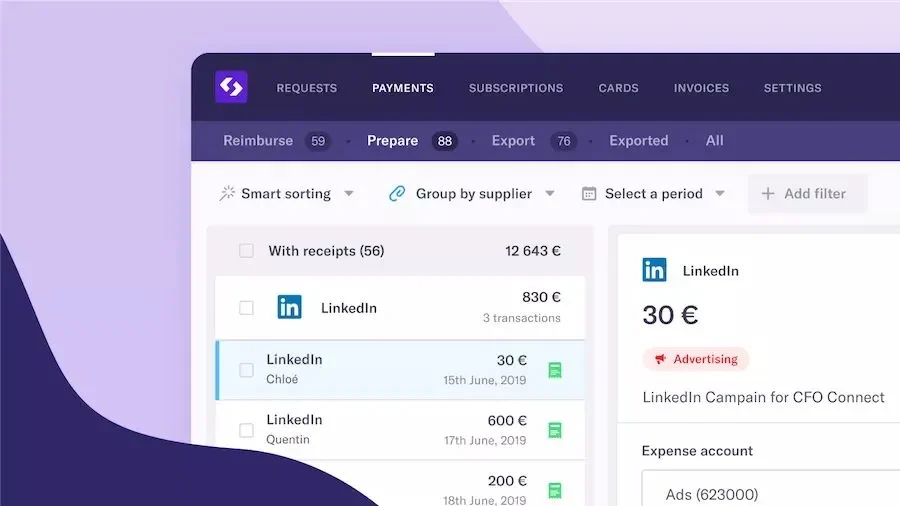
Spendesk takes an all-in-one approach with an emphasis on usability: Covering budget requests, transaction tracking, and payments in a clean interface. It supports both physical and virtual company cards with customizable limits, real-time spend dashboards, and automated invoice approvals.
Key features:
- Company cards: Supports both physical and virtual cards with adjustable spending limits per team
- Invoice management: Accelerates invoice processing from receipt to payment with automated approval flows
- Budget & approval workflows: Simplifies budget setup and approval routing based on company policy
- Real-time spend tracking: Connects transaction data directly to a reporting dashboard for live visibility
- Subscription control: Helps enforce budget discipline over recurring digital subscriptions and routine expenses
Read more: 10 Best Enterprise Budgeting Software for Cost Control
4. Airbase
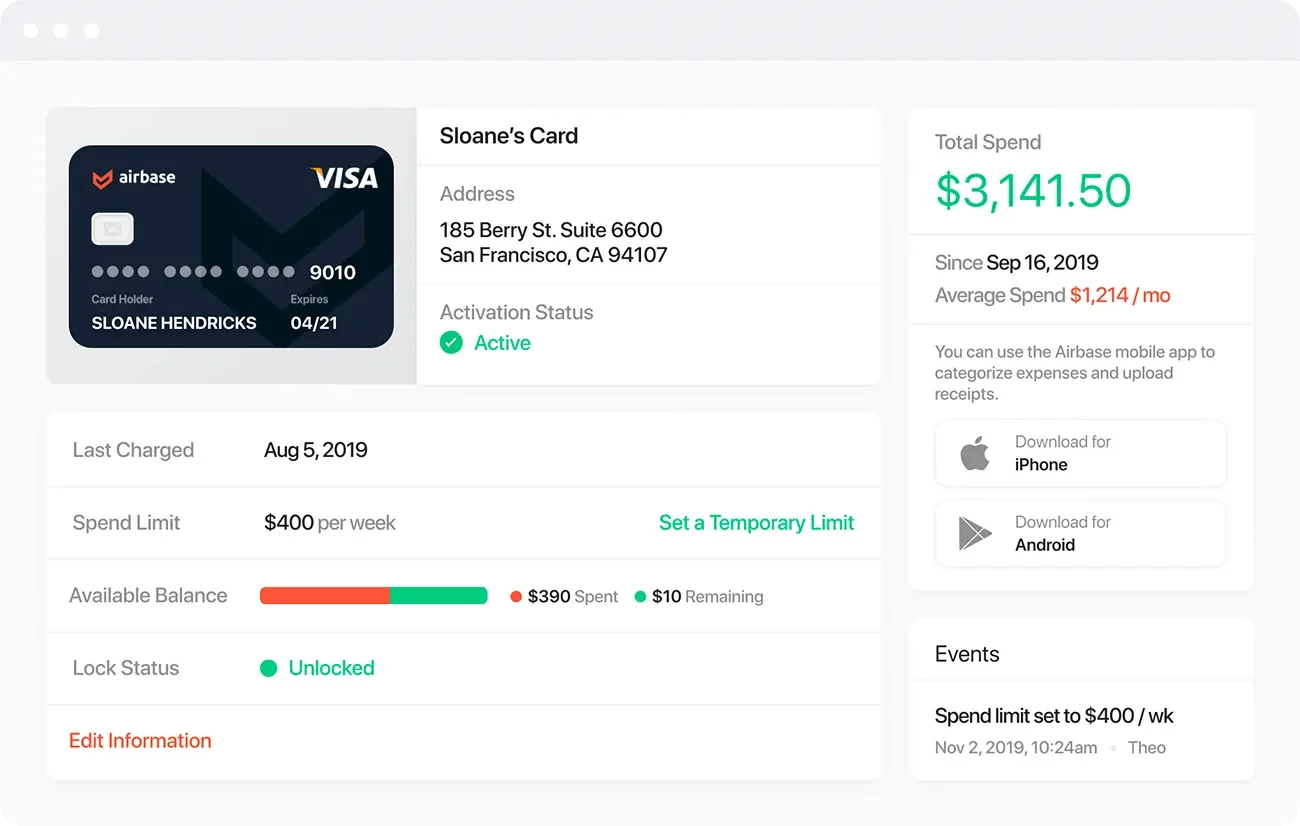
Airbase unifies procurement, payments, and corporate card management in a single automated system. It uses OCR and rule-based approvals to handle purchasing workflows end to end, integrates with accounting systems for automatic bookkeeping, and includes anomaly detection to flag suspicious transactions.
Key features:
- Purchase & payment automation: Automates the full purchase request and payment flow using OCR and rule-based approval logic
- Corporate card controls: Allows granular control over card usage with per-vendor and per-transaction limits
- Real-time spend data: Provides live spending trends and analytics to support faster decision-making
- Accounting integration: Syncs with accounting systems automatically so bookkeeping runs without manual entry
- Fraud detection: Includes security features that flag unusual transactions and reduce the risk of financial abuse
5. GEP Smart
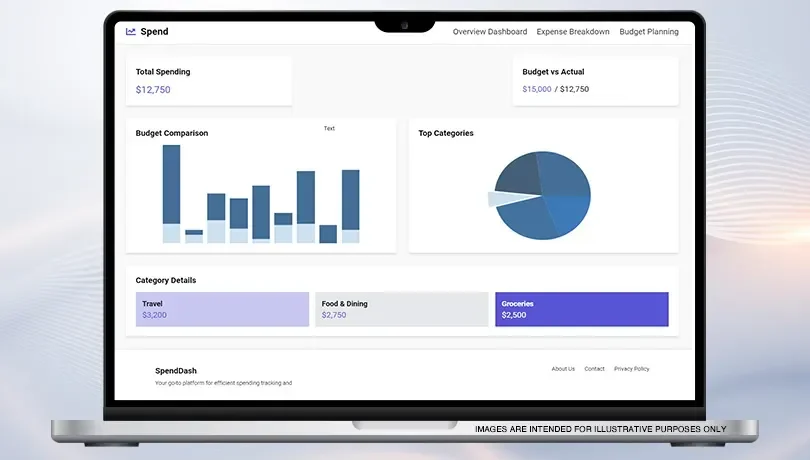
GEP Smart is a cloud-native platform covering the full spend management lifecycle: From spend analysis and sourcing through procurement and payment. It provides detailed visibility into spending data, automates vendor evaluation and contract management, and supports long-term category strategy to drive sustained efficiency.
Key features:
- Spend visibility: Delivers comprehensive insight into spending data and tracks cost efficiency targets
- Sourcing & contract management: Automates vendor evaluation, negotiation, and contract creation
- Supplier performance monitoring: Tracks vendor quality, pricing, and delivery consistency over time
- End-to-end procurement: Streamlines the full procure-to-pay process in one system
- Category management: Supports spend category strategy and sourcing planning for long-term efficiency gains
Read more: 7 Practical Ways to Reduce Company Spending & Best Software
Enterprise spending platform for Indonesian companies
As business operations grow more complex: Spanning procurement, vendor payments, financial reporting, and regulatory compliance: Companies need more than just a capable system. They need one built for the local context.
Of all the options available, Mekari Expense stands out as the most relevant choice for Indonesian businesses. It’s the only local platform that understands the specific requirements of operating in Indonesia: how approval hierarchies work, how procurement processes are structured, and what financial reporting needs to look like to stay compliant with local tax regulations.
The platform’s direct integration with accounting and HR software also means less manual work and fewer data gaps: Everything stays connected, from purchase request to payroll to general ledger.
FAQ
1. What is the difference between enterprise spend management and expense management?
1. What is the difference between enterprise spend management and expense management?
Expense management focuses on individual employee expenses — like travel costs or meal reimbursements. Enterprise spend management is broader: it covers all organizational spending, including procurement, vendor contracts, software subscriptions, and operational budgets across every department. Think of expense management as a subset of the larger ESM system.
2. What types of spending does enterprise spend management cover?
2. What types of spending does enterprise spend management cover?
ESM covers the full scope of business expenditure: procurement and supplier contracts, accounts payable and vendor invoices, employee expenses and reimbursements, SaaS and software subscriptions, corporate card transactions, and operational budgets by division or project. The goal is to bring all of these into one connected, auditable system.
3. How does enterprise spend management reduce costs?
3. How does enterprise spend management reduce costs?
ESM reduces costs in several ways: by consolidating vendors so companies can negotiate better pricing, by enforcing approval workflows that catch unauthorized purchases before they happen, by identifying duplicate or redundant subscriptions, and by providing spend analytics that reveal where budgets are being exceeded or wasted. Companies with mature spend management processes consistently outperform peers on procurement savings.
4. Is enterprise spend management software suitable for mid-sized businesses, or only large enterprises?
4. Is enterprise spend management software suitable for mid-sized businesses, or only large enterprises?
Both. While ESM originated in large enterprise contexts, modern platforms — including cloud-based solutions — are designed to scale. Mid-sized businesses often benefit even more per dollar spent, since they typically have less procurement infrastructure in place and more room for immediate efficiency gains.
5. What should Indonesian businesses look for when choosing a spend management platform?
5. What should Indonesian businesses look for when choosing a spend management platform?
Beyond the standard criteria (features, integrations, ease of use), Indonesian businesses should specifically evaluate: support for Rupiah and local currency management, built-in compliance with Indonesian tax regulations (including VAT and PPh), integration with local accounting and HR systems, and whether the vendor provides local support. These factors significantly affect how quickly a platform can be deployed and how well it fits day-to-day operations.