

Top 8 Spend Management Software for Better Cost Control
Mekari Insight
- Spend management in Indonesia carries unique compliance requirements, from NPWP and PKP validation to PSAK/IFRS reporting, that most global platforms aren’t built to handle out of the box. Evaluating software against local regulatory needs is just as important as evaluating features.
- The right spend management software doesn’t just track what’s been spent, it prevents overspending before it happens, through budget controls, approval workflows, and policy enforcement built into every transaction.
- For Indonesian businesses that need a solution built around local tax compliance, multi-entity operations, and end-to-end procurement, Mekari Expense is the only locally developed platform that covers all of it in one place.
Spend management software helps companies control expenditures efficiently, in a structured manner, and within budget.
However, not every platform is a natural fit for the Indonesian business context, particularly when it comes to tax compliance, vendor validation, and local reporting standards.
In this article, Mekari breaks down 8 of the best spend management software solutions worth considering. Read on.
Spend management for companies in Indonesia
Managing business expenditure goes beyond recording transactions, it also means ensuring compliance with applicable regulations. In Indonesia, this challenge is particularly distinct, as very few spend management platforms are genuinely built to accommodate local regulatory requirements.
For instance, companies operating in Indonesia often need features such as:
- Tax code mapping per spending category for accurate records aligned with local tax provisions
- PKP (Taxable Entrepreneur) validation relevant to specific transaction types
- Vendor identity verification through valid NPWP or NIK to prevent compliance risks
- Support for audit trails and PSAK/IFRS-compliant reporting to meet financial reporting standards
Software with this level of local specificity remains rare in the Indonesian market. That said, a number of global and regional spend management solutions do offer comprehensive features that can generally meet company needs, from budget control and approval automation to integration with accounting and financial systems.
Below are the top spend management software recommendations for companies operating in Indonesia.
1. Mekari Expense

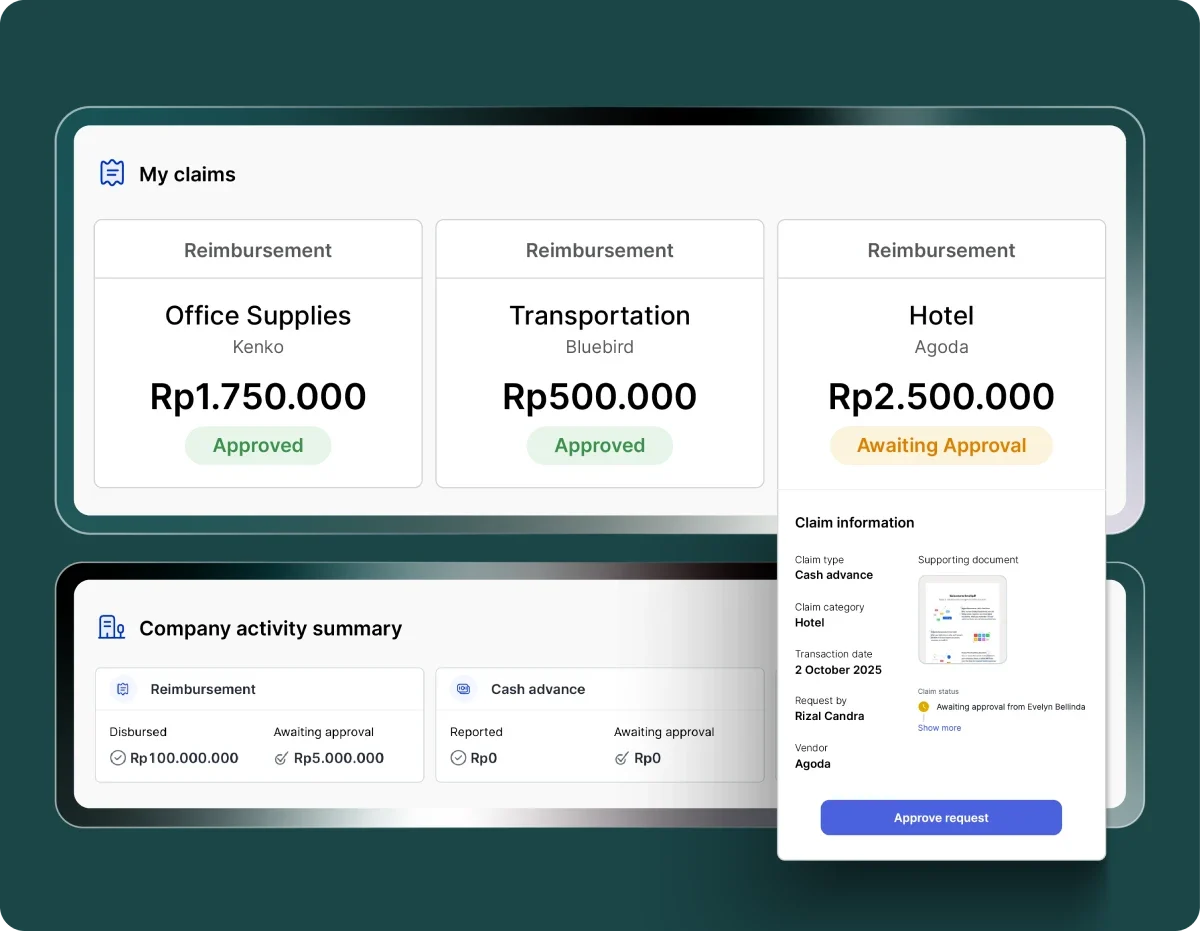
Mekari Expense is the only locally built spend management software in Indonesia that centralizes all business expenditures within a single integrated platform. From reimbursements and purchases to budget allocation, every spending activity is managed within one unified system.

Fully integrated with Mekari Jurnal (accounting software) and Mekari Talenta (HR software), the platform supports fast, informed financial decision-making across the organization.

Key features by category:
1. T&E (Travel & Expense) Manages employee expenditures during business travel and operational activities.
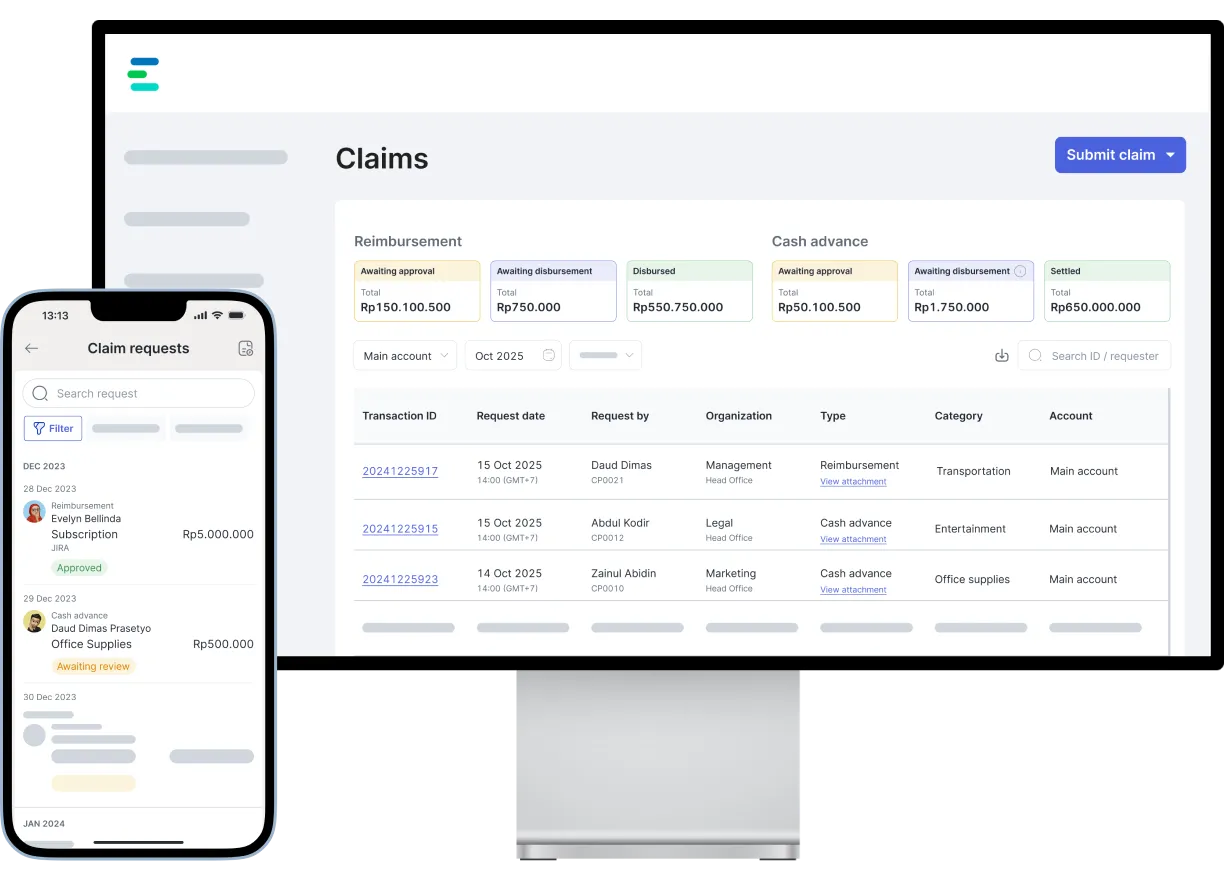
- Reimbursement: Digital receipt-based claims for operational expenses
- Cash Advance: Upfront fund requests in line with company policy and budget limits
- Business Trip: Centralized planning and tracking of business travel costs
2. Accounts payable Automates vendor invoice recording and control.
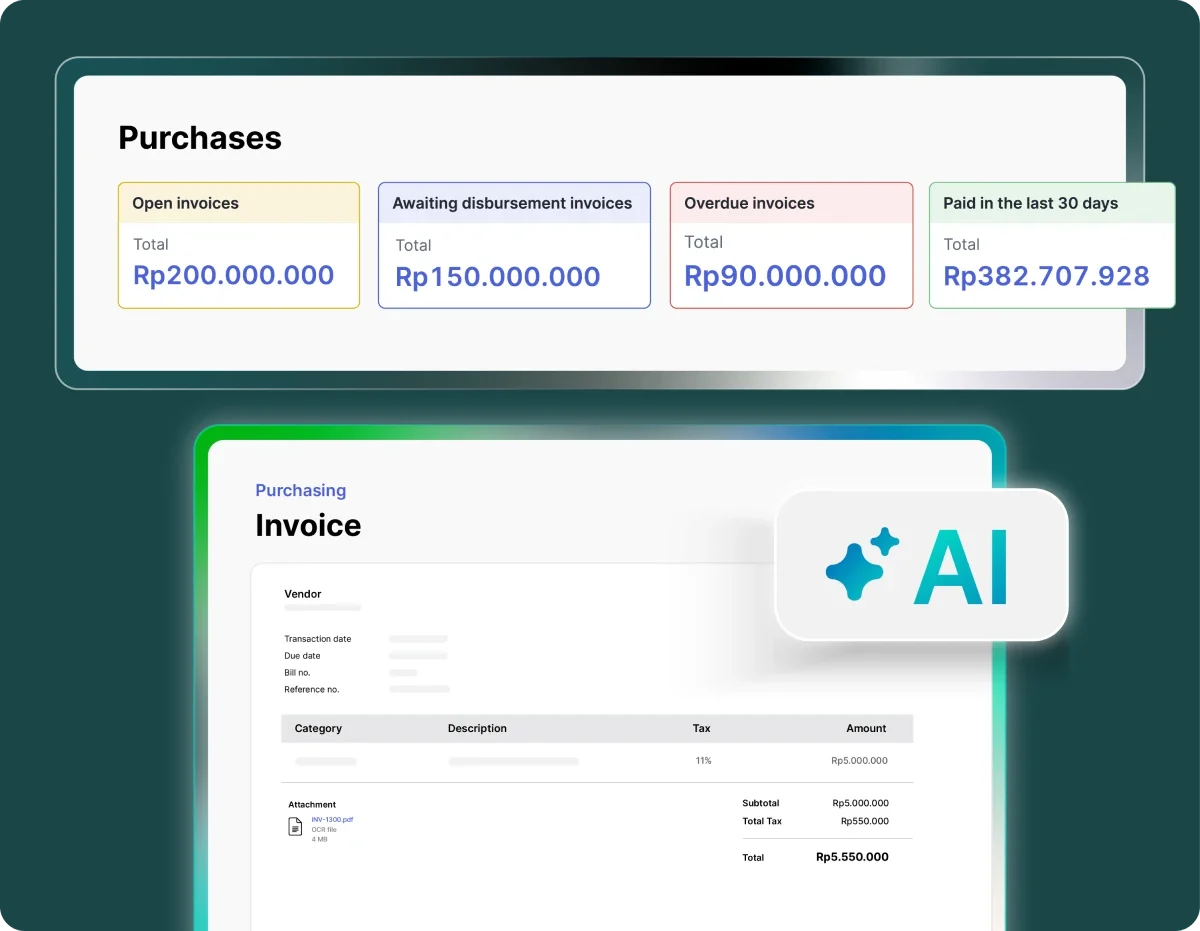
- Purchase Invoice: Input and settlement of vendor purchase invoices
- XPM Balance: Real-time budget balance monitoring
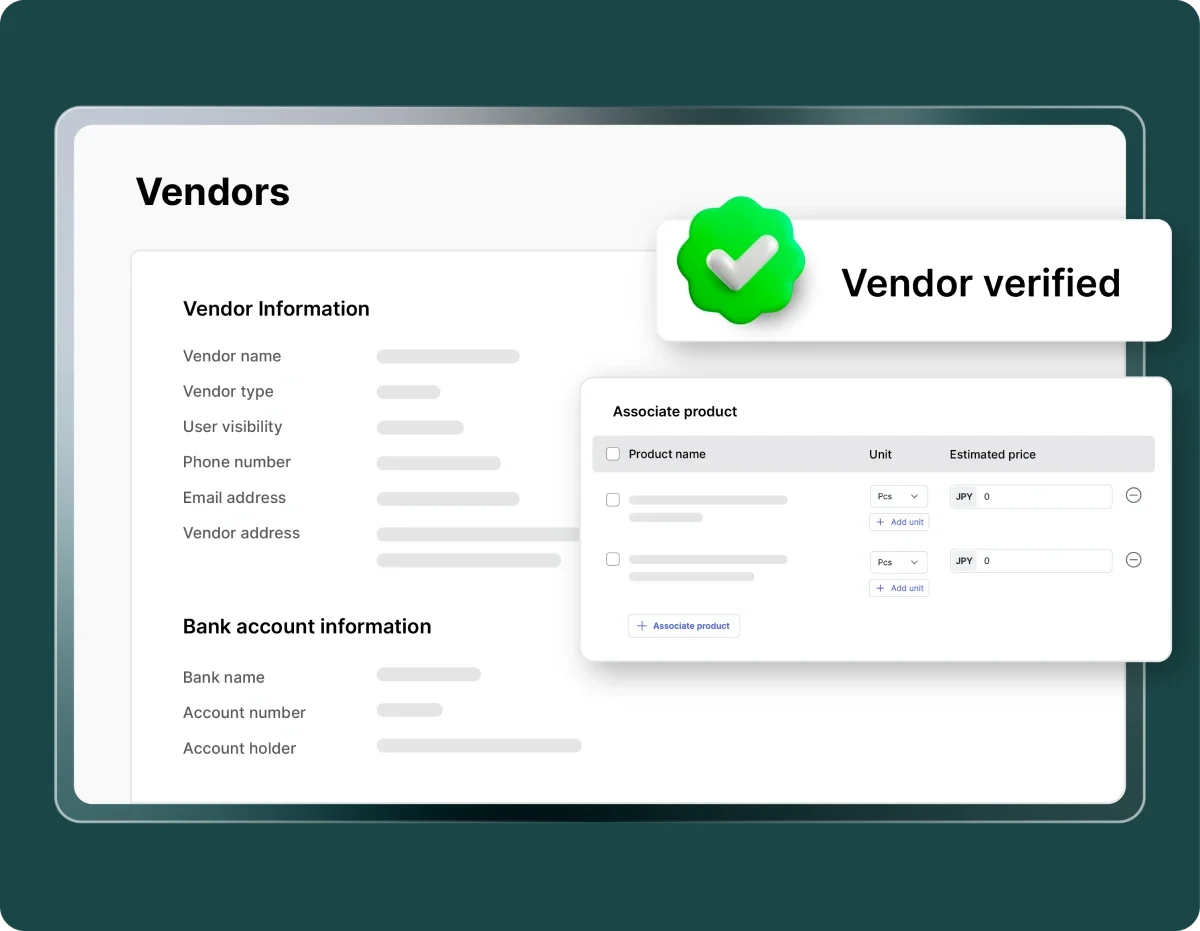
3. Sourcing management Vendor data management and validation.
- Vendor Management: Centralized and documented storage of vendor data, legal validation (NPWP, PKP status), and performance monitoring
4. Spend control Transaction controls to ensure alignment with budgets and policies.
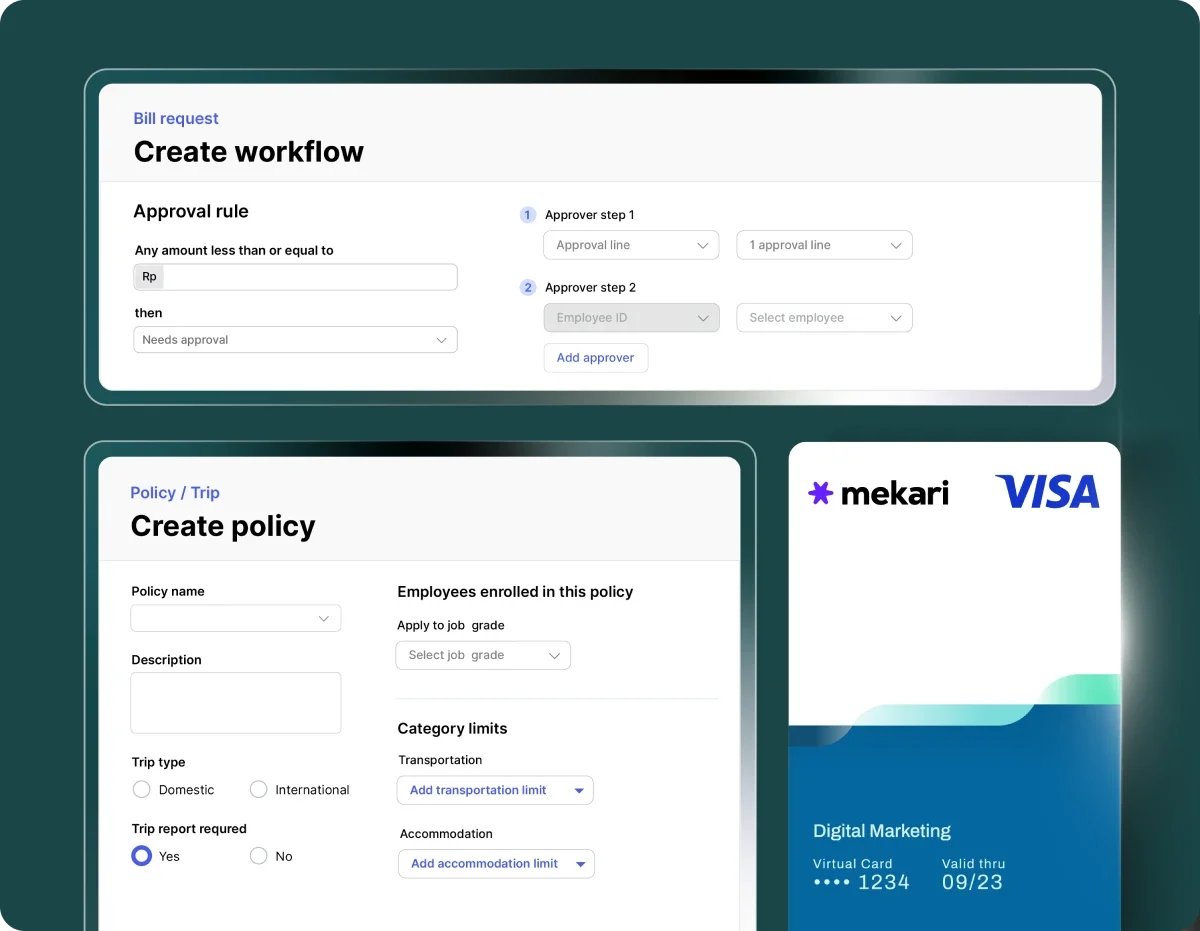
- Virtual Corporate Card (VCC): Digital cards with adjustable transaction limits per employee or team
- Custom Policy: Expenditure rules based on role, division, or spending type
- Multi-level Approval: Tiered approval workflows for every transaction, aligned with organizational structure
- Multi-Accounts: Budget management across separate accounts or business units for cleaner tracking
Key advantages of Mekari Expense:
- Expenditure predictability: Up-to-date spending reports and real-time currency exchange rate updates
- Minimize overspending: Customizable spending rules, budget balance controls, and card usage limits
- Reduce misuse risk: Multi-level approval processes to prevent unauthorized transactions
- Accelerate budget allocation: Fast and accurate budget distribution through the multi-account system
Mekari Expense is built specifically for Indonesia, supporting Rupiah, local tax compliance, and domestic business workflows. Trusted by many Indonesian CFOs as a superior alternative to generic global solutions that don’t always fit the local market.
2. Spendesk

Spendesk is a European-based spend management platform designed to simplify company expense management through a combination of physical and virtual corporate cards and a digital reimbursement system.
Key features:
- Virtual and physical corporate card creation with spending limits and rules
- Easy mobile reimbursement submission with automatic receipt capture
- Customizable approval workflows per team or expense category
- Automated invoice management with accounting software integration
- Real-time expense tracking across a unified dashboard
Best for: Startups and small to mid-sized companies in Europe and the US that need tighter spending controls, particularly those with remote teams or rapid growth.
Read more: 7 Practical Ways to Reduce Company Spending & Best Software
3. Payhawk

Payhawk is a global spend management solution focused on companies with multinational operations and high financial complexity.
Key features:
- Corporate cards integrated with team budgets and automatic controls (limits, auto-blocking)
- Global coverage across 30+ countries and 60+ languages for cross-border spending
- Reimbursements in 50+ currencies via Wise
- Flexible expense approval workflows via mobile app
- Smart OCR for automatic invoice extraction and categorization
Best for: Mid-sized to large enterprises with multiple entities or branches across countries, and cross-currency payment and compliance requirements.
4. Moss

Moss is a German-based platform offering flexible corporate cards and tools for managing budgets, reimbursements, and expense tracking.
Key features:
- Flexible debit/credit card options (physical and virtual): single-use, subscription-based, or monthly
- Real-time dashboard for viewing all transactions per card
- Digitized reimbursement process with automatic OCR
- Dedicated budget management dashboard for budget owners
Best for: Mid-sized companies in Europe looking for high flexibility in card usage and decentralized budget control across business units.
Read more: 10 Best Budget Forecasting Software for Businesses
5. Teampay

Teampay is a US-based spend management software that emphasizes controlled, automated spending from the request stage all the way through to payment.
Key features:
- Chat-based purchase request and approval process (integrated with Slack and Microsoft Teams)
- Automated PO creation and transaction recording into accounting systems
- Instant virtual cards issued on demand per team or project
- Real-time budget tracking and reporting
Best for: Tech companies and agile teams in the US seeking more controlled and transparent spending without adding burden to the finance team.
6. Airbase
Airbase offers an end-to-end spend management system with powerful automation for complex accounting and expenditure processes.
Key features:
- Customizable approval workflows aligned with organizational structure
- Cross-currency reimbursements across 5 currencies
- Complete audit trail for every transaction
- AI and OCR-powered accounts payable automation
- Self-service vendor portal for onboarding and data updates
Best for: Mid-sized to enterprise companies in the US with comprehensive financial tracking and control needs, and deep integration requirements with accounting systems.
7. BILL (Spend & Expense)
Formerly known as Divvy, BILL provides a spend management solution suited for businesses looking for a free yet fully featured option.
Key features:
- Spending controls customizable to internal company policies
- Virtual cards (Divvy) for transaction security and fraud prevention
- Access to a credit line for business financing needs
- Mobile app for expense reporting and monitoring
- Instant spending data visualization
Best for: Small and mid-sized businesses in the US looking to begin digitalizing expenditure with minimal cost, while still maintaining control and visibility.
Read more: Financial Oversight for Operational Cost Control
8. Ramp
Ramp is an all-in-one solution that combines spend management, financial automation, and financial insights within a single platform.
Key features:
- Real-time spending insights and efficiency analysis
- Spending limits by vendor or category
- Deep integration with tools such as Slack, QuickBooks, and Xero
- AI-powered AP data entry and three-way document matching (invoice, PO, and goods receipt)
- Savings tracking from every spending decision
Best for: Startups, scale-ups, and tech companies looking to optimize operational costs through automation and data-driven financial insights.
9. Yokke!
Yokke! is not a full spend management platform, but it can support part of such a system by providing debit-based corporate card solutions and integration with local accounting systems.
Key features:
- Corporate debit cards for various operational needs
- Per-employee limit and usage controls
- Direct expense reconciliation to local financial software
- Integration support with platforms such as Jurnal and Klikpajak
Best for: Companies in Indonesia that don’t yet need a full spend management system, but want to start controlling employee spending digitally and in an integrated way.
Feature considerations when choosing spend management software
Choosing the right platform requires more than comparing price tags, it means evaluating whether the software can genuinely support how your business operates. Here are the key features to assess before making a decision.
1. Procure-to-pay (P2P)
This covers the entire process from purchase request to payment.
Key capabilities to look for include internal catalogs and vendor marketplaces, automated PR-to-PO workflows including contract creation and release orders, three-way matching (invoice, PO, and goods receipt) with tolerance handling and dispute resolution, goods receipt processing, and budget controls at the PR/PO stage, both hard stops (automatic rejection) and soft stops (alerts).
2. Accounts payable (AP) automation
AP automation streamlines payment processes and improves efficiency.
Essential features include automatic invoice data recognition via OCR with duplicate validation, flexible approval routing, payment scheduling and payment runs across multiple banks, and automated reconciliation with real-time invoice status monitoring.
3. Travel and expense (T&E) and corporate cards
Business travel and operational expenses need to be controlled through a transparent, mobile-friendly system.
Look for travel policy configuration including cost limits, per diem, and mileage rules, corporate card integration (card feed) for automatic reconciliation, and mobile receipt capture with auto-coding to COA/GL accounts.
4. Vendor management
Good vendor management goes beyond onboarding, it’s about compliance and performance.
The software should support onboarding and identity verification (KYC), NPWP validation and PKP status checks, SLA monitoring, vendor performance evaluation, and contract and expiry date management.
5. Spend analytics and insights
Spending analysis enables data-driven decisions rather than assumptions.
Needed features include a spend cube presenting data by category, vendor, and business unit, identification of savings opportunities and vendor consolidation potential, anomaly detection and fraud indicators, and spend forecasting against actual outcomes.
6. Integration and security standards
Spend management cannot operate in isolation, it must connect with other systems and remain secure.
Non-negotiables include integration with ERP/GL (journal entries, COA), HRIS/SSO (roles and cost centers), banks (virtual accounts, BI-FAST), and tax systems (e-Faktur, PPh withholding proof), as well as multi-entity and multi-currency support, VAT handling, and project-based spending with retention or milestone billing.
Security standards should include SSO, role-based access control, encryption, comprehensive audit logs, and certifications such as ISO 27001.
The best spend management software recommendation
Among all available options, Mekari Expense stands out as the top spend management software recommendation for local companies in Indonesia. Designed specifically for domestic business needs, it delivers predictable budget control with built-in safeguards against overspending.
Directly connected to Mekari Jurnal for bookkeeping and Mekari Talenta for HR management, Mekari Expense delivers operational efficiency that generic global software โ often misaligned with the local context โ simply cannot match.
Key capabilities that demonstrate Mekari Expense’s strength as a spend management solution include:
- Multi-level approval to reduce fraud risk
- Custom policy and VCC (Virtual Corporate Card) to cap spending against budget
- Purchase invoice and XPM balance management for compliant bill handling
- Vendor management that supports sourcing in line with local regulations
- Multi-accounts to accelerate budget allocation across divisions or business units
Mekari Expense is the right spend management software for Indonesian businesses โ built for Indonesia, by a team that understands Indonesia.
FAQ
1. What is spend management software?
Spend management software is a digital platform that helps companies plan, control, and monitor all forms of business expenditure โ from employee reimbursements and vendor payments to procurement and budget allocation. It centralizes spending data across teams and departments into a single system, replacing manual processes like spreadsheets and email-based approvals with automated workflows, real-time visibility, and policy enforcement built into every transaction.
2. What are the key benefits of using spend management software?
The benefits extend across finance, operations, and compliance. On the financial side, it reduces overspending through budget controls and pre-approval workflows, and surfaces savings opportunities through consolidated spending data. Operationally, it eliminates manual paperwork, speeds up approval cycles, and gives procurement and finance teams time back for higher-value work. From a compliance standpoint, it creates a complete audit trail for every transaction, enforces internal policies automatically, and โ for businesses in Indonesia โ can support local requirements such as NPWP validation, PKP status checks, and tax system integrations.
3. Do Indonesian companies really need locally built spend management software, or can global tools suffice?
Global tools can cover general spend management needs, but they often fall short on Indonesia-specific requirements such as NPWP and PKP vendor validation, e-Faktur integration, PPh withholding proof, and PSAK-compliant reporting. Companies with straightforward operations may manage with global platforms, but those dealing with complex local tax obligations and multi-entity structures will benefit significantly from a locally built solution like Mekari Expense.
4. Can spend management software support companies with multiple branches or business units?
Yes, and this is a critical capability for Indonesian companies with distributed operations. Platforms like Mekari Expense support multi-branch and multi-account structures, allowing finance teams to manage and monitor budgets separately per division, location, or business unit, all from a single dashboard. This eliminates the need for fragmented reporting across entities and gives leadership a consolidated view of total company spending.