





Procurement Maturity Model: 4 Stages to Procurement Excellence


Mekari Insight
- Procurement maturity directly impacts business performance, from cost efficiency to long-term profitability. Many companies still operate reactively, limiting visibility and missing strategic opportunities
- A structured maturity model helps identify gaps, align procurement with business goals, and build a clear improvement roadmap. Digital tools and automation play a key role in improving efficiency, reducing costs, and enabling data-driven decisions
- Mekari Expense Procurement module supports this journey end-to-end, helping businesses move from manual procurement (PO, vendor, invoice) to a fully integrated system with automation, real-time visibility, and seamless accounting—enabling a step-by-step transition from operational efficiency to strategic procurement
Procurement has become a key driver of business strategy, cost efficiency, and supplier performance. However, many organizations still struggle to understand how mature their procurement function really is or what steps to take next. This gap often leads to missed opportunities, inefficient processes, and limited visibility across spending.
The difference matters. Companies with more mature procurement functions can achieve EBITDA margins at least five percentage points higher than their peers (McKinsey). Yet, nearly 65% of businesses still operate reactively, focusing on transactions instead of long-term value (Spendflo).
To move forward, businesses need a way to understand their current position and what to improve next, and that’s exactly what the procurement maturity model helps clarify, by offering a structured way to assess capabilities, spot gaps, and build a roadmap toward better procurement performance.

What is a procurement maturity model?
A procurement maturity model is a structured framework used to evaluate how developed and effective a company’s procurement function is in supporting overall business goals.
It helps organizations assess how well they manage procure-to-pay processes, optimize spending, and adopt digital technologies, covering both operational efficiency and strategic impact.
In practice, the model helps businesses clearly understand their current position and what needs to improve. It serves several key purposes:
- Provides an objective view of current procurement performance
- Identifies operational gaps and inefficiencies
- Aligns procurement goals with broader business strategies (cost reduction, risk management, sustainability)
- Creates a clear roadmap for capability improvement
- Benchmarks performance against industry standards
Because of this, the procurement maturity model is often a critical first step before digital transformation. Without evaluating current processes and capabilities, implementing new systems can lead to budget inefficiencies, disconnected workflows, and more complexity instead of real improvement.
Why procurement maturity matters for business performance
Procurement maturity has a direct and measurable impact on business performance, not just in cost savings, but in profitability, efficiency, and resilience.
Companies with more advanced procurement capabilities don’t just operate better; they make smarter, faster decisions that drive long-term value. This is why leading organizations treat procurement as a strategic function, not just a support role.
Here’s how procurement maturity translates into real business impact:
Direct financial impact
- Companies with top-quartile procurement maturity achieve EBITDA margins at least five percentage points higher than less mature peers
- Leading organizations show significantly higher maturity across key areas like procurement strategy, category management, digital adoption, data & analytics, organization, and skills
Operational excellence
- Top performers score at least 40% higher in strategy, digital, and data & analytics compared to average companies (McKinsey)
- AI-powered procurement systems improve supplier relationship management by up to 45% and enable 30% faster responses to supply disruptions (Deloitte survey)
- Organizations adopting advanced technologies, including generative AI, can achieve up to 3.2x return on investment
Technology and efficiency gains
- AI in procurement can reduce overall costs by 15–45% and eliminate up to 30% of manual work (BCG)
- Procurement automation delivers 25–30% lower processing costs and speeds up cycle times by 50–80% (Concord)
- AI-powered data classification improves spend visibility by 24.4%, helping companies make more informed decisions (Coupa)
As procurement becomes more digitized and data-driven, maturity is no longer optional. It’s a key factor that determines how well a company can control costs, manage risks, and scale efficiently in an increasingly complex business environment.
Read more: Top 7 Procurement Automation Software to Streamline Procurement Cycle
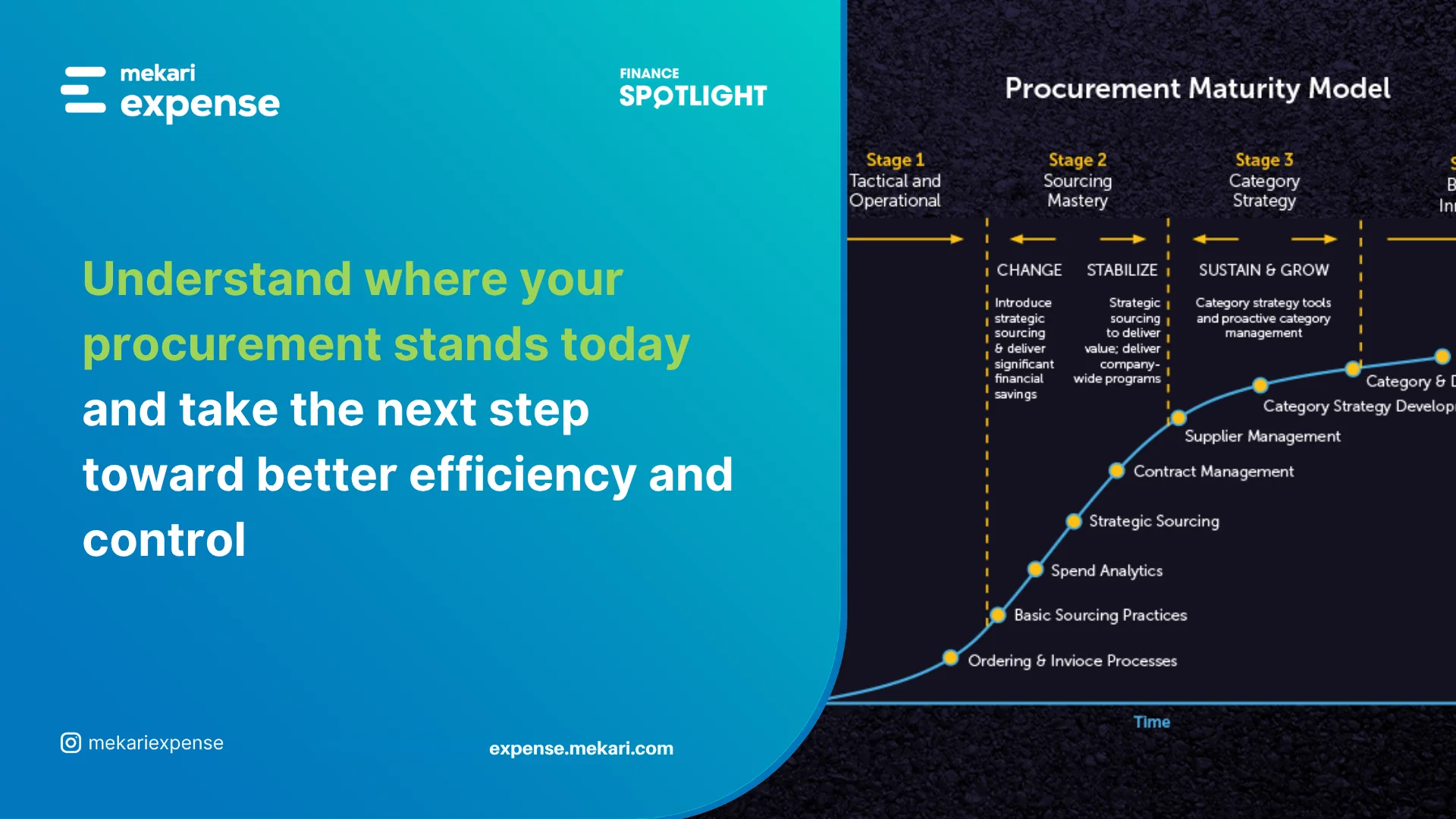
The 4 stages of the procurement maturity model
The procurement maturity model typically evolves through four key stages, each representing a shift from reactive purchasing to strategic value creation. Understanding these stages helps organizations identify where they are today and what capabilities they need to develop next.
Stage 1: Tactical and operational phase
At this stage, procurement is mostly administrative and reactive. The focus is on fulfilling immediate purchasing needs rather than planning ahead.
Characteristics:
- Focus on basic purchasing and day-to-day transactions
- Minimal strategic planning or supplier relationship management
- Heavy reliance on manual processes (email, spreadsheets, paper)
- Limited control over vendors, pricing, and contracts
- Spending decisions are often unstructured and not strategically reviewed
Challenges:
- Poor visibility into spend and inconsistent processes
- Limited data for analysis and decision-making
- Procurement seen as a support function, not a strategic partner
- High risk of inefficiencies and uncontrolled (maverick) spending
Goals:
- Establish procurement policies and approval workflows
- Centralize purchasing under a dedicated function
- Introduce basic digital tools for PR, PO, and vendor management
- Start tracking spend data for better visibility
Stage 2: Tactical sourcing / strategic sourcing phase
Organizations begin to recognize procurement’s potential for cost savings and start building more structured sourcing practices.
Characteristics:
- Procurement professionals manage sourcing and contract negotiations
- Centralized supplier selection and sourcing processes
- Increased use of technology to support sourcing activities
- Spend data is collected and analyzed for cost-saving opportunities
- Supplier performance is monitored periodically
Challenges:
- Disconnected tools leading to data silos and inefficiencies
- Negotiations still focused mainly on price and lead time
- Limited analytical capabilities for more complex decision-making
Goals:
- Develop category-based sourcing strategies
- Integrate procurement systems for better data and workflow management
- Improve team capabilities in negotiation and cost analysis
- Strengthen collaboration across departments
Stage 3: Category management / category strategy phase
Procurement becomes more proactive and aligned with business strategy, focusing on long-term value rather than short-term savings.
Characteristics:
- Procurement structured around spend categories (e.g., IT, marketing, logistics)
- Decisions driven by data, market insights, and business priorities
- Stronger cross-functional collaboration across teams
- Use of advanced tools for analytics, forecasting, and supplier risk management
- Procurement involved in planning cycles and key business initiatives
Challenges:
- Limited scalability if technology is not fully optimized
- Balancing global standardization with local flexibility
- Managing organizational change as procurement becomes more strategic
Goals:
- Build cross-functional category teams and governance frameworks
- Strengthen analytics and performance dashboards
- Develop structured supplier relationship management (SRM)
- Expand procurement’s role in innovation and business strategy
Read more: Building Retail Procurement Operating Model That Saved $500M
Stage 4: Innovative / strategic partnership phase
At the highest level, procurement becomes a fully integrated, data-driven function that drives innovation and competitive advantage.
Characteristics:
- Procurement operates as a strategic business partner
- Decisions powered by automation, AI, and predictive analytics
- Strong collaboration with suppliers to co-create value and innovation
- End-to-end processes (from sourcing to payment) fully integrated in one platform
- Mature ESG and sustainable procurement practices
Impact at this stage:
- High efficiency, faster decision-making, and stronger resilience
- Procurement contributes directly to revenue growth and risk reduction
- Full visibility across suppliers with faster response to disruptions
- Advanced procurement strategies can generate up to 4.4x more value compared to traditional approaches
Each stage represents a meaningful step forward, not just in tools and processes, but in how procurement contributes to the business. The goal isn’t to rush through stages, but to build the right capabilities at each level for sustainable, long-term improvement.
Key dimensions of procurement maturity assessment
To understand how mature a procurement function really is, companies need to look beyond just cost savings.
A proper assessment should cover the core dimensions that shape procurement performance, from strategy and process efficiency to supplier management and governance. Looking at these areas together makes it easier to see what is already working well and where improvement is still needed.
Here are the key dimensions typically evaluated in a procurement maturity assessment:
| Dimension | What to assess | Indicators of high maturity |
|---|---|---|
| Strategy & alignment | How procurement goals connect to broader business objectives | Procurement is embedded in corporate planning, with clear KPIs tied to business outcomes |
| Process efficiency | The level of standardization and automation in procurement workflows | High transaction automation rates, lower procurement cost per transaction, and shorter cycle times |
| Technology & digital | The use of digital tools, analytics, and system integration | Integrated platforms, advanced analytics, and adoption of AI or machine learning |
| People & skills | Team capabilities, training, and talent development | Strong digital literacy, strategic procurement skills, and a culture of continuous learning |
| Data & analytics | The quality, accessibility, and use of procurement data | Real-time dashboards, predictive insights, and data-driven decision-making |
| Supplier management | How suppliers are selected, evaluated, and managed | Strategic supplier partnerships, supplier scorecards, and structured risk assessment models |
| Compliance & governance | Policy enforcement, audit readiness, and regulatory compliance | High on-contract spend, low exception rates, and audit-ready documentation |
A company may perform strongly in one dimension but still lag in another. For example, it may already use digital tools but still lack strong governance or supplier performance management. That is why procurement maturity should be assessed as a whole, not in isolated parts.
Read more: Procurement Fraud: How to Spot Signs and Prevent Schemes
How to conduct a procurement maturity assessment
A procurement maturity assessment works best when it is done in a structured way. Instead of trying to review everything at once, companies can break the process into clear stages over several weeks. This makes the assessment easier to manage and helps teams turn findings into a more practical improvement plan.
Week 1: Define scope and goals
Start by setting the direction of the assessment and agreeing on what the business wants to improve.
What to do:
- Refresh assessment priorities and align the team
- Define clear objectives, such as cost reduction, better supplier quality, or higher process efficiency
- Choose KPIs that match those business goals
Week 2: Engage stakeholders and gather data

Procurement maturity is influenced by multiple teams, so the assessment should include input from across the organization.
What to do:
- Interview stakeholders from procurement, finance, legal, operations, and IT
- Gather information across key areas such as structure, policy, people, process, and technology
- Prepare templates or assessment tools to organize the data clearly
Week 3: Analyze and score
Once the information is collected, the next step is to turn it into clear findings using a consistent scoring approach.
What to do:
- Evaluate each procurement dimension using predefined maturity criteria
- Compare current practices against industry best practices
- Create dimension-level scores and identify capability gaps
Week 4: Build improvement roadmap
The final step is to turn assessment results into an action plan that the business can realistically follow.
What to do:
- Identify the gaps that offer the biggest improvement opportunities
- Prioritize initiatives based on business impact and urgency
- Align the roadmap with available resources and realistic timelines
- Reassess regularly to track progress and refine the strategy over time
A maturity assessment should not end as a one-time diagnostic exercise. It works best when used as an ongoing tool to measure progress, guide transformation efforts, and help procurement evolve in line with business needs.
Common challenges in procurement maturity advancement
Moving up the procurement maturity curve is not always straightforward. While many organizations recognize the need to improve, they often face a mix of technology, data, and organizational challenges that slow progress or create confusion along the way.
Digital transformation challenges
- Many procurement leaders struggle with where to start, leading to delays or inaction
- Some organizations have already invested in digital tools but failed to achieve expected results
- Talent gaps remain a major issue, with 45% of companies facing hiring challenges and 30% struggling with retention (Procurement Mag)
Benchmarking pitfalls
- Poor data quality can lead to inaccurate insights and missed opportunities
- Misalignment between procurement and finance metrics creates confusion in performance evaluation
- Over-focusing on cost savings alone can give a misleading picture of progress
- Benchmarking without regular updates makes insights quickly outdated and less relevant
Organizational challenges
- Around 65% of procurement teams still operate reactively rather than strategically
- Limited visibility into total spend due to fragmented systems and inconsistent data
- Difficulty integrating data across multiple tools and departments
- Resistance to change, especially when teams are used to manual or legacy processes
These challenges are common, but not impossible to overcome. Recognizing them early helps organizations take a more structured and realistic approach to improving procurement maturity—rather than jumping straight into solutions without addressing the root issues first.
How Mekari Expense can support your procurement maturity journey
As procurement evolves from manual processes to a strategic, data-driven function, having the right system in place becomes critical.
Mekari Expense is designed as a spend management platform with a Procurement module, helping businesses in Indonesia and Southeast Asia improve their procurement maturity—step by step, from operational efficiency to strategic impact.
For organizations at early maturity stages (Stages 1–2):
- Digital PO creation: Move away from manual processes with structured purchase orders, complete with attachments and automated approvals
- Standardized vendor database: Centralize vendor data to improve control, transparency, and compliance
- Product management: Maintain consistent product lists and pricing to avoid data discrepancies and manual errors
For organizations advancing to strategic levels (Stages 2–3):
- Multi-level approval workflows: Ensure every purchase follows company policies and budget controls
- Purchase request management: Streamline request submissions with automated routing and backup approvers
- Integrated procurement dashboard: Monitor procurement activities in real time, including invoice and request status
For organizations pursuing innovation (Stages 3–4):
- AI-powered OCR technology: Automatically convert documents into usable data, reducing manual input and errors
- End-to-end purchasing integration: Manage POs, invoices, and payments in one unified system
- International remittance: Pay global vendors with real-time exchange rates
- Seamless accounting integration: Sync directly with Mekari Jurnal for automated reconciliation and financial reporting
Key benefits aligned with maturity advancement:
- Faster PO creation with automated data capture and approval flows
- Full transparency and compliance with real-time, audit-ready records
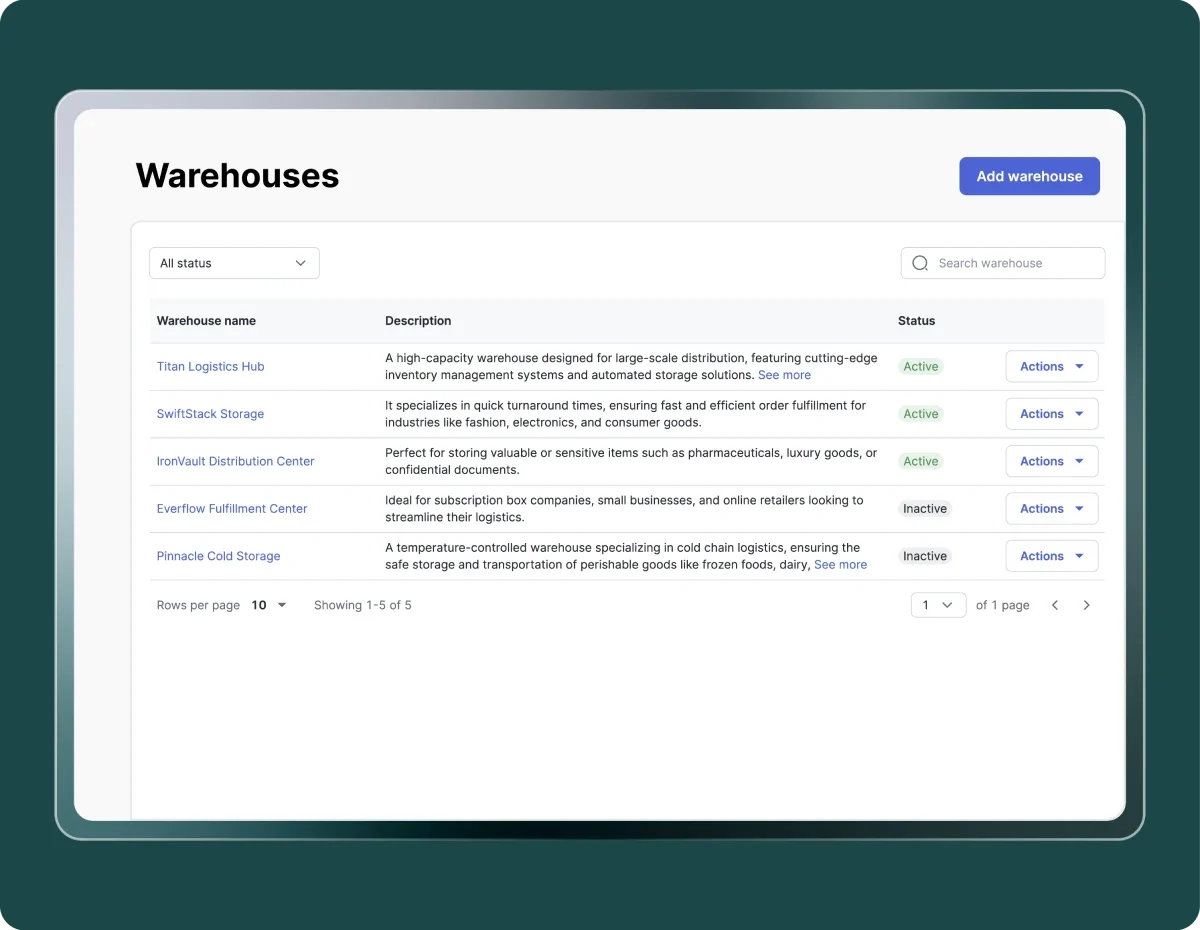
- Centralized monitoring across multiple branches and warehouses
Whether you’re just starting to standardize procurement or aiming to build a fully integrated, strategic function, Mekari Expense helps you move forward with the right foundation and tools.
References
Coupa. ‘’Procurement Benchmarks & KPIs: Measuring What Matters’’
McKinsey. ‘’Where procurement is going next’’
Spendflo. ‘’Procurement Maturity Model: 4 Stages and Strategies’’
FAQ
1. What is a procurement maturity model?
1. What is a procurement maturity model?
A procurement maturity model is a structured framework used to assess how advanced an organization’s procurement function is across strategy, technology, processes, and people. It helps organizations understand their current capabilities, identify gaps, and create a roadmap for improvement.
2. How many stages are in a typical procurement maturity model?
2. How many stages are in a typical procurement maturity model?
Most procurement maturity models include four stages: Tactical/Operational (basic purchasing focus), Strategic Sourcing (centralized sourcing with cost savings focus), Category Management (proactive, business-aligned procurement), and Innovative/Strategic Partnership (fully integrated, data-driven procurement). Some frameworks include a fifth stage for organizations that have become transformation hubs.
3. How do I assess my organization's procurement maturity level?
3. How do I assess my organization's procurement maturity level?
Conduct a structured assessment across key dimensions including strategy and alignment, process efficiency, technology and digital capabilities, people and skills, data and analytics, supplier management, and compliance and governance. This typically involves stakeholder interviews, data collection, gap analysis, and benchmarking against industry standards.
4. What is the business impact of improving procurement maturity?
4. What is the business impact of improving procurement maturity?
Organizations with high procurement maturity achieve EBITDA margins at least five percentage points higher than less mature peers. Additionally, companies using AI-powered procurement systems report 45% improvements in supplier relationship management and 30% faster response times to supply disruptions.
5. What role does technology play in procurement maturity advancement?
5. What role does technology play in procurement maturity advancement?
Technology is a core enabler of procurement maturity. At foundational levels, digital tools automate manual tasks and ensure transparency. At strategic levels, advanced analytics provide spend visibility and category management support. At innovation levels, AI and machine learning drive predictive analytics, automated decision-making, and intelligent supplier management.