

Employee Expense Management Guide & Top Software
Mekari Insight
- Employee expense management is a structured process used by companies to track, control, and analyze employee spendingโsuch as travel, reimbursements, and operational purchasesโwithin a centralized system. This approach is often supported by employee expense management system.
- Employee expense management software enables businesses to streamline expense reporting, automate approval workflows, and maintain better control over company spending in real time.
- Some best employee expense management software choices include Mekari Expense, especially for global companies that want to expand to Indonesia, and Ramp and Brex for other general companies.
Most companies already have employees making business purchases every dayโfrom travel and client dinners to software subscriptions and office supplies.
Yet many organizations still manage these employeeโs expenses through spreadsheets, paper receipts, and long email chains that are slow, error-prone, and difficult to audit. This might lead to frequent human errors.
According to the Global Business Travel Association (GBTA), 19% of expense reports contain errors, and each one costs $52 and about 18 minutes to fix. When there is no structured system, these inefficiencies will remain and quietly drain both time and money.
These challenges can be significantly reduced with a right expense management approach.
With a proper employee expense management system, companies can automate many kinds of work and gain real-time visibility into spending and reimburse employees much faster. At the same time, automation reduces the manual workload for finance teams.
In this article, we will explain what employee expense management is, how the process works step by step, the common challenges companies face, and the best software tools businesses can use to manage employee expenses more efficiently.
What is Employee Expense Management?
Employee expense management is a systematic process companies use to track, control, and analyze employee spending related to business activities, such as travel and purchases.
This procedure includes setting expense policies, approving purchases, processing reimbursements, and reviewing spending data to improve financial decisions.
While many businesses focus only on expense tracking, the concept of expense management is much broader.
Expense tracking simply records what employees spendโsuch as logging receipts or categorizing transactions. Expense management, on the other hand, oversees the entire lifecycle of business expenses, from defining policies and approving requests to reimbursing employees and analyzing spending patterns.
A complete employee expense management system typically includes several key components:
- Expense policies setting: Defining clear rules on what employees can spend, spending limits, and the documentation required to ensure compliance with company policies.
- Expense tracking: Monitoring and categorizing employee transactions in real time so finance teams maintain accurate records of all business-related spending.
- Digital submission: Employees submit receipts and expense claims digitally, reducing paperwork and making the process faster and more organized.
- Approval workflow: Automatically routing expense submissions to the appropriate managers or finance teams based on predefined rules such as amount, category, or department.
- Reimbursement: Processing approved claims and reimbursing employees for legitimate out-of-pocket business expenses in a timely and accurate manner.
- Reporting & analysis: Generating expense reports and insights that help companies monitor budgets, identify spending trends, and support better financial planning.
- Automation: Reducing manual work by automating tasks such as receipt capture, policy checks, approvals, and report generation.
- Integration with accounting system: Connecting expense data directly to accounting software so financial records stay synchronized and bookkeeping becomes more efficient.
When implemented effectively, employee expense management also connects directly to broader financial operations.
Accurate expense data flows into accounting systems, supports more reliable budget forecasting, and helps companies maintain cost control without slowing down employeesโ day-to-day business activities.
Types of Employee Expenses You Need to Manage
Employee expenses come in several categories depending on how the spending occurs and how it is recorded in financial systems.
Understanding these categories is important in the employee expense management process to help companies track costs more accurately and apply the right policies for approvals, documentation, and reimbursement.
1. Operating expenses (OpEx)
Operating expenses (OpEx) are recurring operational costs that support day-to-day business activities, such as office supplies, software subscriptions, utilities, and small equipment purchases.
Because they occur regularly, OpEx are generally predictable and easier for companies to budget.
2. Travel & Entertainment (T&E)
Travel & Entertainment (T&E) expenses include business travel costs such as flights, hotels, car rentals, rideshares, and meals during work trips, as well as client entertainment expenses.
These costs tend to fluctuate depending on business activities and usually require detailed receipts or itemized documentation for accounting and tax compliance.
3. Employee Out-of-Pocket Expenses
Employee out-of-pocket expenses are the purchases employees initially pay for using their personal funds and later submit for reimbursement.
This expense category may also include corporate card transactions that still require receipt submission and expense categorization.
It may also include per diem allowances that provide employees with a fixed daily budget for meals and incidental expenses during business travel.
Accurately categorizing these kinds of expenses is essential for maintaining clear financial records.
Proper classification also supports more accurate financial reporting, simplifies tax deductions, and ensures that companies maintain reliable audit trails when reviewing business spending.
How the Employee Expense Management Process Works
A well-structured expense management process ensures that every business purchase is properly documented, reviewed, reimbursed, and recorded.
Although the exact workflows may vary between organizations, most companies follow a similar step-by-step process to maintain financial control and transparency.
1. Expense capture
The employee expense management process begins when employees record proof of purchase as soon as an expense occurs.
This process can be done through mobile receipt scanning, email forwarding, or desktop uploads within the companyโs expense management system.
Capturing receipts immediately is important because physical receipts can easily be lost or fade over time. Mobile scanning makes this easier by allowing employees to digitize receipts on the spot to ensure documentation is securely stored and accessible for later review.
2. Expense report submission
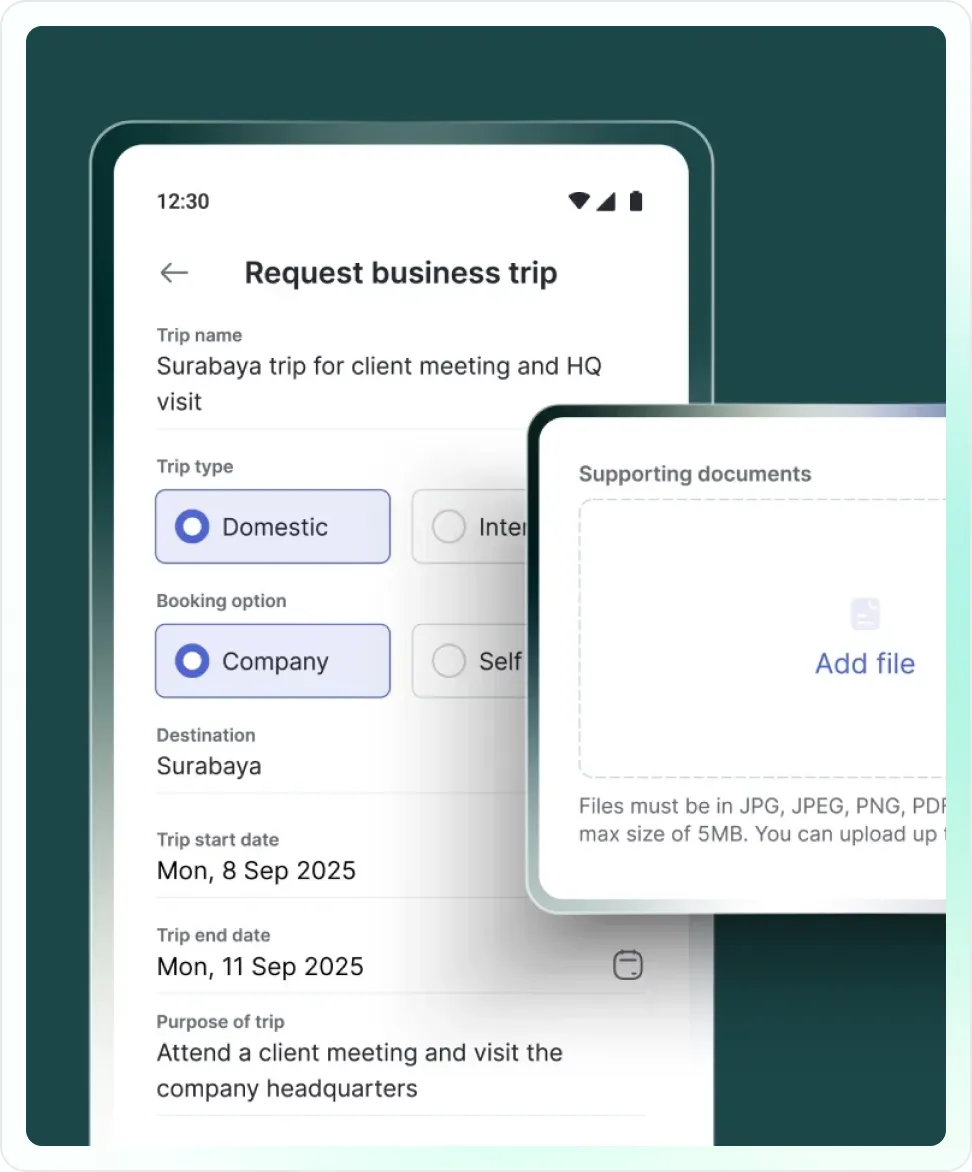
After every expense is captured, employees need to submit it as part of an expense report.
Then, each purchase must be categorized according to company guidelines and supported with the necessary documentation.
This often includes:
- Client or meeting details
- Project or cost center codes
- A short business justification for the expense
With these details in place, modern expense management systems can automatically check submissions against company policies and flag potential violations before the report is sent to an approver.
3. Review and Approval
Once submitted, the expense report moves through an approval workflow. Managers review the expenses to confirm that they are legitimate, properly categorized, and compliant with company policies.
Approval requirements often depend on the expense value:
- Lower-value purchases may require only one level of approval.
- Higher-value expenses may trigger additional approval layers or finance team review.
This step helps prevent misuse of company funds and ensures spending stays aligned with company guidelines.
4. Reimbursement and payment
After the submission is approved, the company processes reimbursement for eligible out-of-pocket expenses, usually by finance or HR teams.
The disbursements are commonly made through direct deposit, often within one to two weeks, depending on the companyโs reimbursement schedule.
However, if your company uses corporate cards, the process will be slightly different.
Instead of reimbursing every employeeโs spending, finance teams only need to reconcile the transactions against card statements and verify that all charges are properly documented.
5. Recording and reporting
The final step in the employee expense management process is recording the expense in the companyโs financial system.
Each spending should be categorized under the appropriate general ledger account so it appears correctly in financial reports.
Automated integrations with accounting systems help eliminate manual data entry and ensure expenses are recorded in the correct reporting period.
This stage also creates a complete audit trail, making it easier for finance teams to review spending history and prepare for internal or external audits.
Benefits of Effective Employee Expense Management
When employee expense management is implemented effectively, it creates benefits across multiple levels of the organization. The impacts become even greater when the process is supported by a modern expense management system.
Finance teams could gain better control and efficiency, employees experience a smoother reimbursement process, and business leaders gain clearer financial insights that lead to better decisions.
Benefits for finance teams
Modern expense management systems could significantly reduce the administrative workload that is handled by finance teams.
- Less time on manual data entry, thanks to automated receipt capture technology and direct synchronization with accounting systems.
- Real-time spending visibility across departments and expense categories without waiting for month-end reports.
- Improved policy compliance through automated checks that flag potential violations before expenses are approved to prevent spending leakages.
- Faster month-end closing as automated categorization and system integrations reduce reconciliation work.
According to a Roland Berger analysis commissioned by Rydoo, companies can save over 30,000 hours a year by switching from manual or legacy systems to digital expense software, with employee payback periods dropping to less than two months.
Baca Juga: Financial Oversight for Operational Cost Control
Advantages for employees
A well-designed expense management process also improves the experience for employees who regularly incur business expenses, such as:
- Faster reimbursements, as automated workflows shorten the time between expense submission and payment.
- Mobile convenience, allowing employees to capture receipts, submit expenses, and track approval status directly from their phones.
- Less paperwork and fewer rejected claims because built-in policy guidance helps employees submit compliant expenses from the start.
Upper Hands for Business Leaders
At the leadership level, an effective employee expense management provides valuable financial insights that support more strategic decision-making.
- Better budget forecasting through access to real-time spending data across teams and projects.
- Reduced fraud and duplicate transaction risk through automated checks and anomaly detection.
- Clearer cost-saving opportunities identified through spending analysis and detailed expense reporting that can help to reduce companies spending.
Baca Juga: 10 Best Budget Forecasting Software for Businesses
9 Top Employee Expense Management Software to Consider
Managing employee expenses manually through spreadsheets and email chains is no longer sustainable as businesses grow.
An employee expense management software helps companies automate repetitive tasks, enforce spending policies consistently, and give finance teams real-time visibility into where money is going.
However, not all platforms are built the same. Choosing the right employee expense management software requires careful consideration of your company’s size, workflows, and operational needs. Here are the key criteria to keep in mind:
- Ease of use: The platform should be intuitive for both employees submitting claims and finance teams reviewing them, as low usability leads to poor adoption.
- Automated receipt capture: OCR or mobile scanning reduces manual data entry and speeds up the submission process for employees.
- Configurable approval workflows: The system should support multi-level approvals that can be tailored to your organizational structure and spending policies.
- Accounting or ERP integration: Direct sync with your existing financial systems keeps records clean and eliminates duplicate data entry.
- Reporting and analytics: Real-time spending visibility helps finance and leadership teams make informed budgeting decisions.
- Mobile accessibility: A strong mobile experience ensures the platform works for employees who are frequently on the go or out of the office.
- Security and compliance: Features like audit trails, data encryption, and regulatory certifications protect financial data and support audit readiness.
Based on those criteria, here are some of the top employee expense management software options worth considering:
| Employee Expense Management Software | Key Features & Strengths | Best for |
|---|---|---|
| Mekari Expense | Unified spend management system (spend control, T&E, reimbursement, accounts payable, procurement); Mekari Limitless Card (virtual & physical); approval automation; custom policy; budget allocation; OCR technology; integration with Mekari Jurnal and Mekari Talenta; ISO 27001-certified | Mid-market and enterprise companies in Indonesia |
| Ramp | AI-powered spend intelligence; corporate cards with built-in controls; automated GL mapping; real-time spending dashboards | AI-powered automation + corporate cards in one platform |
| Navan | Unified travel booking and expense management; policy-embedded booking; automatic expense capture; wide travel inventory | Unified travel booking + expense management in a single tool |
| Emburse Certify | 95%+ OCR accuracy; highly configurable approval workflows; comprehensive T&E automation; audit-ready compliance reporting | High OCR accuracy (95%+), deep configurability, strong T&E automation |
| Fyle | In-app expense submission via Gmail, Outlook, and Slack; real-time card feed matching; automated policy checks; low adoption barrier | Submit expenses directly from inbox or chat apps; real-time card feed matching |
| Brex | Virtual cards for remote teams; automated GL mapping; fast onboarding; integrated rewards program | Virtual cards for remote teams + automated GL mapping for fast reconciliation |
| Rippling | Expense management tied to HR data; payroll integration; role-based policy rules; unified workforce platform | Expense management tied to payroll, HR data, and role-based policy rules |
| BILL Spend & Expense | Free core platform; real-time spend tracking via Divvy card; budget-based card controls; covers card and out-of-pocket expenses | Free core platform + Divvy card with real-time spend tracking |
| Rydoo | Mobile-first design; offline submission; GDPR and SOC 2 compliant; multi-currency and multi-language support | Mobile-first, offline submission, GDPR & SOC 2 compliant |
1. Mekari Expense

Mekari Expense is a unified spend management system with spend control capabilities that helps companies automate and control every aspect of their business expenses.
This spend management platform serves as a complete employee expense management software, connecting expense tracking, approvals, and reimbursements within Mekari’s unified software ecosystem.
Trusted by over 35,000 businesses across Southeast Asia, Mekari Expense is rated 5.0 on Gartner Peer Insights and holds ISO 27001 certification for data security.
Key Features of Mekari Expense to manage employee expenses:
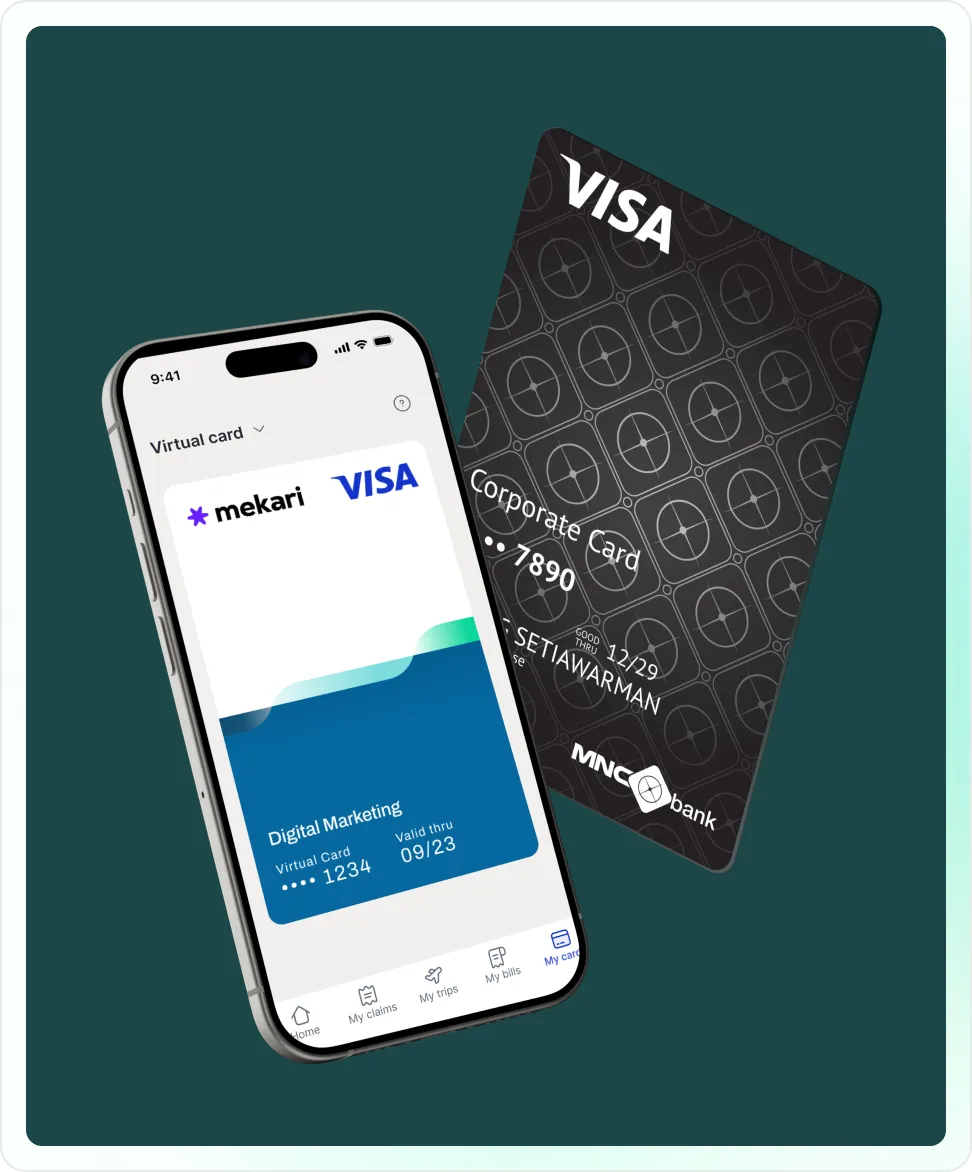
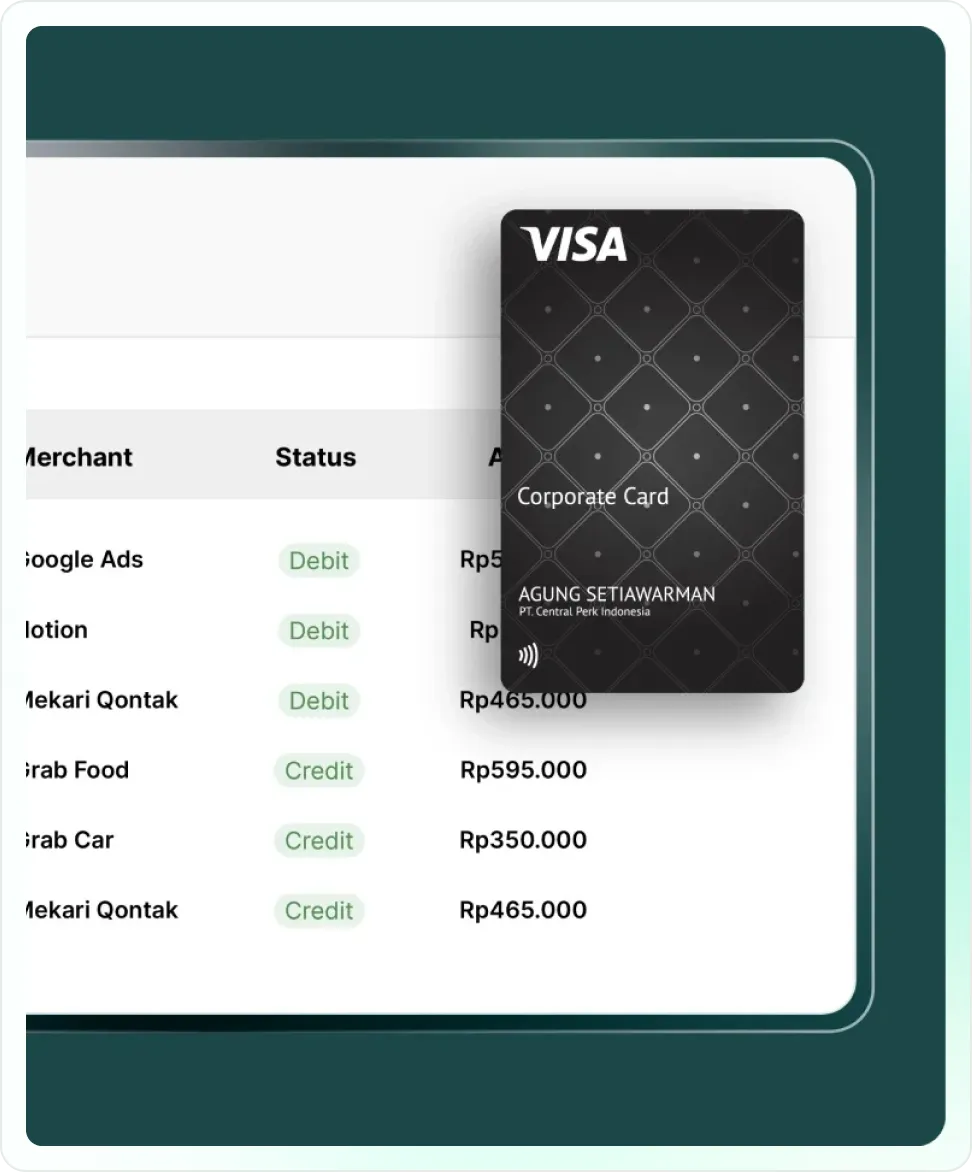
- Mekari Limitless Card (Corporate Card): Issue virtual corporate cards (VCC) and physical Visa-powered debit cards instantly from the app, with spending limits assigned per team, branch, or project and every transaction recorded automatically.
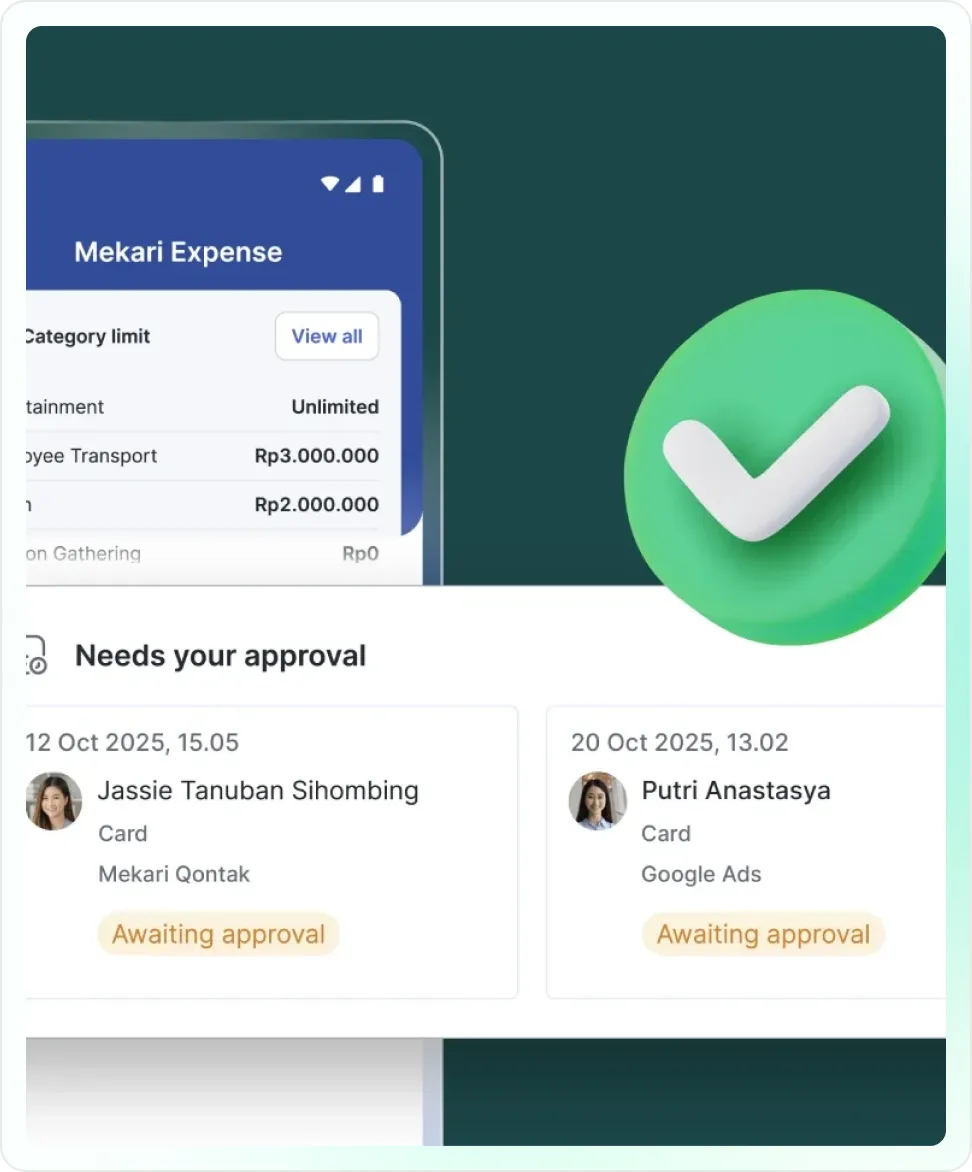
- Approval Automation: Configure multi-level, dynamic approval workflows based on transaction value, department, or expense category โ with full audit trail and mobile approval support.
- Custom Policy: Set flexible, role-based spending rules by category, branch, or job level, including per diem and travel allowances, with automatic enforcement that blocks non-compliant transactions before they reach an approver.
- Budget Allocation: Manage separate budget accounts for different cost centers, branches, or projects from a single dashboard, with real-time balance tracking and selective fund disbursement.
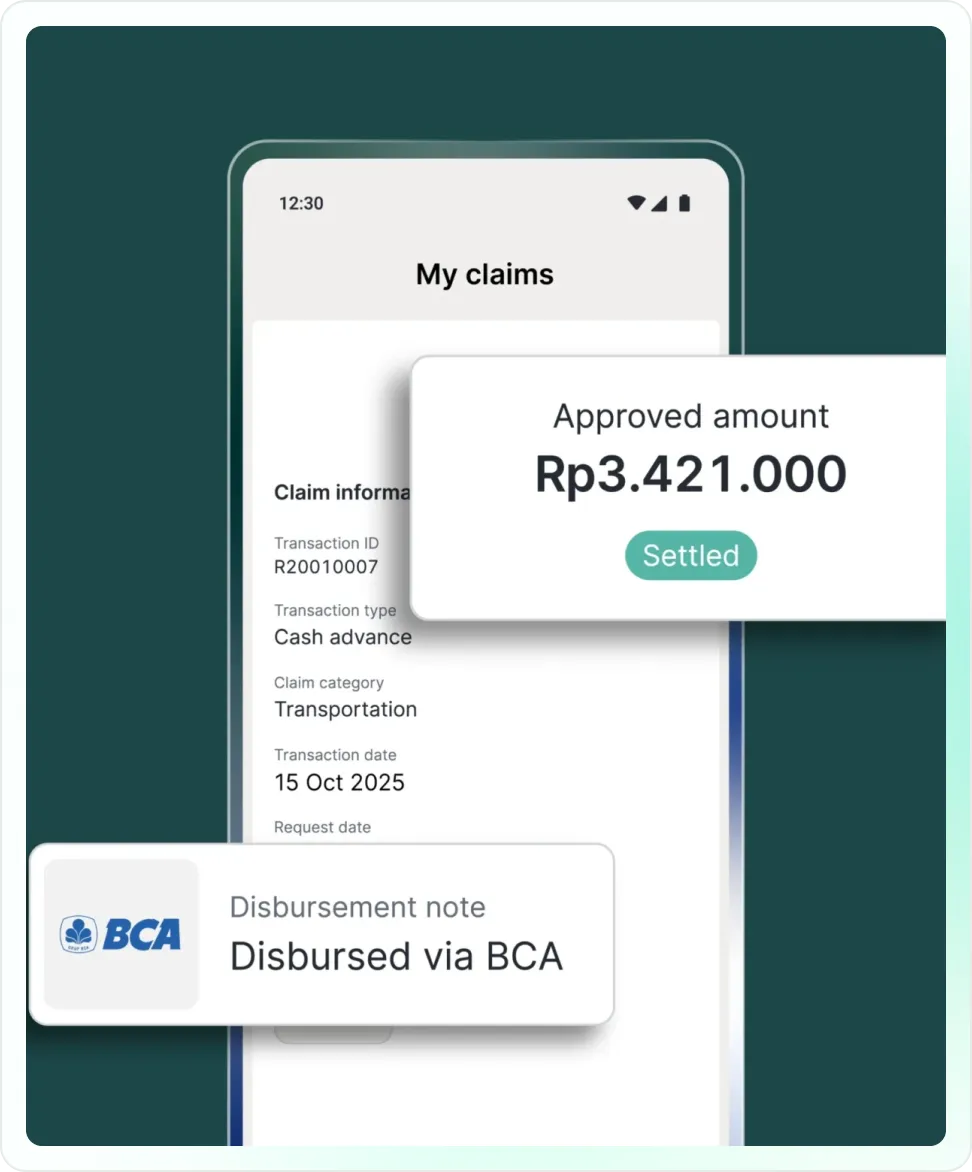
- Reimbursement: Automate the entire reimbursement and cash advance process โ from employee submission to disbursement โ without manual handoffs between teams.
- OCR Technology: Automatically extract data from uploaded receipts using OCR, reducing manual input and converting physical documents into structured digital records ready for reporting and audit.
Mekari Expense excels as the best choice because of several strengths, such as:
- Unified spend management in one platform: Spend control, travel and expense, reimbursement, accounts payable, and procurement are all managed from a single integrated dashboard.
- Deep integration with the Mekari ecosystem: Expense data syncs automatically with Mekari Jurnal (accounting) and Mekari Talenta (HRIS), eliminating double entry and keeping employee and financial data in sync.
- Built for Indonesian businesses: The platform is designed around local compliance requirements, multi-branch organizational structures, and Indonesian regulatory standards.
- Proactive spend control: Unlike systems that flag issues after the fact, Mekari Expense enforces policies and budget limits at the point of transaction, preventing overspend before it occurs.
- ISO 27001-certified security: Financial data and sensitive company information are protected to international security standards.
Mekari Expense is best suited for mid-market and large enterprise companies, especially the ones operating in Indonesia.
2. Ramp

Ramp is a US-based finance automation platform that combines corporate cards with expense management in a single product.
Key Features & Strengths
- AI-powered spend intelligence: Automatically analyzes spending patterns and surfaces savings recommendations, such as unused software subscriptions or vendor overcharges.
- Corporate cards with built-in controls: Cards come with configurable limits and category restrictions, so policy enforcement happens at the point of purchase rather than after approval.
- Automated accounting sync: Transactions map to the correct GL codes automatically, reducing reconciliation work for finance teams.
- Real-time dashboards: Finance leaders get live visibility into company-wide spend without waiting for month-end reports.
Ramp works best for mid-market and enterprise companies looking for an AI-powered, all-in-one spend management and corporate card solution.
3. Navan

Navan (formerly TripActions) combines travel booking and expense management into a unified platform.
This expense management platform is particularly effective for organizations where T&E expenses represent a significant portion of overall spending.
Key Features & Strengths
- Unified travel and expense: Employees book flights, hotels, and rental cars within the same platform they use to submit expenses, creating a seamless end-to-end travel workflow.
- Policy-embedded booking: Travel policies are built into the booking experience, so employees can only select options that comply with company guidelines.
- Automatic expense capture: Expenses from travel bookings are captured automatically, eliminating manual receipt submission for most travel transactions.
- Wide travel inventory: Provides access to a broad range of travel options, including rates negotiated on behalf of its customer base.
Navan is an ideal choice for companies where business travel makes up a significant portion of overall spending and need a unified booking and expense platform.
Baca Juga: Top 7 Unified Corporate Travel Expense Management Software
4. Emburse Certify

Emburse Certify is a dedicated T&E expense management platform known for its high OCR accuracy and deep configurability, making it a strong choice for organizations that process large volumes of receipts and require granular policy controls.
Key Features & Strengths
- 95%+ OCR accuracy: Reliably extracts data from physical receipts, significantly reducing manual correction work for finance teams.
- Highly configurable approval workflows: Approval rules can be tailored to match complex organizational hierarchies and spending policies.
- Comprehensive T&E automation: Automates mileage tracking, per diem calculations, and receipt matching across the full range of travel and entertainment expenses.
- Audit-ready compliance: Detailed audit trails and policy violation reports support finance teams during internal or external reviews.
Emburse Certify is a strong fit for mid-market companies that process high volumes of T&E expenses and require deep configurability in their approval and policy workflows.
Baca Juga: Top 10 T&E Cards: Real-Time Control for Business Trips
5. Fyle

Fyle is an employee expense management software that help companies simplify tracking, reporting, and reconciling business expenses
This platformโs differentiating feature is in its deep integration with everyday communication tools, allowing employees to submit expenses directly from their email inbox or messaging apps without switching to a separate platform.
Key Features & Strengths
- In-app expense submission: Employees can forward receipts from Gmail or Outlook and submit expenses via Slack without opening a dedicated expense tool.
- Real-time card feed matching: Matches corporate card transactions against submitted receipts in real time, reducing reconciliation delays.
- Low adoption barrier: Because employees interact with Fyle through tools they already use daily, training requirements and resistance to adoption are significantly lower.
- Automated policy checks: Expenses are validated against company policies at the point of submission, reducing back-and-forth between employees and approvers.
Fyle works particularly well for growing teams that already rely heavily on Gmail, Slack, or Outlook and want to submit and manage expenses without leaving those tools.
6. Brex

Brex is a financial technology that is built for fast-growing companies that need financial infrastructure to scale quickly.
Key Features & Strengths
- Virtual cards for remote teams: Issue virtual corporate cards instantly for any employee, anywhere, with custom limits and controls managed from a central dashboard.
- Automated GL mapping: Transactions are automatically mapped to the correct general ledger accounts, reducing manual bookkeeping for lean finance teams.
- Fast onboarding: Companies can get set up and issue cards far faster than traditional corporate card programs, designed to match startup pace.
- Integrated rewards program: Spending earns points redeemable for travel and other business expenses, offering added value for high-spend companies.
Brex is designed for startups and high-growth companies that need to move fast, issue virtual cards for distributed teams, and keep reconciliation overhead low.
7. Rippling

Rippling is an HR software that includes expense management capabilities alongside its core workforce and payroll features.
This platform takes a wide approach to business operations, connecting expense management directly with payroll, HR data, and employee role information.
Key Features & Strengths
- Expense management tied to HR data: Approval workflows and spending policies automatically update based on employee role changes, department transfers, or headcount updates from the HR system.
- Payroll integration: Approved reimbursements can be routed through payroll, simplifying disbursement and reducing the number of systems involved.
- Role-based policy rules: Spending limits and approval chains are configured at the role level, so policies apply consistently across the organization without manual per-employee configuration.
- Unified workforce platform: HR, IT, payroll, and finance all operate from the same underlying employee data, reducing administrative overhead across departments.
Rippling is suitable for companies that want expense management, payroll, and HR to operate as a single connected system rather than separate tools.
Baca Juga: 8 Best & Most Recommended HR Spend Management Software
8. BILL Spend & Expense

BILL Spend & Expense (formerly Divvy) offers a free core expense management platform with no subscription fee.
This expense management software is one of the most accessible options for small and mid-sized businesses that need real-time spend control without a large software investment.
Key Features & Strengths
- Free core platform: The expense management software is available at no cost, with revenue generated through the card program rather than subscription fees.
- Real-time spend tracking: The Divvy corporate card feeds transactions into the platform instantly, giving finance teams live visibility into company spending.
- Budget-based card controls: Spend limits are enforced at the card level in real time, preventing overspend before it occurs rather than flagging it after the fact.
- Covers card and out-of-pocket expenses: Out-of-pocket submissions and card transactions are both managed through the same platform, keeping all expense data in one place.
BILL Spend & Expense is a practical option for budget-conscious small and mid-sized businesses that need real-time spend control without committing to a software subscription fee.
9. Rydoo

Rydoo is an expense management solution that is designed with automation, mobility, and compliance in mind.
Key Features & Strengths
- Mobile-first design: Built around a mobile experience, allowing field employees to capture receipts, submit expenses, and track approvals entirely from their phones.
- Offline submission: Expenses can be captured and queued without an internet connection, syncing automatically once connectivity is restored โ essential for remote field teams.
- GDPR and SOC 2 compliance: Meets both European and international data security and privacy standards, supporting companies with cross-border operations.
- Multi-currency and multi-language support: Handles expenses in multiple currencies and languages, reducing friction for globally distributed teams.
Rydoo is best suited for globally distributed or field-based teams that need a mobile-first, offline-capable expense tool that meets international compliance standards.
Best Employee Expense Management Software for Indonesian Companies
For businesses operating in Indonesia, particularly mid-market and large enterprises, Mekari Expense stands out as the most suitable choice.ย
Unlike the other platforms, Mekari Expense is a spend management system with spend control module that serves perfectly as an employee expense management software.
This spend control solution is best for global companies that want to expand their businesses to Indonesia because it’s features are designed around local business practices, compliance requirements, and the operational realities of managing multi-branch organizations across the country.
Mekari Expense provides end-to-end control over company spending, covering all the key components that Indonesian businesses need:
- Mekari Limitless Card: Both VCC and physical corporate cards can be issued directly from the app and linked to specific budgets, so spending is controlled before it happens rather than reconciled after the fact.
- Approval Automation: Approval chains are configured once and run automatically, routing each submission to the right approver based on the transaction amount, team, or category without manual intervention.
- Custom Policy: Finance teams can define spending rules at a granular level, down to specific employee roles, branches, and expense categories, with the system automatically blocking any submission that falls outside those boundaries.
- Budget Allocation: Multiple budget accounts can be maintained simultaneously across branches, departments, or projects, giving finance teams a clear, real-time picture of available funds at any point in the month.
- Reimbursement: The reimbursement process, from initial submission through approval to disbursement, runs on a single automated workflow, removing the back-and-forth that typically slows down payment cycles.
- OCR Technology: Receipt data is extracted and populated automatically upon upload, turning physical documents into audit-ready digital records without requiring employees to enter information manually.
What further sets Mekari Expense apart is its deep integration with the broader Mekariโs unified software ecosystem. Expense data syncs automatically with Mekari Jurnal for accounting and Mekari Talenta for HR, creating a unified data environment where changes in employee structure automatically reflect in expense policies and approval chains
Ready to take control of your company’s spending? Explore Mekari Expense and see how it can streamline your expense management process.
References
PeopleHum. โEmployee Expense Managementโ
Gartner. โExpense Management Software Reviews and Ratingsโ
FAQ
1. What is an employee expense management system
Employee expense management system is a software platform that companies use to track, approve, report, and reimburse employee business expenses. This employee expense management software also helps to automate the full process from receipt capture and policy enforcement to reimbursement and financial reporting.
2. How does employee expense management software support HR and payroll operations?
When integrated with an HRIS, expense management systems can automatically update approval workflows and spending policies based on role changes, department transfers, or headcount updates โ eliminating manual adjustments between HR and finance.
3. Why should companies use employee expense management software?
As businesses grow, managing employee expenses manually becomes increasingly error-prone and difficult to audit. Expense management software helps companies automate policy enforcement, approval routing, and financial reporting so finance teams maintain control without adding administrative overhead.
4. How does Mekari Expense help employee expense management processes for companies with multi-branch or multi-department?
As an empoyee expense management software, Mekari Expense allows finance teams to create and manage separate budget accounts for different branches, departments, or cost centers from a single dashboard, with real-time balance tracking and role-based spending policies applied automatically across the organization.