

18 mins read

Top 9 Fraud Detection Software to Reduce 50% Fraud Losses

Fraud Detection Software - Featured image

Mekari Insight

Fraud detection software varies widely by use case, from internal spend controls to AML compliance and digital identity fraud. Here is a quick breakdown to help you identify the right fit: 

  1. Mekari Expense: Best for internal fraud detection in business and companies, including reimbursement fraud, duplicate AP or vendor submissions, and procurement anomalies, with AI-powered controls built natively into the submission and approval workflow for finance and procurement teams.ย 
  2. Eftsure: Best for AP payment fraud prevention, specifically vendor impersonation and invoice redirection before funds are released.
  3. Trustpair: Best for vendor payment fraud prevention across high volumes of outgoing B2B payments.
  4. Unit21: Best for compliance-focused fraud monitoring that requires customizable, no-code detection rules without engineering dependency.
  5. SEON: Best for digital identity fraud prevention during high-volume customer onboarding on fintech and digital platforms.
  6. Sift: Best for ecommerce and marketplace fraud across the full customer journey, from signup through post-purchase.
  7. ComplyAdvantage: Best for AML compliance and transaction fraud detection for regulated financial institutions operating across multiple jurisdictions.
  8. SAS Fraud Management: Best for enterprise-grade behavioral fraud detection across multiple channels and business lines at large banks.
  9. Feedzai: Best for real-time AI risk management at large banks and payment processors handling omnichannel transaction volumes.

Most fraud is not caught by audits or compliance checks. It surfaces through tips, and by the time it does, the damage has already been accumulating for months. 

The ACFE’s Occupational Fraud found that the median fraud scheme lasts 12 months before detection, costing organizations an estimated 5% of annual revenue each year.ย Yet, PwC found that nearly one in five companies still does not use data analytics in any form to identify fraud, leaving a significant portion of that exposure undetected until it’s too late.ย 

Fraud detection software addresses this gap by applying AI-driven controls to monitor transactions and flag anomalies before they clear.

This article compares 9 fraud detection tools across distinct use cases, from internal expense fraud to B2B payment fraud and digital identity fraud, to help you identify the solution that matches where your organization is most exposed. 

What Is Fraud Detection Software

Fraud detection software is a technology solution that uses AI, machine learning, and rules-based logic to identify anomalous or suspicious activity in transactions, vendor data, user behavior, and expense submissions before or after they occur.

These anomaly detection tools generally fall into two broad categories:

  • External fraud: Payment fraud, identity fraud, account takeover, and ecommerce fraud targeting customer-facing systems and financial institutions.
  • Internal business fraud: Expense fraud, vendor fraud, duplicate submissions, and procurement anomalies occurring within an organization’s own workflows.

Understanding which type of fraud your organization is most exposed to is the most important first step in choosing the right solution. 

The 9 fraud detection tools in this list span both categories, each with a distinct best-for use case to help you evaluate what fits your team’s actual risk.

9 Best Fraud Detection Software Recommendation in 2026

No two organizations face the same fraud exposure, and the list of tools below reflect that. 

Each solution on this list covers a distinct use case, from internal expense and procurement fraud to payment fraud, identity fraud, and AML, so you can evaluate what actually matches your risk. 

Fraud Detection SoftwareFeaturesBest ForRating on G2
EftsureMulti-factor vendor bank account verification against 6M+ businesses; real-time traffic light alerts during payment processing; continuous vendor monitoring for BEC/VEC scenarios; vendor master file cleansing on onboardingAP payment fraud prevention for mid-market finance teams managing frequent vendor payments and supplier onboarding4.9/5
TrustpairAutomated vendor bank account verification before every payment run; continuous third-party monitoring; real-time payment fraud alerts integrated into AP and ERP workflows; audit trail and risk scoring per vendorVendor payment fraud prevention for AP and finance teams managing high volumes of outgoing B2B payments4.8/5
Mekari ExpenseAI Fraud Checker covering Claims and Purchases modules; three detection layers (unusual amount, unusual vendor, duplicate transaction); risk scoring per submission (NONE/LOW/MEDIUM/HIGH); AI-powered OCR; custom policy enforcement; part of the Mekari unified software ecosystem connecting operational data across business functions for automated workflows, seamless cross-system integration, and consolidated spend reportingInternal expense, procurement, and vendor fraud detection for finance teams managing high transaction volumes4.7/5
Unit21No-code rule builder for custom fraud detection logic; real-time transaction monitoring with automated alerts; backtesting engine against historical data; unified case management dashboard; native SAR filing and compliance reportingCompliance-focused fraud monitoring for finance and risk teams that need customizable detection rules without engineering dependency4.6/5
SEONDigital footprint analysis using email, phone, IP, and device data; real-time device and behavioral monitoring for account takeovers; transparent AI rules engine with plain-language input; network analysis for coordinated fraud rings; unified command center combining fraud prevention, identity verification, and AMLDigital identity fraud prevention for fintechs, online lenders, and digital platforms managing high-volume customer onboarding4.6/5
SiftReal-time risk scoring across the full customer journey; payment fraud prevention using ML models; account defense against credential stuffing and account takeover; promo and policy abuse detection; customizable fraud policies via rules dashboardEcommerce and marketplace fraud prevention for mid-to-large digital businesses managing fraud across the full customer journey4.6/5
ComplyAdvantageProprietary global risk database covering 200+ countries updated in real time; AI transaction monitoring with agentic workflows resolving 65โ€“85% of routine alerts automatically; fraud detection using ML clustering with tiered alert scoring; customer screening across 49 configurable risk sub-types; full audit trail with explainable AI reasoningAML compliance and transaction fraud detection for financial institutions and regulated fintechs operating across multiple jurisdictions4.3/5
SAS Fraud ManagementIn-memory processing for real-time transaction scoring at enterprise scale; patented multi-entity behavioral signature analysis; adaptive ML models that self-update over time; enterprise-wide monitoring across multiple channels from a single platform; integrated case management with automated alert prioritizationEnterprise-grade behavioral fraud detection for large banks and financial institutions managing high transaction volumes across multiple business lines4.3/5
FeedzaiOmnichannel real-time transaction monitoring across all payment rails; segment-of-one profiling per customer; AI TrustScore using network-wide real-time intelligence; integrated AML monitoring with automated SAR filing; built-in Responsible AI framework with bias quantification and explainable outputsReal-time AI risk management for large banks and payment processors handling high transaction volumes across multiple channelsN/A

1. Eftsure

Eftsure Dashboard

Eftsure is a B2B payment fraud prevention platform built specifically for accounts payable teams. 

This fraud detection software protects organizations from vendor impersonation, invoice redirection, and payment errors by independently verifying supplier bank account details before funds are released.

Key features:

  • Multi-factor vendor bank account verification against a database of over 6 million verified businesses, independently from internal ERP records.
  • Real-time traffic light alerts during payment processing that flag mismatches in supplier banking information before a payment clears.
  • Continuous vendor monitoring that re-validates supplier data when changes are detected, covering Business Email Compromise and Vendor Email Compromise scenarios.
  • Vendor master file cleansing on onboarding to eliminate inherited fraud risks, duplicates, and incorrect banking details from the start.

Rating: 4.9 on G2

Best for: AP payment fraud prevention for mid-market finance teams managing frequent vendor payments and supplier onboarding.

2. Trustpair

Trustpair Dashboard

Trustpair is a B2B fraud prevention platform focused on protecting organizations from vendor fraud and payment fraud by continuously validating third-party bank account data before payments are released.

Key features:

  • Automated vendor bank account verification against global banking databases before every payment run.
  • Continuous third-party monitoring that re-validates vendor data when changes are detected.
  • Real-time payment fraud alerts integrated directly into AP and ERP workflows.
  • Audit trail and risk scoring per vendor to support internal controls and compliance review.

Rating: 4.8 on G2

Best for: Vendor payment fraud prevention for AP and finance teams managing high volumes of outgoing B2B payments.

3. Mekari Expense

Mekari Expense Dashboard

Mekari Expense is a spend management platform with AI-powered fraud detection built natively into its expense submission and approval workflow. 

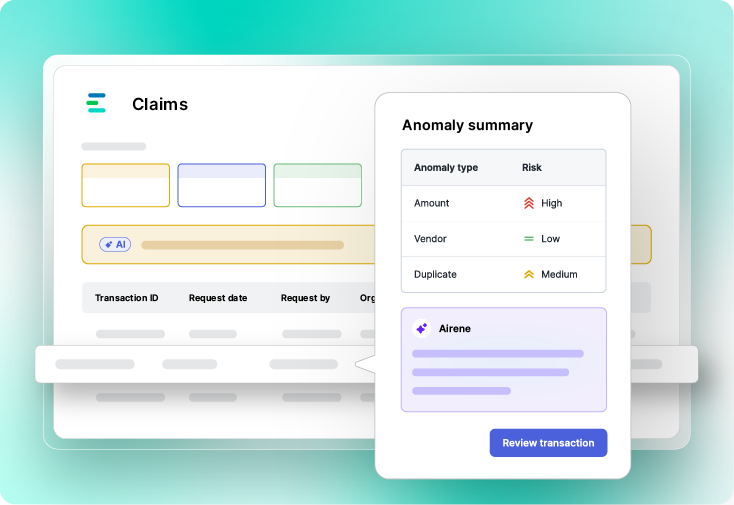
Unlike bolt-on fraud tools that require separate implementation, its fraud detection capability, which lays down at the AI Fraud Checker, works automatically the moment a transaction is submitted, powered by Mekari Airene as the underlying intelligence layer.

Mekari Expenseโ€™s Fraud AI Checker active across two core modules:

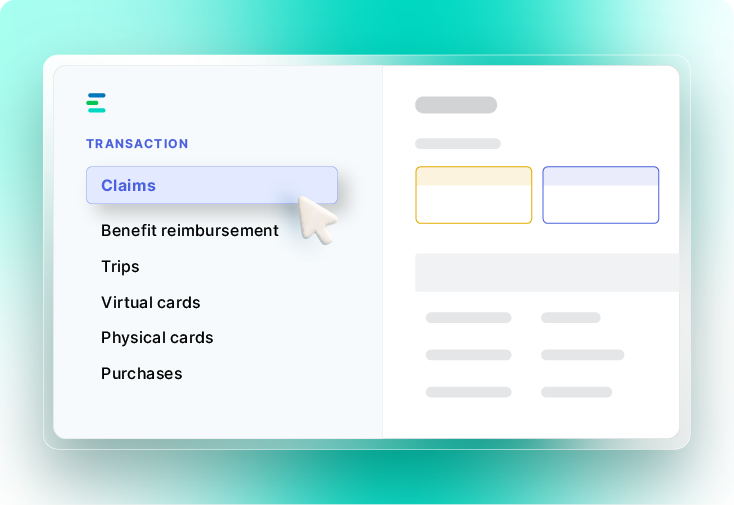
  • Claims: Covers Reimbursement and Cash Advance submissions.
  • Purchases: Covers Purchase Quotation, Purchase Order, and Purchase Invoice workflows.
  • Trips: Covers Business Trip requests and reports involving cash advance or travel amounts.

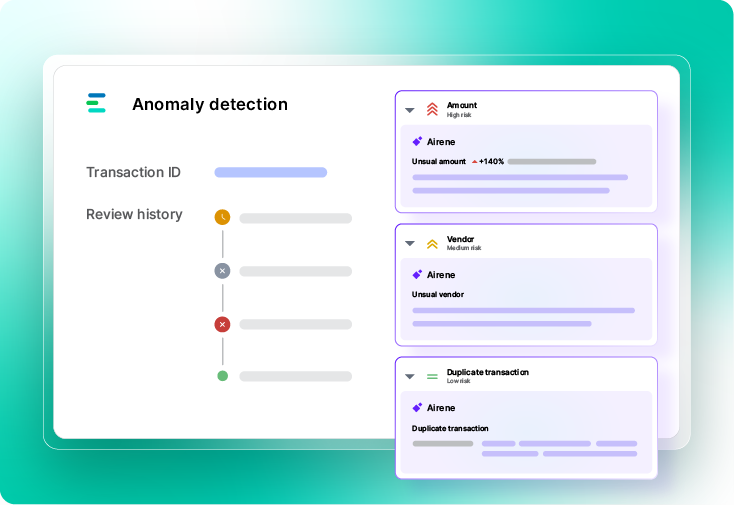
Each submission in those two layers of Mekari Expenseโ€™s Fraud AI Checker is analyzed across three detection layers, including:

  • Unusual Amount: Flags transaction amounts that deviate significantly from historical patterns within the same category, vendor, or product using statistical analysis.
  • Unusual Vendor: Checks vendor legitimacy, identifies mismatches between vendor name and expense type, and flags unregistered bank accounts.
  • Duplicate Transaction: Detects near-identical submissions by comparing vendor, amount, date, and employee data across a 7-day window using fuzzy matching logic.

Beyond anomaly detection, Mekari Expense provides additional capabilities that strengthen fraud control across the full expense workflow:

  • Risk scoring: Every submission receives a risk level of NONE, LOW, MEDIUM, or HIGH with explainable reasoning per detection, giving approvers the context to act with confidence rather than intuition.
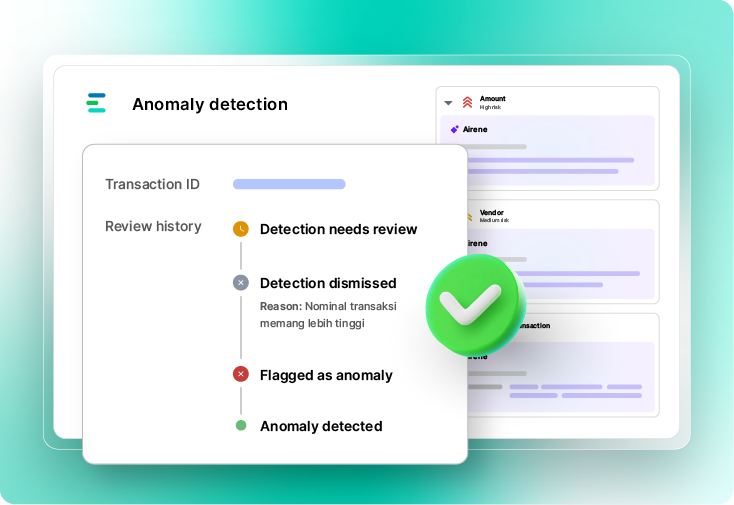
  • Approver actions: Dismiss or Flag as Anomaly with reason, with a full audit trail per transaction including reviewer name and timestamp for internal audit and compliance needs.
  • AI-powered OCR: Auto-extracts receipt and invoice data at point of submission to ensure clean, consistent data that makes downstream fraud signals more reliable.
  • Custom Policy enforcement: Finance teams define spending rules and limits that the platform enforces at point of submission, closing the loop between what policy allows and what AI flags as deviation.
  • Availability: Web and Mobile, visible to Admin, Super Admin, and Approvers across all transaction and approval pages.

Based on data collected from its customer base, Mekari Expense has helped organizations identify and block up to 40% of non-compliant reimbursement submissions that would otherwise have passed through standard approval workflows without detection.

Rating: 4.7 on G2

Best for: Internal expense, procurement, and vendor fraud detection for finance teams managing high transaction volumes.

4. Unit21

Unit21 Fraud Detection for Financial Institutions

Unit21 is a no-code fraud and compliance operations platform that lets finance and risk teams build, test, and deploy detection rules without engineering support.

Key features:

  • No-code rule builder for creating custom fraud detection logic across transaction types without writing code.
  • Real-time transaction monitoring with automated alerts and case management for compliance teams.
  • Backtesting engine that lets teams simulate detection rules against historical data before deploying them.
  • Unified case management dashboard that consolidates fraud alerts, investigation notes, and audit trails in one place.
  • Supports SAR filing and compliance reporting workflows natively within the platform.

Rating: 4.6 on G2

Best for: Compliance-focused fraud monitoring for finance and risk teams that need customizable detection rules without engineering dependency.

5. SEON

Seon Fraud Prevention

SEON is an AI-powered fraud prevention platform that analyzes over 900 real-time first-party signals across digital footprint, device intelligence, and behavioral data to detect identity fraud and account-level risk before and during customer onboarding.

Key features:

  • Digital footprint analysis using email, phone, IP, and device data to surface synthetic identities and fake accounts before KYC is triggered.
  • Real-time device and behavioral monitoring that detects account takeovers, screen sharing, remote access tools, and suspicious login patterns.
  • Transparent AI rules engine that lets fraud teams describe suspicious behavior in plain language and converts it into live detection logic without coding.
  • Network analysis that maps relationships across shared devices, IPs, and emails to expose coordinated fraud rings and money laundering patterns.
  • Unified command center combining fraud prevention, identity verification, and AML compliance in a single platform with full audit trail.

Rating: 4.6 on G2

Best for: Digital identity fraud prevention for fintechs, online lenders, and digital platforms managing high-volume customer onboarding.

6. Sift

Sift is a Digital Trust and Safety platform that protects the entire customer journey using a global data network of over one trillion annual events to train its machine learning models in real time.

Key features:

  • Real-time risk scoring on every user action from signup and login through checkout and post-purchase interactions.
  • Payment fraud prevention using ML models that detect stolen card use, chargeback fraud, and high-risk transaction patterns.
  • Account defense against credential stuffing and account takeover attacks at login.
  • Promo and policy abuse detection that identifies coordinated misuse patterns across accounts and devices.
  • Customizable fraud policies via a rules dashboard, with seamless API integration into ecommerce platforms.

Rating: 4.6 on G2

Best for: Ecommerce and marketplace fraud prevention for mid-to-large digital businesses managing fraud across the full customer journey.

7. ComplyAdvantage

ComplyAdvantage is an AI-native financial crime risk platform built for regulated institutions. 

This fraud prevention software combines AML screening, transaction monitoring, and fraud detection in a single unified environment called Mesh.

Key features:

  • Proprietary global risk database covering sanctions, PEPs, adverse media, and watchlists across 200+ countries, updated in real time.
  • AI transaction monitoring with agentic workflows that auto-resolve 65โ€“85% of routine alerts without analyst intervention.
  • Fraud detection module that monitors monetary and non-monetary events using ML clustering and tiered alert scoring (High, Medium, Low).
  • Customer screening across 49 configurable risk sub-types with natural language rule building and sandbox testing before deployment.
  • Full audit trail with explainable AI reasoning per decision for regulatory defensibility.

Rating: 4.3 on G2

Best for: AML compliance and transaction fraud detection for financial institutions and regulated fintechs operating across multiple jurisdictions.

8. SAS Fraud Management

SAS Fraud Management is an enterprise fraud detection platform built for large financial institutions that need to monitor and score every transaction across multiple channels from a single system.

Key features:

  • In-memory processing that scores every transaction in real time with high throughput and low latency, even at enterprise scale.
  • Patented multi-entity signature behavioral analysis that builds a behavioral baseline per customer and detects deviations contextually at the point of scoring.
  • Adaptive machine learning models that self-update as customer behavior and fraud patterns change over time.
  • Enterprise-wide monitoring across multiple channels and lines of business from a single platform, consolidating internal, external, and third-party data.
  • Integrated case management with automated alert prioritization, routing, and investigation workflows for fraud and AML teams.

Rating: 4.3 on G2

Best for: Enterprise-grade behavioral fraud detection for large banks and financial institutions managing high transaction volumes across multiple business lines.

9. Feedzai

Feedzai is a cloud-native fraud and financial crime prevention platform designed for banks and payment processors. 

This software builds a behavioral risk profile for every customer using real-time transaction, device, and biometric data.

Key features:

  • Omnichannel real-time transaction monitoring across all payment rails, combining behavioral biometrics, device intelligence, and transaction history in a single risk profile.
  • Segment-of-one profiling that establishes an individual behavioral baseline per customer to detect subtle anomalies specific to that user.
  • AI TrustScore that generates a network-wide risk score per transaction using real-time intelligence from across Feedzai’s global client base.
  • Integrated AML transaction monitoring with automated SAR filing and alert prioritization for compliance teams.
  • Built-in Responsible AI framework with bias quantification, model fairness optimization, and explainable outputs for regulatory reporting.

Best for: Real-time AI risk management for large banks and payment processors handling high transaction volumes across multiple channels.

Key Features to Look for in Fraud Detection Software

Fraud detection software varies significantly in scope and target use case. Before selecting a platform, evaluate whether it covers the risk categories most relevant to your organization.

Key features to look for:

  • Real-time transaction monitoring: Analyzes transactions at the moment of submission or payment initiation, not after the fact.
  • AI/ML-based risk scoring: Generates a risk score per transaction with explainable reasoning, not just a binary flag.
  • Multi-method detection: Covers unusual amounts, vendor legitimacy, and duplicate submissions rather than relying on a single signal type.
  • Policy enforcement and rules engine: Allows finance and compliance teams to define spending rules and limits that the system enforces automatically.
  • Data accuracy at submission point: Platforms with OCR or automated data extraction reduce manual input errors that create gaps in detection coverage.
  • Audit trail and case management: Every detection, review action, and approver decision should be logged with reason and timestamp for compliance and internal audit purposes.
  • Integration with existing systems: Connects to ERP, AP, and expense management platforms without requiring teams to switch contexts or re-enter data manually.

Not every organization needs all seven capabilities, but the more of these a platform covers natively, the less you will rely on workarounds or manual intervention to close the gaps.

How to Choose the Right Fraud Detection Software for Your Business

Choosing the right fraud detection software is not only about feature lists but also about where your organization is actually exposed. These are the key factors to evaluate before making a decision.

  1. Identify your primary fraud exposure: Map where losses or risks have occurred before evaluating any tool, whether internal spend, vendor payments, identity fraud, or payment fraud.
  2. Match the tool to your team: Finance and procurement teams need workflow-integrated controls, risk and compliance teams need transaction monitoring, and ecommerce teams need customer-facing fraud detection.
  3. Evaluate integration requirements: Check whether the platform connects natively to your existing ERP, AP, or expense management systems without significant custom development.
  4. Prioritize explainability over black-box AI: Look for platforms that provide reasoning per detection so approvers and compliance teams can document decisions for audit.
  5. Assess coverage breadth: Platforms that combine amount analysis, vendor legitimacy checks, and duplicate detection provide more reliable coverage than single-signal tools.
  6. Consider deployment speed and operational overhead: Prioritize solutions that integrate into existing workflows and go live quickly if your team lacks dedicated data science resources.
  7. Check audit trail requirements: Every flagged transaction, review action, and approver decision should be logged automatically for internal audit and regulatory compliance.

The right platform fits your fraud exposure, integrates with your existing stack, and gives your team the context to act on detections confidently without adding significant operational burden.

Benefits of Using Fraud Detection Software

Selecting the right fraud detection software based on your actual risk exposure sets the foundation for getting the most out of it. When the platform fits your workflows, the benefits compound across every transaction your team processes. 

Here are some of the key benefits:

  • Earlier detection, smaller losses: The longer a fraud scheme runs undetected, the more it costs. Deploying automated controls shortens that window before significant financial damage accumulates.
  • Broader transaction coverage: Manual review processes can only check a fraction of submissions. Automated software applies detection logic to every transaction, not just sampled ones, eliminating the blind spots that manual processes inevitably create.
  • Explainable risk decisions: Modern fraud platforms generate a risk score with reasoning per transaction โ€” flagging why something was suspicious, not just that it was โ€” so approvers can act with confidence rather than intuition.
  • Audit trail and compliance readiness: Every flagged transaction, review action, and approver decision is logged automatically with a timestamp, reducing the manual effort required to prepare evidence for internal audits or regulatory review.
  • Deterrence through visibility: When employees and vendors know that every submission is analyzed automatically, the conditions that enable opportunistic fraud become harder to exploit.
  • Lower false positive burden: AI-powered systems learn behavioral baselines over time, distinguishing genuine anomalies from unusual-but-legitimate activity โ€” freeing investigation teams to focus on real threats.

The data behind these benefits is consistent across independent research.

Strengthen internal fraud controls with a spend management system

Most organizations invest in fraud detection only after losses have been identified. Preventing fraud at scale requires a system that analyzes every transaction automatically before it reaches the approval stage.

Mekari Expense is a spend management system with AI-powered fraud detection built natively into its submission and approval workflow to enforce the custom spending policy that has been set.ย 

Mekari Expenseโ€™s fraud detection software lays on its Fraud AI Checker feature that powered by Mekari Airene AI and covers three core spend categories:

  • Claims: Reimbursement and Cash Advance submissions.
  • Trips: Business Trip requests and reports involving cash advance or travel amounts.
  • Purchases: Purchase Quotation, Purchase Order, and Purchase Invoice workflows.

Key advantages of Mekari Expense Fraud AI Checker for finance and procurement teams:

  • Detects fraud before approval, not after the fact
  • Covers every internal spend category: expenses, travel, and purchases
  • Gives approvers explainable reasoning per transaction, not just a flag
  • Enforces spending policy automatically at point of submission
  • Builds a complete audit trail without additional manual effort

Mekari Expense is also part of the Mekari unified software ecosystem, so it helps you connecting operational data across business functions, reducing manual work at every stage of the expense workflow, and consolidating spend data into structured reports that support faster, more informed financial decisions.

Strengthen your company’s expense fraud controls with Mekari Expense Fraud AI Checker.

References and methodology

Methodology

Methodology

Articles published by Mekari are developed using trusted sources, including official data, company reports, academic research, and insights from industry practitioners. Whenever possible, we refer directly to primary sources before drawing conclusions. Our editorial team reviews and verifies the information to ensure accuracy and relevance. All references are listed so readers can trace each piece of information back to its original source.

Our editorial standards

Our editorial standards

  • Primary source first: We consult official product documentation and pricing pages directly, not secondhand summaries or aggregator sites.
  • Fact-checking: All product features, pricing, and claims are cross-verified against each platform’s official website at the time of writing.
  • No paid placement: Tools are selected based on relevance and fit for Indonesian businesses, not commercial arrangements. Mekari Expense is included as a first-party product and is transparently labeled as such.
  • Regular review: Articles are periodically updated to reflect product changes or shifts in market relevance.
References

References

ACFE. “Occupational Fraud 2024: A Report to the Nations”
PwC. “PwCโ€™s Global Economic Crimes Survey 2024”
Salv. “13 Best fraud detection software solutions in 2024”
ComplyAdvantage. “The best fraud detection software and companies in 2026”

FAQ

1. What is the difference between internal fraud detection and external fraud detection software?

1. What is the difference between internal fraud detection and external fraud detection software?

Internal fraud detection focuses on risks within an organization’s own workflows โ€” such as expense fraud, duplicate vendor submissions, and procurement anomalies โ€” while external fraud detection targets threats from outside, including payment fraud, identity fraud, and account takeover. Understanding which category applies to your business is the most critical step before evaluating any tool.

2. How does AI-based risk scoring differ from a simple rules-based fraud flag?

2. How does AI-based risk scoring differ from a simple rules-based fraud flag?

A rules-based flag produces a binary output โ€” suspicious or not โ€” without context, while AI-based risk scoring assigns a severity level (such as LOW, MEDIUM, or HIGH) alongside explainable reasoning per transaction. The latter gives approvers actionable context to make confident decisions rather than relying on intuition.

3. What is the best fraud detection software for internal fraud?

3. What is the best fraud detection software for internal fraud?

The best fraud detection software for internal fraud is one that is embedded natively into your expense and procurement workflows rather than bolted on as a separate tool. Mekari Expense’s AI Fraud Checker analyzes every submission across three detection layers โ€” unusual amount, unusual vendor, and duplicate transaction โ€” and delivers an explainable risk score to approvers before any transaction is approved. Learn how Mekari Expense helps your finance team catch internal fraud earlier and with less manual effort.

4. What is Business Email Compromise (BEC) and how does fraud detection software address it?

4. What is Business Email Compromise (BEC) and how does fraud detection software address it?

Business Email Compromise is a scheme where attackers impersonate vendors or internal stakeholders via email to redirect payments to fraudulent accounts. Fraud detection platforms address this by independently verifying vendor bank account data against external databases before any payment is released, rather than relying solely on internal ERP records.

5. What is fuzzy matching and why does it matter for duplicate transaction detection?

5. What is fuzzy matching and why does it matter for duplicate transaction detection?

Fuzzy matching is a technique that identifies near-identical records even when minor variations exist โ€” such as slight differences in vendor name spelling, date, or amount โ€” rather than requiring an exact match. In fraud detection, this is important because duplicate submissions are rarely identical; they are often deliberately varied to avoid simple exact-match filters.

WhatsApp Icon WhatsApp sales