





Direct Spend Procurement: Definition, Strategies & Best Practices


Mekari Insight
- Direct spend is mission-critical because it feeds directly into production, any disruption in raw material sourcing doesn’t just affect costs, it can halt output, delay deliveries, and erode customer trust faster than almost any other procurement failure.
- The biggest risks in direct spend aren’t just about price, supplier concentration, limited real-time visibility, and commodity price volatility are equally dangerous, and managing them requires a structured strategy that combines supplier diversification, demand forecasting, and integrated procurement systems.
- Mekari Expense give procurement, operations, and finance teams a unified view of the entire direct spend lifecycle, from purchase requests and multi-level approvals to three-way matching and real-time inventory tracking, helping Indonesian businesses reduce risk and optimize spend at scale.
For manufacturers, distributors, and product-based businesses, direct spend procurement is mission-critical. Any disruption in raw material supply can quickly escalate from rising costs to halted production, delayed deliveries, and strained customer relationships.
Unlike indirect spend that supports day-to-day operations, direct spend is tightly linked to revenue, product quality, and a company’s ability to fulfill demand.
This article serves as a practical guide for procurement, supply chain, and finance leaders to understand what direct spend is, how it differs from indirect spend, the risks involved, and proven strategies to manage it more effectively.

What is direct spend procurement?

Direct spend procurement refers to the process of purchasing raw materials, components, and goods that are directly used to produce the products or services a company sells. These are not supporting items, they are essential inputs that become part of the final product delivered to customers.
Because of this, direct spend is closely tied to a company’s Cost of Goods Sold (COGS) and plays a critical role in maintaining production continuity. Any disruption in sourcing these materials can immediately impact output, product quality, and revenue.
This makes direct procurement fundamentally different from indirect purchasing, which focuses on operational support like office supplies or services.
The exact form of direct spend varies by industry. For example:
- In manufacturing, it includes materials like steel, plastics, and machined components
- In food and beverage, it covers raw ingredients and primary packaging
- In software or digital products, it can include cloud infrastructure that directly powers the product experience
In most product-based businesses, direct procurement represents the largest portion of total spend. As a result, how effectively it is managed has a direct impact on cost efficiency, margins, and overall business performance.
Direct spend vs. indirect spend: key differences
Before diving deeper, it’s important to clearly distinguish direct spend from indirect spend, as both require very different procurement strategies, controls, and priorities.
| Dimension | Direct spend | Indirect spend |
|---|---|---|
| Purpose | Inputs to final product or service delivery | Operational support (office supplies, IT, facilities, marketing) |
| Impact on P&L | Affects COGS and gross margin | Affects operating expenses (OpEx) |
| Supplier relationships | Fewer, strategic, long-term partnerships with joint forecasting | More numerous, transactional, focus on consolidation and compliance |
| Inventory approach | Proactive, stock-based, tied to production schedules | Reactive, demand-driven, lower stockholding costs |
| Procurement ownership | Typically centralized, managed by procurement and supply chain teams | Often decentralized, spread across multiple departments |
| Key cost tools | Should-cost analysis | Zero-based budgeting |
| Risk profile | Supply disruption, quality failures, commodity price volatility | Maverick spending, compliance gaps, fragmented vendor base |
Key risks in direct spend procurement
Managing direct spend comes with a unique set of risks because it is tightly linked to production and revenue. Even small disruptions can quickly escalate into operational and financial impact.
- Supply chain volatility: Geopolitical instability, raw material shortages, port congestion, and transportation disruptions can cause unexpected procurement failures with direct operational impact
- Supplier performance risk: Late deliveries or quality issues can stall production, create rework costs, and damage customer trust—especially in just-in-time (JIT) environments
- Price volatility: Commodity-driven inputs (metals, chemicals, agricultural goods) are highly sensitive to market fluctuations, which can quickly compress margins without proper contract or hedging strategies
- Limited visibility: Lack of real-time tracking for PO status, goods receipt, and supplier performance makes it difficult to anticipate and prevent disruptions
- Compliance and ethical sourcing: Direct suppliers are subject to stricter scrutiny around labor standards, environmental practices, and responsible sourcing (e.g., conflict minerals)
- Concentration risk: Over-reliance on single-source suppliers for critical materials increases vulnerability and reduces supply chain resilience
In 2024, companies invested heavily to reduce dependency on single sourcing, with supply chain disruptions increasing 38% year-over-year — driven by factory fires remaining the top disruption for the sixth consecutive year, alongside a 47% jump in labor disruptions. (Resilinc)
Read more: Procurement Compliance & Governance Framework Guide
Best practices for direct spend procurement optimization
To optimize direct spend effectively, companies need a structured approach that balances cost control, supply continuity, and operational efficiency. The following best practices can help procurement teams strengthen their strategy and reduce risk.
1. Centralize direct procurement
Managing direct spend through a centralized procurement function helps standardize processes, enforce supplier governance, and improve visibility across all purchasing activities.
This approach enables better volume consolidation, stronger negotiation leverage, and more consistent quality control across suppliers.
As of April 2024, the average lead time for production materials stood at 79 days — still 21% higher than pre-pandemic levels — with 86.2% of manufacturers actively working to de-risk their supply chains over the past two years. (Deloitte Insights)
2. Build strategic supplier relationships
Direct procurement benefits significantly from long-term, collaborative supplier partnerships.
Instead of purely transactional relationships, companies should invest in joint forecasting, co-development initiatives, and shared risk management. This not only improves supply reliability but also opens access to innovation and cost efficiencies.
3. Implement real-time PO tracking
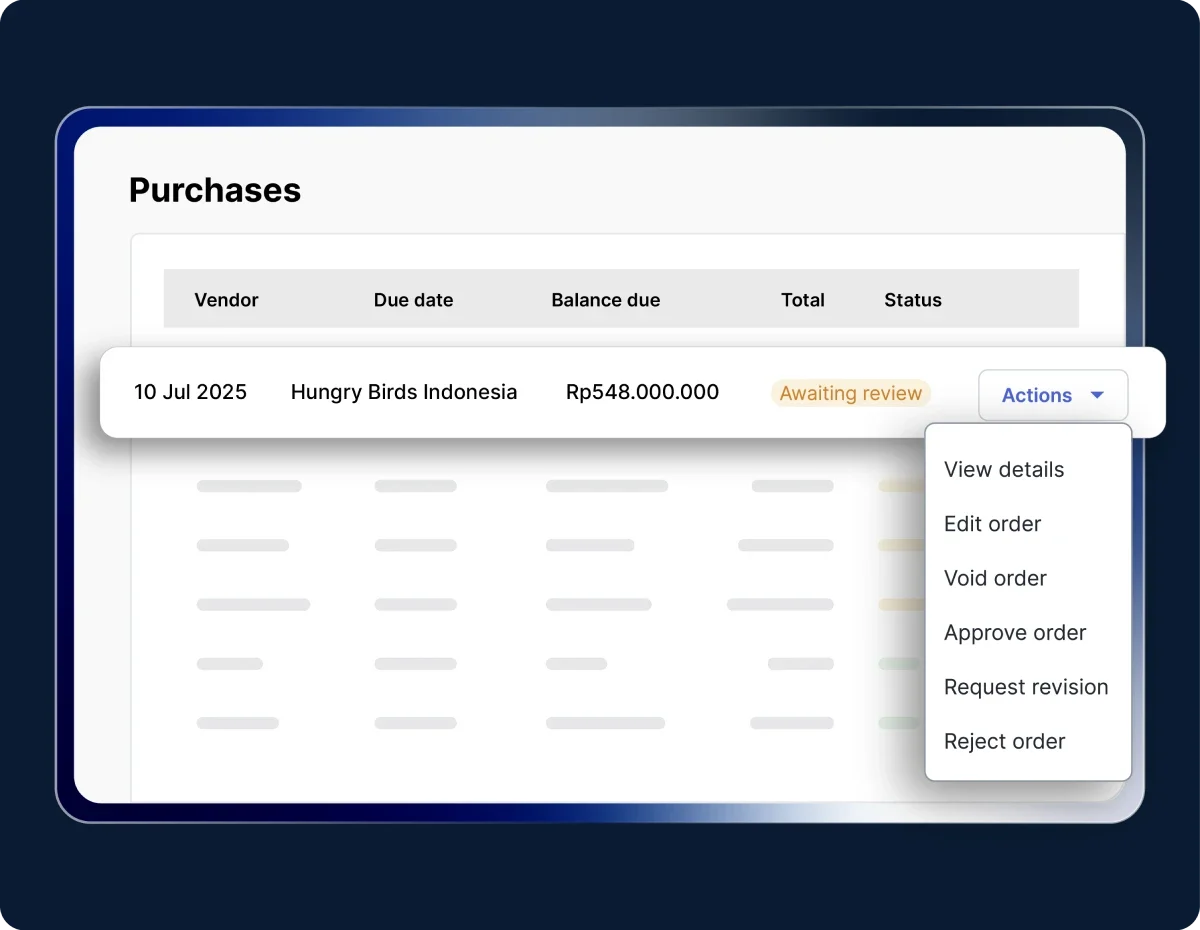
End-to-end visibility is critical in direct spend.
Digital procurement systems that track purchase orders from request to goods receipt allow teams to monitor delays, identify bottlenecks, and resolve issues proactively, before they escalate into production disruptions.
Read more: Purchase Order Automation: Complete Guide to PO Workflows
4. Conduct should-cost analysis
Should-cost analysis helps procurement teams understand the true cost structure behind the materials they purchase.
By breaking down inputs such as raw materials, labor, and overhead, companies can negotiate more effectively with suppliers using data-backed insights rather than relying solely on quoted prices.
5. Diversify the supply base
Relying on a single supplier for critical inputs creates unnecessary risk.
Maintaining a pool of qualified suppliers ensures continuity in case of disruption, while also increasing competitive tension. This became especially important after global supply chain shocks in recent years.
6. Automate approval workflows
Even in direct procurement, structured approval processes are essential.
Automating multi-level approvals ensures that every purchase aligns with budget limits, category policies, and internal authorization structures, reducing the risk of unauthorized or inefficient spending.
7. Integrate procurement with inventory management
Aligning procurement systems with inventory data in real time helps businesses strike the right balance between availability and cost.
This integration prevents stockouts that halt production, while also avoiding excess inventory that increases carrying costs.
Read more: 10 Best Inventory Invoice Software to Manage Stock and Billing
8. Leverage demand forecasting
Effective direct procurement starts with accurate demand signals.
By collaborating closely with sales and operations teams, procurement can translate forecasts and production plans into timely purchasing decisions, ensuring materials are available exactly when needed.
How technology improves direct spend management
As direct procurement becomes more complex and data-driven, technology plays a critical role in improving visibility, control, and efficiency across the entire process.
- ERP integration: Connects procurement with production planning, inventory, and financial systems, enabling end-to-end visibility across the supply chain and better coordination between teams
- AI-powered spend analytics: Analyzes large volumes of procurement data to identify price trends, supplier performance patterns, and cost-saving opportunities that are difficult to detect manually
- Automated three-way matching: Ensures that purchase orders, supplier invoices, and goods receipts are aligned before payment, helping prevent overpayments, discrepancies, and fraud
- Vendor portals: Allow suppliers to collaborate in real time on PO status, delivery schedules, and invoice submissions—reducing back-and-forth communication and delays
- OCR and AI data extraction: Automates the capture of invoice and receipt data, minimizing manual input, reducing errors, and accelerating the overall procurement cycle
Organizations that consolidate procurement into a single automated platform can reduce operating expenses by close to 20% in industries exposed to volatile input prices — giving them headroom to negotiate volume discounts that protect margins during commodity swings. (Mordor Intelligence)
How Mekari Expense supports direct spend procurement
Managing direct spend effectively requires more than just process discipline, it demands real-time visibility, strong controls, and seamless coordination across procurement, operations, and finance. This is where a unified platform like Mekari Expense becomes essential.
Mekari Expense is designed to support Indonesian businesses with end-to-end procurement and spend management capabilities, helping teams gain full control over the entire lifecycle, from purchase requests to payment and reconciliation.
Key capabilities include:
- Purchase order management: Create and manage digital POs with complete details (vendor, product, quantity, pricing, warehouse) while tracking status in real time through a centralized dashboard
- Automated multi-level approval: Ensure every purchase aligns with company policies and budget controls through configurable approval workflows
- Vendor management: Maintain a centralized, verified vendor database to prevent unauthorized transactions and standardize supplier selection
- Product and warehouse management: Integrate product catalogs and warehouse data directly into procurement workflows for accurate inventory tracking
- Three-way matching: Automatically match POs, invoices, and goods receipts to prevent discrepancies and ensure payments are only made for verified deliveries
- Accounting integration: Sync procurement data seamlessly with Mekari Jurnal for real-time financial reporting and easier reconciliation
- Multi-branch support: Monitor procurement activities across multiple locations and warehouses within a single, unified system
By combining automation, visibility, and control in one platform, Mekari Expense helps businesses reduce risk, improve efficiency, and optimize direct spend at scale.
References
GEP. ‘’Direct vs. Indirect Spend: Key Differences Explained’’
Sievo. ‘’Key Differences Between Direct and Indirect Spend Management’’
Sourceday. ‘’Direct Spend Procurement: Best Practices for Manufacturers’’
FAQ
1. What is direct spend in procurement?
1. What is direct spend in procurement?
Direct spend refers to the purchasing of raw materials, components, and goods that are directly used to manufacture or deliver a company’s products. It is tied to Cost of Goods Sold (COGS) and is critical to production continuity, product quality, and revenue.
2. What is the difference between direct spend and indirect spend?
2. What is the difference between direct spend and indirect spend?
Direct spend covers inputs that become part of the final product, such as raw materials and components, and directly affects gross margin. Indirect spend covers operational support items like office supplies, IT services, and facilities, which affect operating expenses but are not embedded in the product itself.
3. Why is direct spend procurement considered high-risk?
3. Why is direct spend procurement considered high-risk?
Direct spend is high-risk because disruptions, whether from supplier failures, geopolitical instability, commodity price swings, or limited visibility, directly impact production schedules and revenue. Unlike indirect spend, there is little buffer: a delayed shipment of critical materials can shut down an entire production line.
4. What are the best practices for managing direct spend?
4. What are the best practices for managing direct spend?
Key best practices include centralizing procurement, building strategic long-term supplier relationships, diversifying the supply base to reduce concentration risk, implementing real-time PO tracking, integrating procurement with inventory management, and leveraging demand forecasting to align purchasing with production plans.
5. How does technology help with direct spend management?
5. How does technology help with direct spend management?
Technology improves direct spend management by enabling end-to-end visibility through ERP integration, using AI-powered analytics to detect price trends and supplier performance issues, automating three-way matching to prevent overpayments, and connecting suppliers through vendor portals for real-time collaboration on orders and deliveries.