





CPG Tail Spend Management: Strategies to Stop Margin Leaks


Mekari Insight
- Tail spend may seem small individually, but in CPG it represents up to 10–20% of total procurement spend and can silently erode margins by 5–15% if left unmanaged
- The complexity of CPG operations, from multi-SKU production to cross-regional purchasing, makes tail spend harder to track, increasing risks in visibility, compliance, and vendor management
- To truly control tail spend at scale, companies need a spend management system like Mekari Expense that combines real-time visibility, automated controls, and flexible payment tools in one platform
CPG companies operate on tight, often single-digit margins, where even small inefficiencies can significantly impact profitability. One of the most overlooked sources of margin leakage is tail spend: low-value, decentralized purchases that can account for 10–20% of total procurement spend.
Despite their size, these transactions often go unmanaged, leading to 5–15% higher costs due to poor supplier consolidation, while studies show they can reduce margins by up to 10–15%. This article breaks down what CPG tail spend is, why it matters, the challenges behind it, and practical strategies to bring it under control.

What is CPG tail spend?

CPG tail spend refers to low-value, decentralized procurement expenses that fall outside a company’s core negotiated contracts. These are typically ad hoc or incidental purchases that are not centrally managed, such as:
- Packaging materials and last-minute production needs
- MRO (maintenance, repair, and operations) items
- Marketing giveaways and promotional materials
- Event-related expenses
- One-off IT purchases or tools
- Occasional vendor or service engagements
In procurement, this aligns with the 80/20 rule, where a small portion of spend value can generate the majority of transactions. This “long tail” is often unmanaged and prone to inefficiencies.
The issue is amplified in CPG due to complex operations, with thousands of SKUs across regions requiring frequent small purchases that are hard to track and consolidate.
To put it simply, there is a clear distinction between:
- Strategic spend: High-value, contract-based, and tightly managed with strong visibility
- Tail spend: Low-value, reactive, scattered across teams, and often lacking control
Without proper management, this bottom layer of spend can quietly erode margins while remaining largely unnoticed.
Read more: 10 Tail Spend Management Software to Control Small Spend
Why CPG tail spend management is critical
Managing tail spend is not just a procurement concern. It directly impacts profitability, risk, and operational efficiency across CPG organizations.
- Margin protection: CPG companies operate on thin margins, so unmanaged tail spend with a 5–15% cost premium can quickly compound into millions in losses at scale. According to a 2024 Boston Consulting Group study, organizations can realize 5% to 10% cost savings by actively managing tail spend.
- Supplier risk: Organizations may manage between 5,000 to 30,000 tail spend suppliers, creating fragmented vendor bases that increase exposure to compliance issues, fraud, and poor oversight. According to Deloitte’s CPO Survey, 65% of procurement leaders have limited or no spend visibility beyond their Tier 1 suppliers, meaning the majority of tail vendor relationships operate largely blind
- Compliance and ESG exposure: Unmonitored tail vendors are harder to assess against ESG standards, labor practices, and regulatory requirements, which are increasingly critical for CPG brands
- Procurement bandwidth: When teams are tied up processing low-value transactions, they have less capacity to focus on strategic sourcing and cost optimization
- Innovation signal: Structured tail spend analysis can reveal new suppliers, emerging capabilities, and unmet internal needs that inform better sourcing strategies
Common tail spend sources in CPG companies
Tail spend in CPG often comes from everyday operational needs that are fragmented across teams and difficult to centralize. Common sources include:
- Indirect spend categories: Office supplies, IT services and SaaS tools, professional consulting, and one-off upgrades that are typically purchased outside core contracts
- Marketing and promotion spend: Trade shows or campaigns often trigger multiple small expenses such as travel, signage, swag, and accommodation, which individually seem minor but add up quickly
- Limited-edition packaging and SKUs: Short production runs with tight timelines often result in higher per-unit costs, especially when sourcing is rushed or not consolidated
- MRO purchasing: Maintenance, repair, and operations supplies bought by different departments without centralized procurement, leading to duplicate vendors and inconsistent pricing
- Last-minute procurement: Urgent and unplanned purchases made outside formal processes, common in CPG due to seasonal demand and rapid market changes
Key challenges in managing CPG tail spend
Managing tail spend in CPG is difficult not because of its size, but because of how fragmented and unstructured it is across the organization.
- Lack of visibility: Tail spend is spread across departments, systems, and regions, making it difficult to track or control without centralized tools
- Data quality issues: Tail spend data is often inconsistent, duplicated, or poorly categorized, limiting accurate analysis and decision-making
- Vendor proliferation: Managing thousands of small vendors creates significant onboarding and administrative overhead, often outweighing the value of the transactions themselves
- Maverick spending: Employees frequently bypass procurement processes for speed, resulting in off-policy purchases that weaken supplier agreements and cost control
- Limited procurement ownership: Tail spend categories often lack clear internal ownership, with procurement teams receiving limited support to manage indirect or low-value spend effectively
Strategies to manage CPG tail spend effectively
To effectively control tail spend in a complex CPG environment, companies need a structured approach that combines visibility, process discipline, and the right use of technology. Here are the key strategies to implement CPG tail spend optimization:
1. Gain spend visibility first
The biggest barrier in managing tail spend is the lack of a unified view. CPG companies often have data scattered across ERP systems, expense tools, spreadsheets, and even emails.
Implementing spend analytics that consolidates all purchasing data into one dashboard is the first critical step. Without this, identifying inefficiencies or leakages is nearly impossible.
Read more: Spend Visibility: Why Blind Spots Cost You Millions
2. Classify and categorize spend
Raw data alone is not enough. Tail spend must be cleaned, standardized, and categorized using frameworks such as UNSPSC or NAICS.
This helps procurement teams identify duplicate vendors, fragmented purchasing patterns, and categories with consolidation potential. Proper classification turns scattered transactions into actionable insights.
Read more: What is Spend Management & How it Helps Company
3. Consolidate suppliers
Tail spend often involves too many vendors supplying similar goods or services. By identifying frequently purchased items and consolidating them under preferred supplier agreements, companies can improve pricing consistency, reduce administrative workload, and strengthen negotiation leverage.
4. Implement guided buying
Employees often bypass procurement because it feels slow or complex.
Guided buying solves this by providing user-friendly purchasing portals or catalogs that automatically direct users to approved vendors and pre-negotiated pricing. This reduces maverick spend while maintaining speed and convenience for business users.
5. Use purchasing cards (P-cards) strategically
Not all purchases require a full procurement cycle. For low-value, high-frequency transactions, P-cards offer a controlled alternative.
When configured with spending limits, merchant category restrictions, and real-time tracking, they enable faster purchasing without sacrificing control or visibility.
6. Automate approval workflows
Manual approvals slow down procurement and create bottlenecks. Automated workflows ensure that every purchase follows company policy while remaining efficient.
For example, small transactions can be auto-approved, while higher-risk or off-policy purchases are flagged for review. This balances control with operational agility.
7. Standardize before automating
Automation is only effective when the underlying process is consistent. If procurement workflows are unclear or vary across departments, automation will only scale inefficiencies.
Standardizing policies, approval structures, and vendor onboarding processes should come first.
8. Review and refine regularly
Tail spend is not static. It evolves with new products, campaigns, and operational needs.
Regular reviews, whether quarterly or semi-annual, help companies reassess vendor performance, identify new savings opportunities, and ensure ongoing compliance with procurement policies.
How Mekari Expense helps CPG companies control tail spend
Managing tail spend effectively requires more than policy enforcement. It requires a system that brings visibility, control, and flexibility into one workflow.
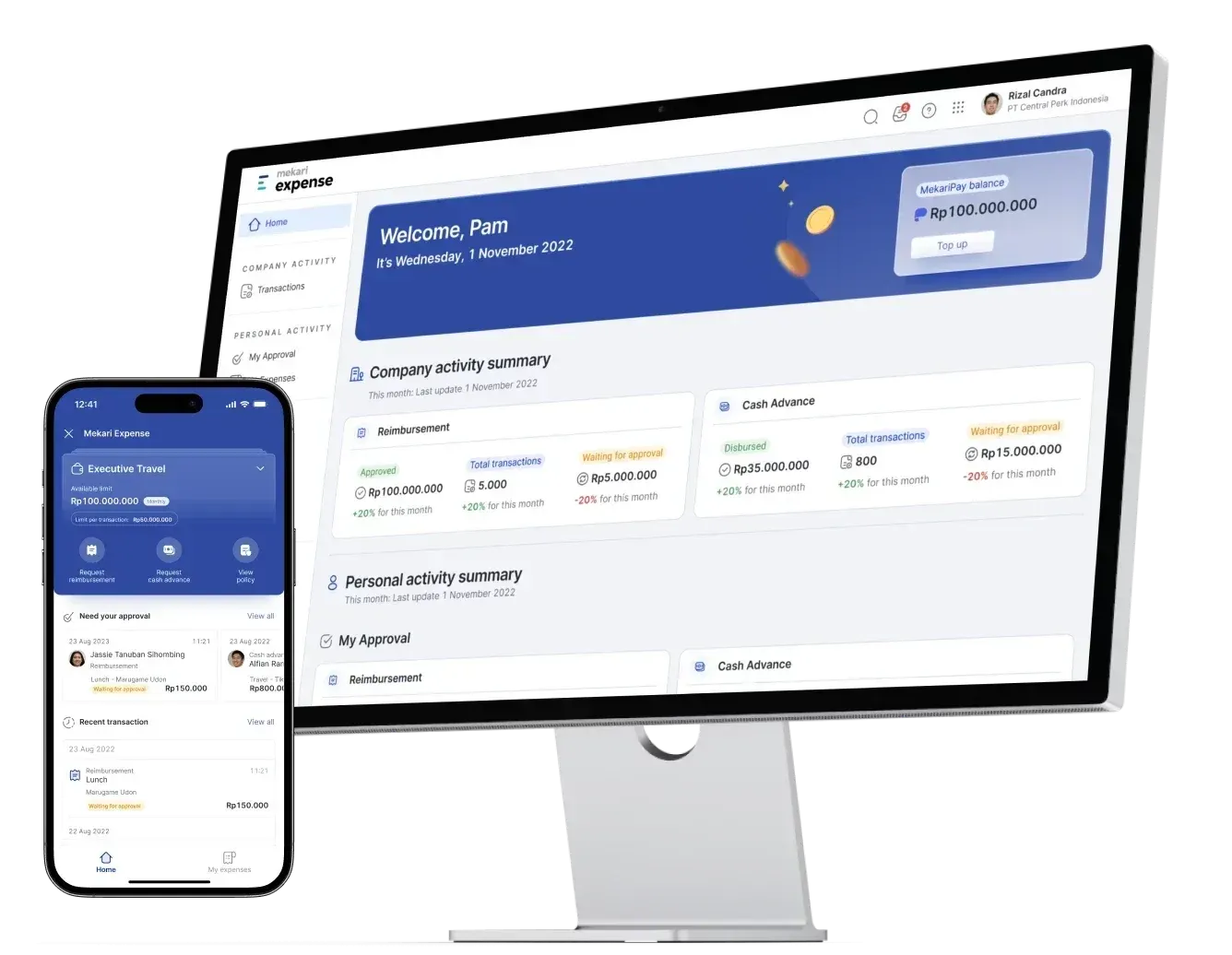
Mekari Expense is a comprehensive spend management platform trusted by 35,000+ businesses across Southeast Asia, built to support the operational complexity of CPG and retail companies in Indonesia.
Mekari Expense addresses the core challenges of CPG tail spend through:
- Spend visibility: A real-time dashboard consolidates all procurement activity, from purchase requests and POs to corporate card transactions, giving Finance and procurement teams full visibility across departments
- Vendor management: A centralized vendor database with verified, pending, and unverified statuses helps prevent transactions with unauthorized or unapproved suppliers
- Approval automation: Every purchase, regardless of value, flows through configurable multi-level approval workflows aligned with company structure and internal policies
- Mekari Limitless Card: Virtual and physical corporate cards with customizable limits, category restrictions, and real-time alerts. This makes it easier to control ad hoc tail spend across marketing, MRO, and operational needs
- Purchase request and PO integration: Digitizes the full procurement process from request to payment, reducing off-process and maverick purchases
- Seamless accounting integration: Direct integration with Mekari Jurnal enables automatic reconciliation, eliminates manual input, and ensures accurate financial records
With a unified system in place, CPG companies can shift from reactive tail spend control to proactive cost optimization and governance.
Explore how Mekari Expense can help your business take control of tail spend.
References
Boston Consulting Group. ‘’Taming Tail Spend’’
Concentric. ‘’Assessing the True Cost of Tail Spend’’
FAQ
1. What is considered tail spend in CPG companies?
1. What is considered tail spend in CPG companies?
Tail spend includes low-value, ad hoc purchases outside core supplier contracts, such as MRO items, marketing materials, packaging needs, and one-off services that are typically decentralized across departments
2. What are the main ways to do CPG tail spend optimization?
2. What are the main ways to do CPG tail spend optimization?
The most effective approach combines supplier consolidation, better buying channels, and process automation. This means reducing the number of suppliers in low-value categories, directing employees to use pre-approved catalogues or purchasing cards instead of creating new purchase orders, and automating approvals for routine low-value buys.
3. How much can companies save by managing tail spend?
3. How much can companies save by managing tail spend?
Studies show companies can reduce costs by 5–15% by improving visibility, consolidating suppliers, and enforcing procurement controls across tail spend categories
4. What is the difference between tail spend and strategic spend?
4. What is the difference between tail spend and strategic spend?
Strategic spend is high-value, contract-based, and actively managed, while tail spend is low-value, reactive, and often lacks visibility and control
5. What tools help manage tail spend effectively?
5. What tools help manage tail spend effectively?
Spend management platforms that offer real-time visibility, automated approvals, vendor controls, and integrated payment methods are key to managing tail spend efficiently at scale