





TPRM Framework Guide: Build a Stronger Vendor Risk Program

Mekari Insight
- 35.5% of all breaches in 2024 originated via third-party vendors, with average remediation costs reaching $4.8 million per incident (SecurityScorecard 2025).
- A structured TPRM framework covering tiered vendor assessment, contract controls, and continuous monitoring reduces exposure at every stage of the vendor lifecycle.
- Mekari Expense Procurement embeds vendor verification, approval controls, and risk management directly into the procurement process, ensuring every purchase and payment follows the required governance workflow.
More than one in three data breaches in 2024 originated through third-party vendors, up 6.5 percentage points from 2023, with average remediation costs reaching $4.8 million per incident, according to the SecurityScorecard 2025 Global Third-Party Breach Report.
Yet many procurement teams still manage vendor risk through emails and spreadsheets.
This guide explains the TPRM framework, its growing importance in 2026, the seven-step lifecycle used by leading organizations, and how to embed risk management into procurement workflows.

What is a TPRM framework?
Third-Party Risk Management (TPRM) is the structured process of identifying, assessing, and continuously monitoring risks introduced by vendors, suppliers, contractors, and other third parties.
A TPRM framework provides consistency through standardized assessments, clear ownership, and repeatable processes that can scale as vendor networks grow.
Key aspects of a TPRM framework include:
- Standardized risk assessments and review processes
- Defined ownership across procurement, IT, legal, and compliance teams
- Continuous monitoring of vendor risks throughout the relationship lifecycle
- Visibility into third-party, fourth-party, and fifth-party dependencies
- Consistent documentation, reporting, and governance
Without a formal framework, organizations often rely on ad hoc questionnaires, inconsistent reviews, and siloed decision-making.
While vendor management focuses on supplier performance, delivery, quality, and service levels, TPRM focuses on risk exposure, including cybersecurity, financial stability, regulatory compliance, and operational resilience.
Statistic
The need for TPRM continues to grow as risks extend beyond direct vendors. Nearly 49% of organizations experienced a third-party cyber incident in the past year, highlighting the importance of monitoring not only vendors but also their downstream dependencies (Venminder’s 2025 State of TPRM Survey).
Why your organization needs a TPRM framework in 2026
A structured TPRM framework is no longer optional. As organizations become more dependent on third-party vendors, the risks associated with those relationships continue to grow.
Key drivers include:
- Rising vendor-related risks
Cybersecurity incidents, operational disruptions, and financial losses increasingly originate from third-party relationships, making proactive risk management essential. - Stricter regulatory requirements
New regulations now require organizations to document, assess, monitor, and report third-party risks as part of their compliance obligations. - Growing vendor ecosystems
Businesses rely on more vendors than ever before, making it difficult to maintain consistent oversight without a standardized framework. - Emerging AI-driven threats
AI is creating new risks, from vendor impersonation and fraud to more sophisticated supply chain attacks, requiring stronger controls and continuous monitoring.
Statistic
Gartner reports that 84% of businesses experienced operational disruptions from a third-party risk miss, and 33% faced regulatory action as a direct result. (Gatekeeper, citing Gartner data)
Core components of a TPRM framework
A TPRM framework is not a single tool or document. It is a set of interconnected components that work across the full vendor lifecycle. The table below contrasts a manual approach with a framework-driven one:
| Component | Manual / Ad-hoc | Framework-driven |
| Vendor inventory | Spreadsheets, often incomplete | Centralized, auto-updated registry |
| Risk assessment | Inconsistent questionnaires | Standardized, tiered by criticality |
| Due diligence | One-time, pre-contract only | Continuous across vendor lifecycle |
| Approval workflow | Email chains, no audit trail | Structured multi-level approvals |
| Monitoring | Reactive (post-incident) | Continuous, real-time alerts |
| Offboarding | Informal, often skipped | Documented, data-access revocation |
| Reporting | Manual, periodic | Automated dashboards, board-ready |
Organizations commonly benchmark their frameworks against ISO 31000 for enterprise risk management principles, NIST SP 800-161r1 for supply chain cybersecurity, and DORA for ICT-specific requirements in regulated industries.
The SIG and SIG Lite questionnaires from Shared Assessments serve as widely adopted vendor assessment tools across sectors.
The 7-step TPRM framework lifecycle
A well-designed TPRM framework provides that structure by ensuring risks are identified, assessed, monitored, and addressed at every stage.
Step 1: Vendor identification and inventory
Create a complete inventory of all third parties your organization relies on, including suppliers, service providers, contractors, and critical subcontractors. Effective risk management starts with full visibility.
Read more: Vendor Verification: Process, Checklist & Software Guide
Step 2: Risk categorization and tiering
Classify vendors based on factors such as data access, business criticality, and financial impact. This helps prioritize oversight and allocate resources where risks are highest.
Read more: Vendor Risk Management: Checklist and Implementation
Step 3: Due diligence and risk assessment
Assess vendors before onboarding across key areas such as cybersecurity, financial stability, compliance, operational resilience, and ESG practices. Use standardized assessments to ensure consistency.
Step 4: Contract controls and SLA definition
Include risk controls in vendor contracts, such as security requirements, audit rights, breach notification obligations, and service level agreements (SLAs) with clear performance expectations.
Step 5: Onboarding with risk-based approvals
Apply approval workflows based on vendor risk levels. Higher-risk vendors should undergo additional reviews and verification before gaining access to systems, data, or payment processes.
Read more: Vendor Onboarding Process: A Complete Guide for Businesses
Step 6: Continuous monitoring and performance review
Monitor vendors throughout the relationship by tracking performance, compliance, security posture, and emerging risks. Ongoing oversight helps identify issues before they become major incidents.
Step 7: Offboarding and exit management
When a vendor relationship ends, revoke system access, secure or delete shared data, terminate agreements, and document the offboarding process to reduce residual risk.
Common TPRM mistakes that create hidden exposure
Even organizations with a written TPRM policy frequently make the following errors:
- Treating TPRM as a compliance checkbox. Assessments completed only at onboarding, then filed until renewal, create a false sense of control. Risk is dynamic; a vendor that was low-risk last year may not be today.
- No risk tiering. Applying the same deep questionnaire to every vendor exhausts assessment resources and slows strategic vendor onboarding.
- Excluding procurement from the process. TPRM that lives exclusively in IT security or legal misses the primary control point. Procurement teams select vendors before contracts are signed and are the first line of defense.
- No fourth-party visibility. Supply chain attacks increasingly originate from sub-vendors, not direct suppliers. Nearly 33% of procurement managers reported an increase in cyberattacks targeting their supply chains in 2025, many originating from this tier.
- Spreadsheet-based tracking at scale. Organizations managing 100 or more vendors on spreadsheets face exponentially growing risk. TPRM tools deliver measurable ROI within 12 to 18 months for organizations that reach that vendor threshold.
Read more: Top 6 Vendor Verification Software for Fraud Prevention
How Mekari Expense supports your TPRM framework
TPRM frameworks fail in practice when procurement workflows remain disconnected from risk decisions. Purchase requests get approved, vendors get paid, and POs get issued before risk verification is complete.
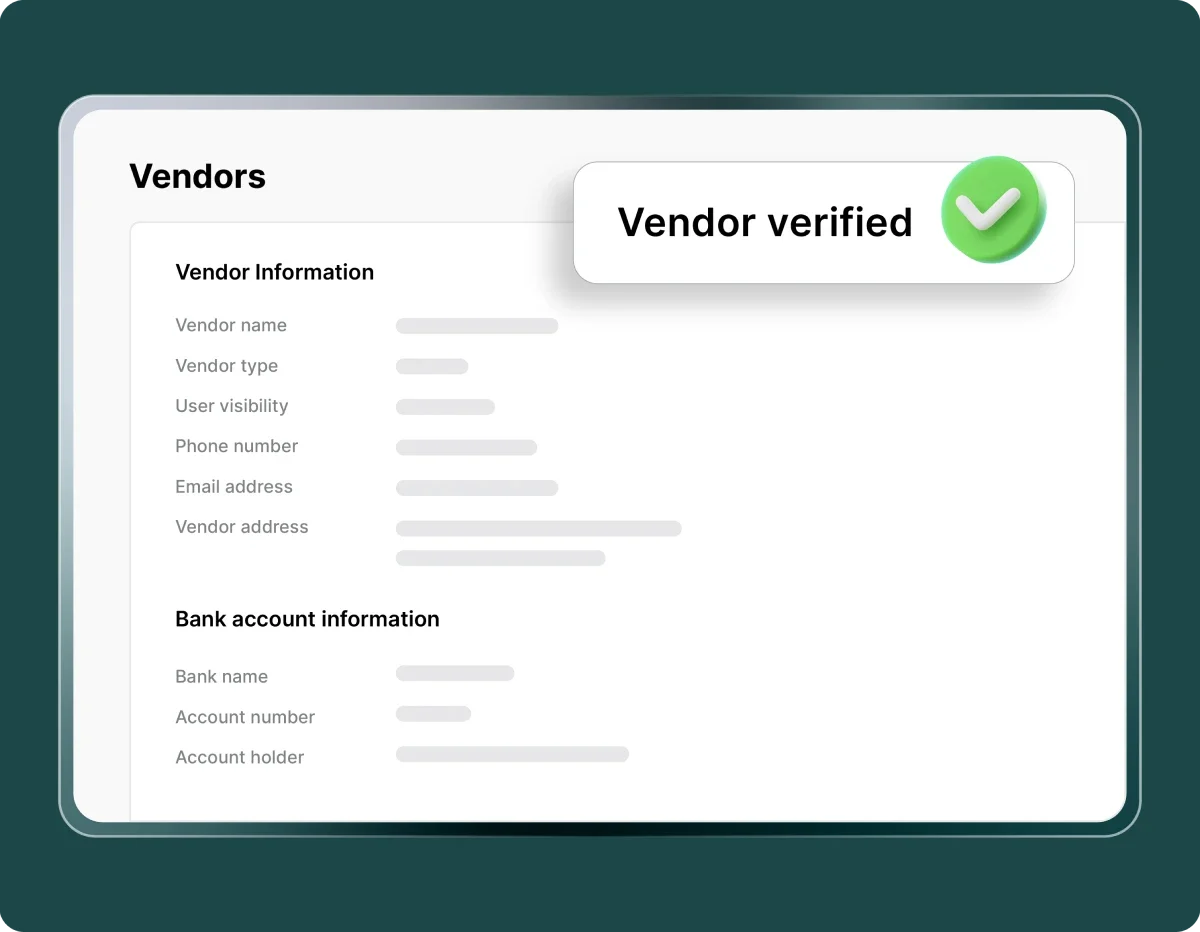
Mekari Expense procurement module closes that gap by embedding vendor controls directly into your procurement process, from the first purchase request to the final payment.
- Vendor verification workflow: Mekari Expense Vendor Portal approves vendors based on verification status before they can receive purchase orders or payments, with configurable approval flows.
- Automated purchase approvals: Route purchase requests through predefined approval hierarchies to ensure compliance before vendor engagement.
- Centralized vendor data: Maintain a single source of truth for vendor records, pricing, and products to prevent duplicate vendors and unauthorized spending.
- OCR-powered invoice processing: Automatically extract and record invoice data from vendor-submitted PDFs, reducing manual work and errors.
- Real-time spend visibility: Track spending by vendor, department, branch, or project while enforcing procurement policies automatically.
- Integrated accounts payable: Manage procurement and vendor payments in one system with complete transaction history and audit trails.
Ready to bring structure and visibility to your vendor relationships? Mekari Expense puts your procurement process in control: from vendor verification to PO issuance to payment, in one integrated platform.
FAQ
1. What is a TPRM framework?
1. What is a TPRM framework?
A TPRM (Third-Party Risk Management) framework is a structured, repeatable process for identifying, assessing, and continuously monitoring risks introduced by external vendors, suppliers, and service providers. It defines roles, risk tiers, assessment criteria, contract controls, and monitoring cadence, giving risk, procurement, legal, and security teams a shared operating model rather than ad-hoc processes.
2. What is the difference between TPRM and vendor management?
2. What is the difference between TPRM and vendor management?
Vendor management focuses on relationship performance: delivery quality, SLA compliance, pricing, and communication. TPRM focuses on risk exposure: what could go wrong if a vendor is breached, fails financially, or violates regulatory requirements. A mature program needs both: vendor management for day-to-day operations, TPRM for resilience and regulatory defensibility.
3. What are the key steps in a TPRM framework?
3. What are the key steps in a TPRM framework?
The core lifecycle covers seven steps: vendor identification and inventory, risk categorization and tiering, due diligence and risk assessment, contract controls and SLA definition, risk-based onboarding with approval workflows, continuous monitoring and performance review, and documented offboarding and exit management.
4. How does risk tiering work in a TPRM framework?
4. How does risk tiering work in a TPRM framework?
Risk tiering categorizes vendors by their inherent risk level: typically critical, significant, and low. Tiering ensures assessment effort is proportionate. Leading organizations allocate roughly 70% of their assessment resources to the top 15% of vendors by risk exposure, avoiding the waste of applying deep due diligence to every supplier regardless of their actual impact.
5. How does procurement software support a TPRM framework?
5. How does procurement software support a TPRM framework?
Procurement software operationalizes TPRM controls inside day-to-day purchasing workflows. Features like vendor verification status gates, multi-level approval automation, centralized vendor records, automated invoice processing, and real-time spend monitoring ensure no vendor advances or gets paid before clearing the appropriate risk controls. Mekari Expense integrates these controls across the full procurement lifecycle, from purchase request to payment.