

10 mins read

Top 6 Vendor Verification Software for Fraud Prevention

mekari expense vendor verification software featured image (1)

Mekari Insight

  • Unverified vendors are a leading cause of procurement fraud, duplicate payments, and compliance gaps.
  • Choose strict full onboarding or fast lightweight pre-approval, without sacrificing control.
  • Mekari Expense embeds vendor review directly into the Purchase Quote flow, with up to 10 approval layers.

A large share of procurement fraud cases share one root cause: a vendor that was never properly checked before a purchase order went out. Once a payment is made to a duplicate, blacklisted, or fraudulent vendor, recovering the funds is difficult and the compliance damage is done.

Most finance and procurement teams still rely on email threads and shared folders to collect vendor documents, with no structured approval gate before purchasing begins. Vendor verification software closes that gap by validating a vendor’s legal, tax, and banking information through a defined workflow, before they enter your purchasing process.

This guide breaks down what vendor verification software does, what to look for when choosing one, and a list of platforms worth considering in 2026, including how Mekari Expense’s procurement module handles vendor review from the inside out.

What is vendor verification software

Vendor verification software is a system that checks a vendor’s legal, tax, and financial documents against your company’s requirements, then routes that vendor through an approval workflow before they can be used in a transaction.

Older approaches relied on collecting PDFs by email and checking them manually. Modern platforms validate documents against compliance databases and apply structured checks such as tax ID matching, sanctions screening, and bank account ownership confirmation, reducing the time and error rate of manual review.

Statistic

Manual vendor onboarding typically takes 2–4 weeks and is prone to errors that can cost companies up to 8% of annual revenue through compliance failures, duplicate payments, and delayed approvals. This supports the paragraph about older email-and-PDF approaches being slow and error-prone. (Zapro)

The risk of skipping this step is concrete. Without a verification gate, companies face duplicate vendor records, vendors operating without valid legal documentation, and in worse cases, blacklisted entities slipping into active use.

Statistic

Manual vendor onboarding costs more than $35,000 per supplier, while automated onboarding brings that figure below $2,500. This quantifies the cost gap between manual and automated processes. (Technologymatch)

What to look for in a vendor verification platform

According to the PwC Global Economic Crime Survey 2024, procurement fraud ranks among the top three most disruptive economic crimes globally over the past two years, following only cybercrime and corruption. This reinforces why the buying criteria matter — the threat is mainstream, not edge-case.

However, not every vendor management tool offers true verification. When evaluating a platform, look for the following:

  • Configurable document checklists. The system should let you define which documents are required, such as business registration, tax certificates, bank account proof, and signed agreements, based on vendor type or risk level.
  • Multi-layer approval workflows. Vendor approval often involves more than one reviewer. Look for support for sequential approval layers and backup approvers, so the process doesn’t stall when one person is unavailable.
  • Clear status tracking. Vendors should move through visible stages, such as draft, under review, approved, needs revision, or rejected, with reasoning recorded at each step for audit purposes.
  • Integration with the purchasing flow. Verification that sits in a separate tool is easy to skip. The strongest setups trigger vendor review automatically when a new vendor is added during a purchase request.
  • Flexibility between strict and fast modes. Some purchases need full onboarding before anything proceeds. Others need quick sourcing with a lighter pre-check, followed by full onboarding later. A good platform supports both.

Top vendor verification software to consider in 2026

Here are six platforms worth evaluating, depending on your company’s size, region, and how tightly you need verification tied to your purchasing process.

1. Tipalti

Tipalti is a cloud-based accounts payable and supplier management platform built for finance teams running high-volume, cross-border payment operations. 

Its vendor verification layer is centered on onboarding accuracy and payment compliance — validating vendor data at the point of payment setup and enforcing regulatory requirements automatically, rather than covering the broader procurement flow.

Key features:

  • Self-service vendor portal for data entry and document submission
  • Automated W-9, W-8BEN, and VAT form collection with embedded validation
  • OFAC and international sanctions screening against global watchlists
  • Bank account verification and payment method validation before disbursement
  • Duplicate vendor detection and TIN/EIN matching
  • 1099 and 1042-S year-end tax reporting automation
  • Timestamped audit trail of all verification decisions

The main limitation is that its verification tooling is tightly coupled to the payment module. Companies seeking procurement-side vendor vetting before a PO is issued will find its coverage limited outside the AP context.

Best for: Finance and AP teams at mid-to-large companies managing international suppliers, high payment volumes, and multi-currency tax compliance.

2. Mekari Expense

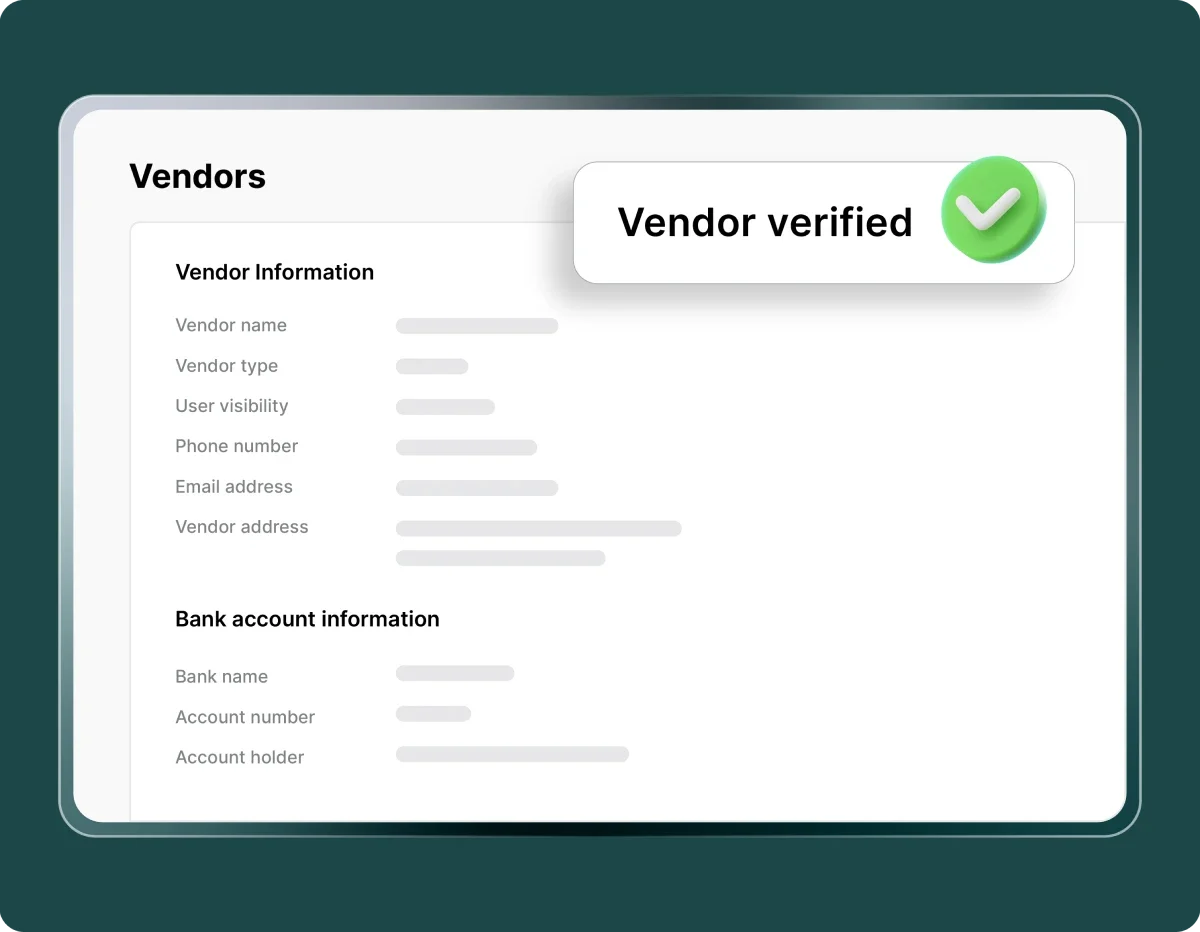
Lencana "Vendor verified" bertanda centang hijau menunjukkan penjual terverifikasi, muncul di sudut antarmuka profil vendor yang menampilkan informasi kontak, alamat, dan data rekening bank.

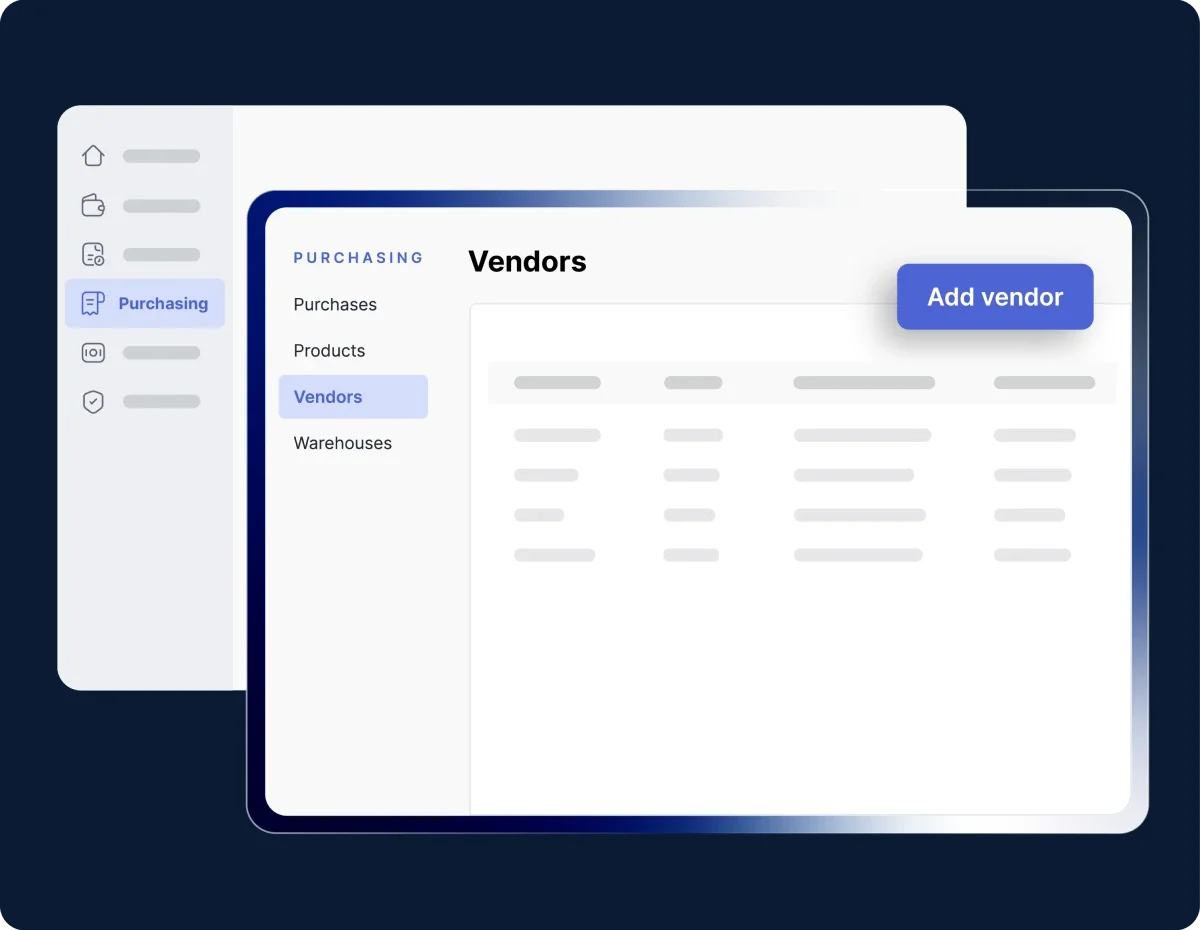
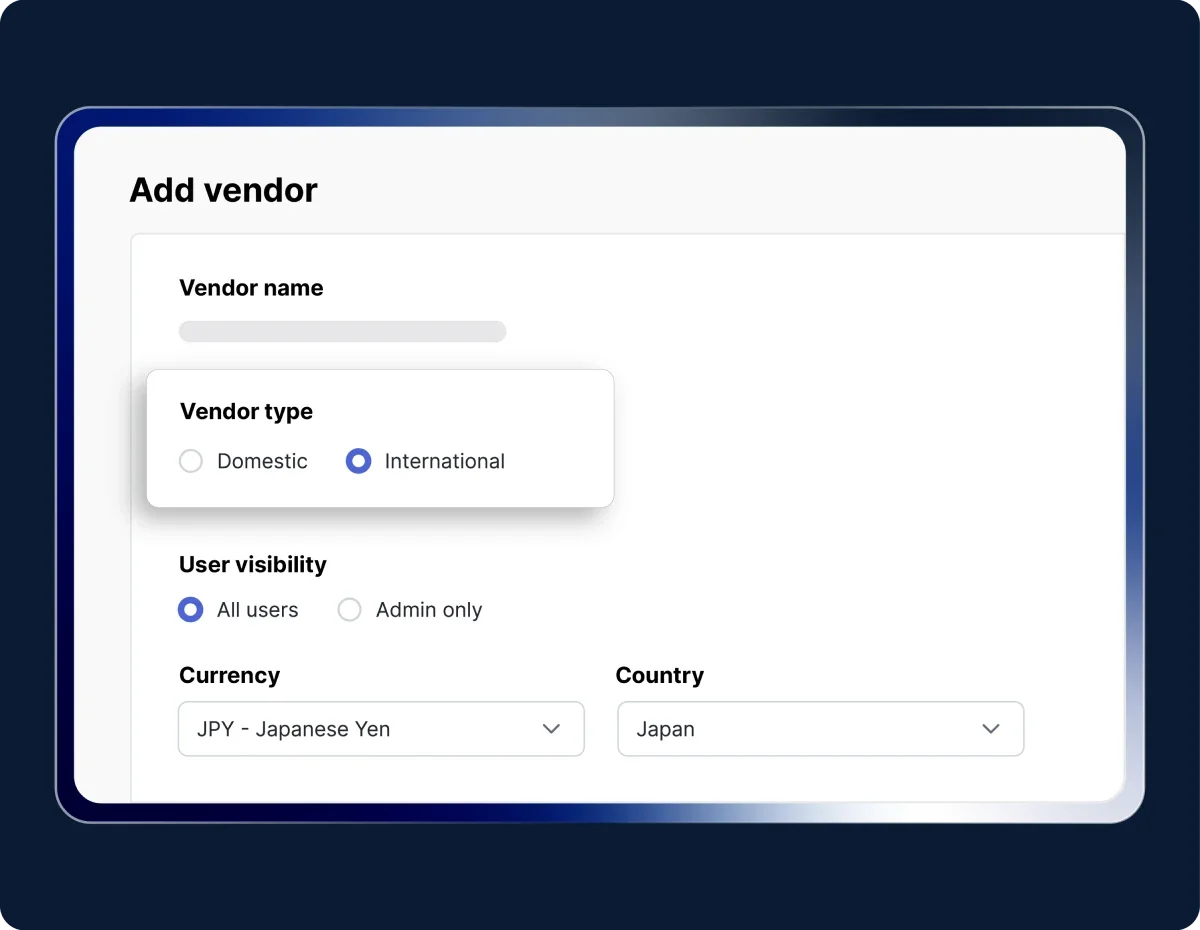
Mekari Expense is an Indonesia-based spend management platform that embeds vendor verification directly inside its procurement module, eliminating the need for a separate verification tool. 

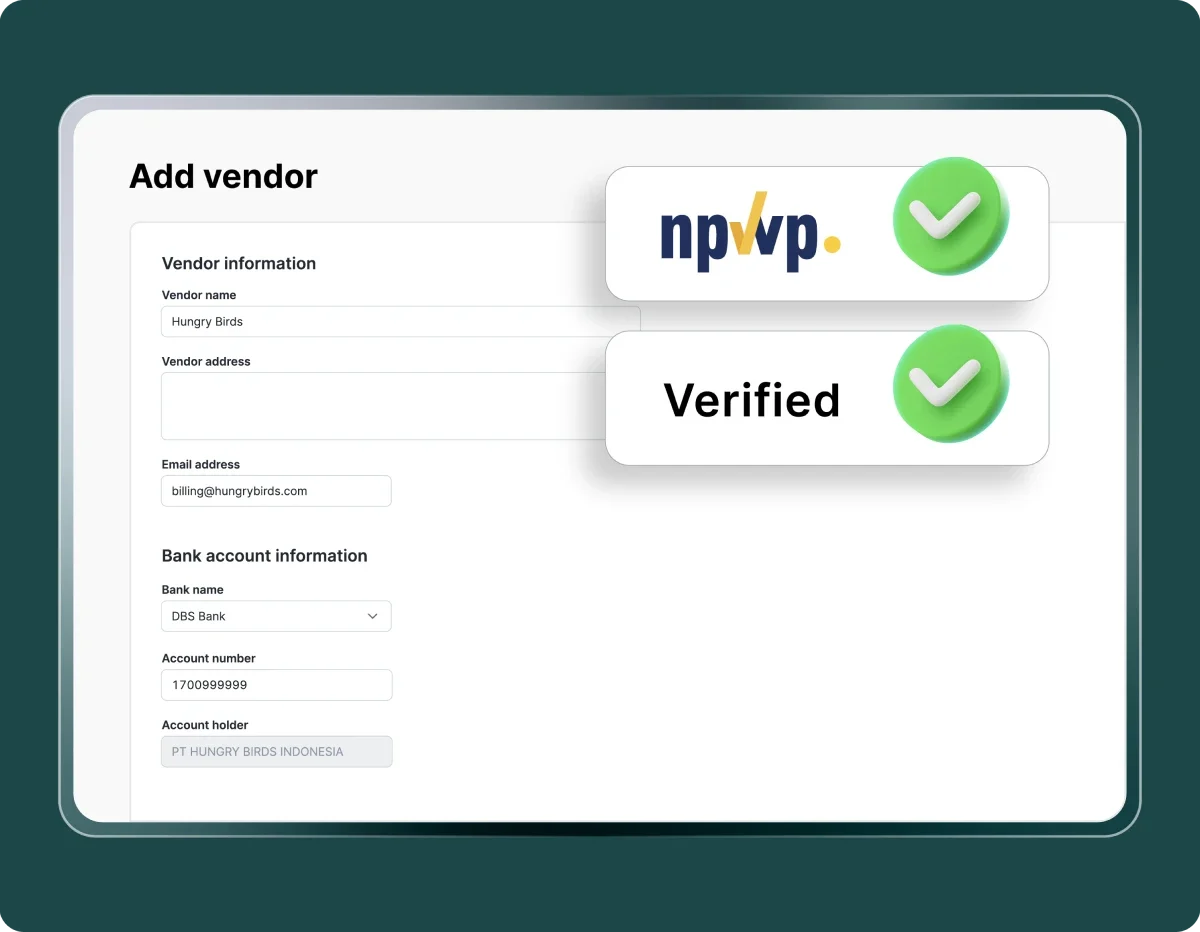
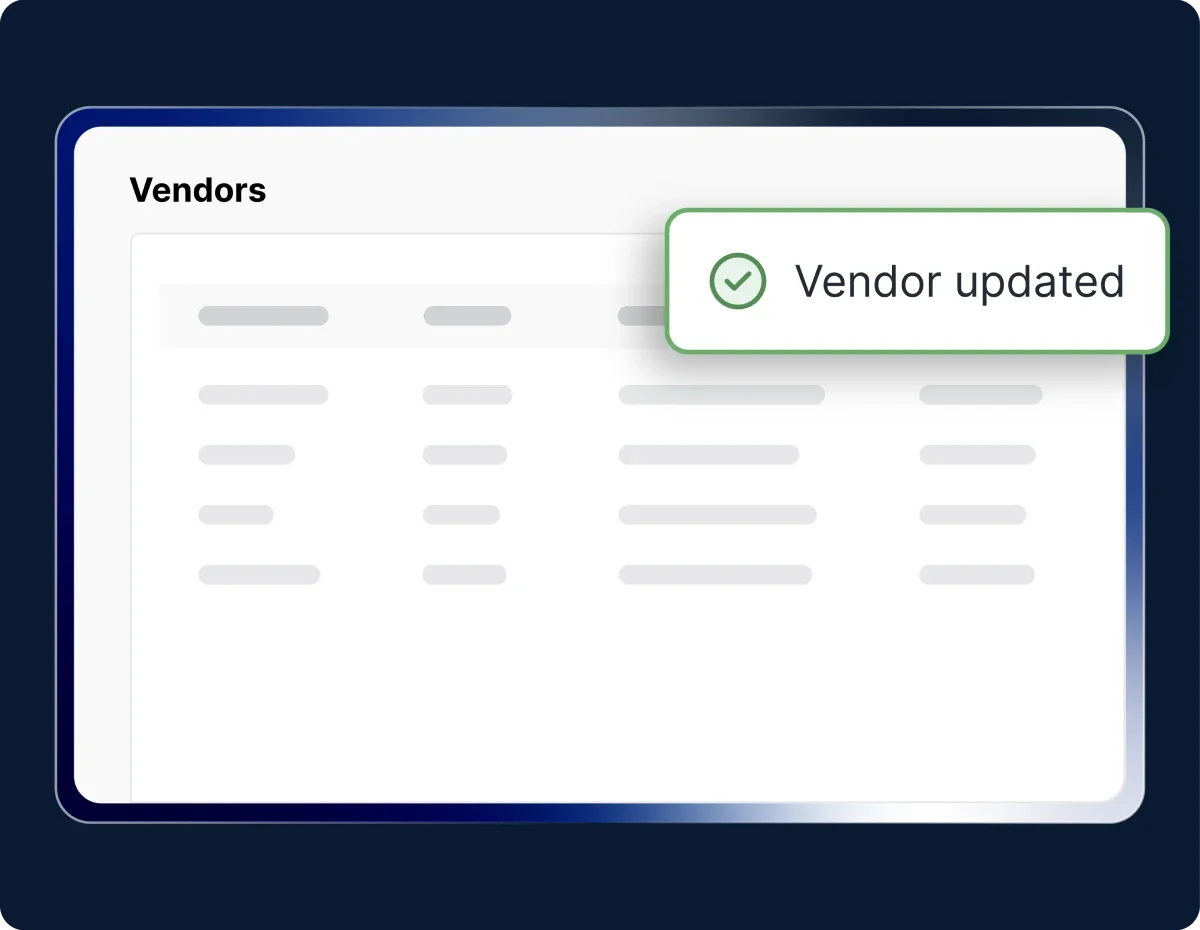
When a Procurement Officer creates a Purchase Quote and adds a new vendor, a review workflow triggers automatically. Vendors move through a structured status flow — Draft → Awaiting Review → Approved, Awaiting Revision, or Rejected — with each decision recorded with reasoning.

Key features:

  • Ensures every vendor used in a transaction has been validated for documents and legal standing before a PO or payment is processed
  • Reduces the risk of unauthorized vendors, duplicate vendor entries, or blacklisted suppliers entering the system
  • Accelerates sourcing with a lightweight pre-approval option that maintains compliance standards without slowing down procurement
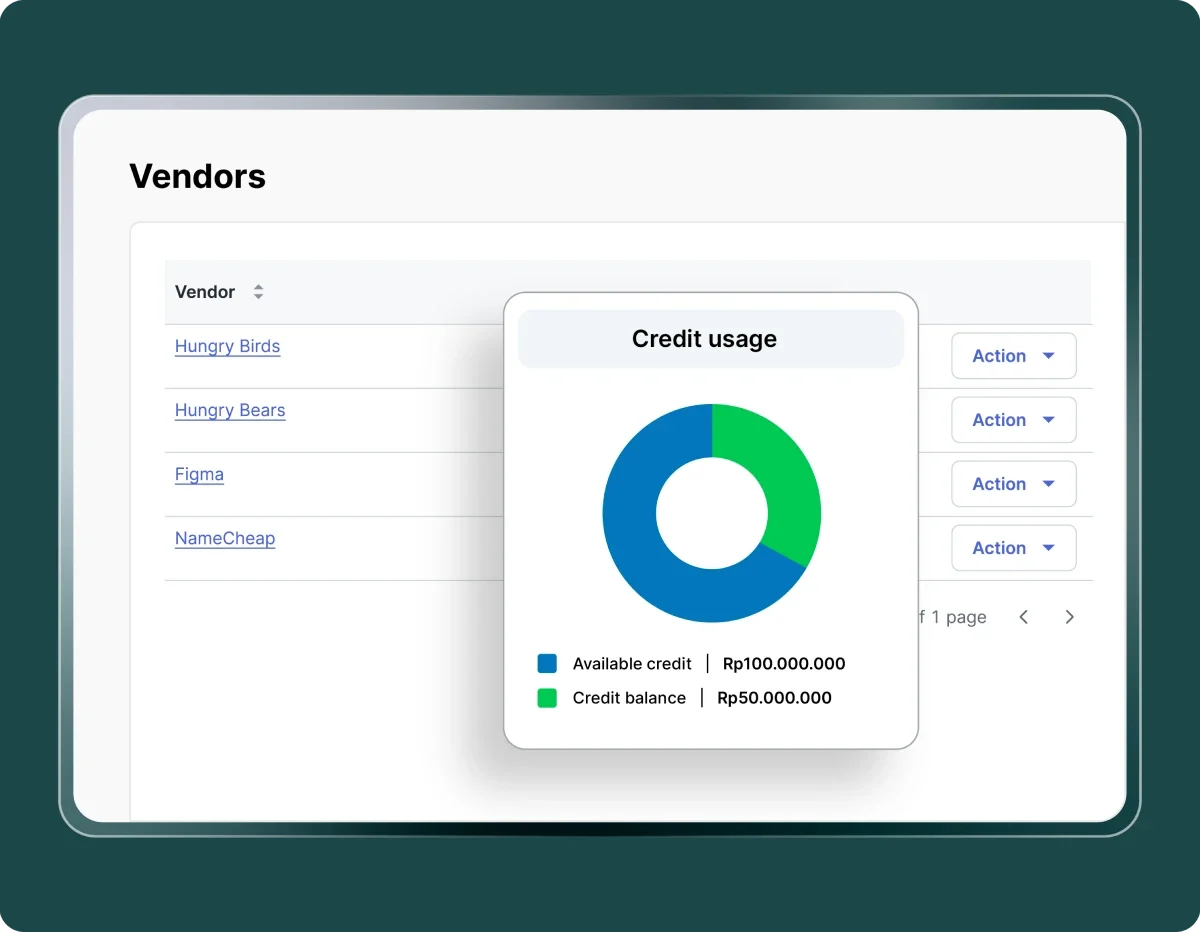
  • Gives Finance and Admin teams full visibility and control over all active vendors in the system
  • Supports compliance and audit readiness through accurate, well-documented vendor master data

The main limitation is regional scope: international compliance coverage such as OFAC screening or multi-country tax forms is more limited than global-first platforms.

Best for: Indonesian companies — from growing SMEs to mid-market — that want vendor verification embedded natively in the same system used for purchasing and budget approvals.

3. SAP Ariba

SAP Ariba is an enterprise-grade source-to-pay suite used by large multinational organizations to manage the full supplier lifecycle, from initial qualification and onboarding through ongoing risk monitoring and contract compliance. 

It integrates deeply with SAP ERP environments and provides extensive tooling for supplier segmentation, risk scoring, and regulatory compliance across complex global supply chains.

Key features:

  • Supplier qualification and segmentation with configurable risk scoring models
  • Access to the Ariba Network for supplier discovery, onboarding, and transaction collaboration
  • Automated compliance checks including sanctions screening, ESG risk flags, and industry certifications
  • Contract lifecycle management tied directly to supplier records
  • Continuous supplier performance monitoring and re-evaluation workflows
  • Deep SAP S/4HANA integration for end-to-end procure-to-pay visibility

The main limitation is implementation complexity. Realizing full value typically requires dedicated SAP administrators and multi-month deployments, placing it out of reach for most small and mid-sized businesses.

Best for: Large enterprises and multinationals with complex global supplier bases and existing SAP infrastructure needing end-to-end supplier lifecycle governance.

4. Stampli

Stampli is an accounts payable automation platform focused specifically on preventing fraudulent changes to vendor master data — particularly bank account and payment routing modifications. 

Rather than full vendor onboarding, its verification capability centers on locking down existing vendor records and requiring approval for any sensitive updates, reducing the risk of business email compromise and payment diversion fraud.

Key features:

  • Vendor master data change controls with mandatory approval workflows for bank detail updates
  • AI-powered invoice processing that flags anomalies and unusual vendor activity
  • Automated duplicate invoice detection across vendor records
  • Communication hub centralizing all invoice-related vendor correspondence in one audit-friendly thread
  • Role-based access controls limiting who can view or edit vendor payment data
  • ERP integrations with NetSuite, QuickBooks, Sage, and Microsoft Dynamics

The main limitation is scope: Stampli is not designed for initial vendor onboarding or procurement-side verification. It addresses what happens after a vendor is already in your system, not the qualification process that gets them there.

Best for: AP teams primarily focused on securing existing vendor records against fraudulent modifications, rather than building a new vendor onboarding or due diligence process.

5. AvidXchange

AvidXchange is an AP automation platform designed for mid-market companies, offering invoice and payment processing with vendor enrollment and data validation features. 

It focuses on reducing manual data entry, catching payment errors before disbursement, and enabling vendors to self-manage their payment preferences — making it a practical complement to an existing ERP rather than a full procurement replacement.

Key features:

  • Vendor enrollment portal where suppliers self-register and submit bank and payment details
  • Payment data validation covering routing numbers, account formats, and payment method eligibility
  • Support for multiple payment methods including ACH, virtual card, check, and international wire
  • Automated three-way matching across PO, receipt, and invoice
  • Approval workflow configuration with threshold-based routing rules
  • Integrations with mid-market ERP systems including Sage Intacct, MRI, and Yardi

The main limitation is that vendor verification is restricted to payment data accuracy. AvidXchange does not cover broader supplier due diligence, sanctions screening, or compliance document collection.

Best for: Mid-market AP teams running alongside an existing ERP who want to eliminate manual vendor payment data entry and catch errors before payments are disbursed.

6. Precoro

Precoro is a cloud-based procurement platform that consolidates vendor management, purchase orders, budgeting, and approval workflows in a single system aimed at mid-market and growing companies. 

Its vendor management module serves as a structured supplier register — storing qualification data, documents, and performance notes — with approval workflows that can gate vendor activation before any purchasing begins.

Key features:

  • Centralized vendor register with custom fields for compliance documents, certifications, and contract references
  • Vendor approval workflows to activate or deactivate suppliers before they can be selected on POs
  • Purchase request and PO management with vendor-linked approval routing
  • Budget tracking and spend visibility by vendor, category, or department
  • Three-way matching for invoices against POs and receipts
  • Supplier portal for quote submission and order acknowledgment
  • Integrations with QuickBooks, Xero, and NetSuite

The main limitation is verification depth: Precoro stores what vendors submit but does not perform automated sanctions screening, TIN matching, or bank account validation. Those checks must be handled externally.

Best for: Mid-market companies that want purchasing, budgeting, and vendor records unified in one tool without the complexity or cost of an enterprise procurement suite.

Build vendor verification into the purchasing process

Vendor verification is most effective when it happens before a supplier enters your procurement workflow, not after a purchase order has already been issued. The right platform helps businesses reduce risk, improve compliance, and maintain accurate supplier records as they scale.

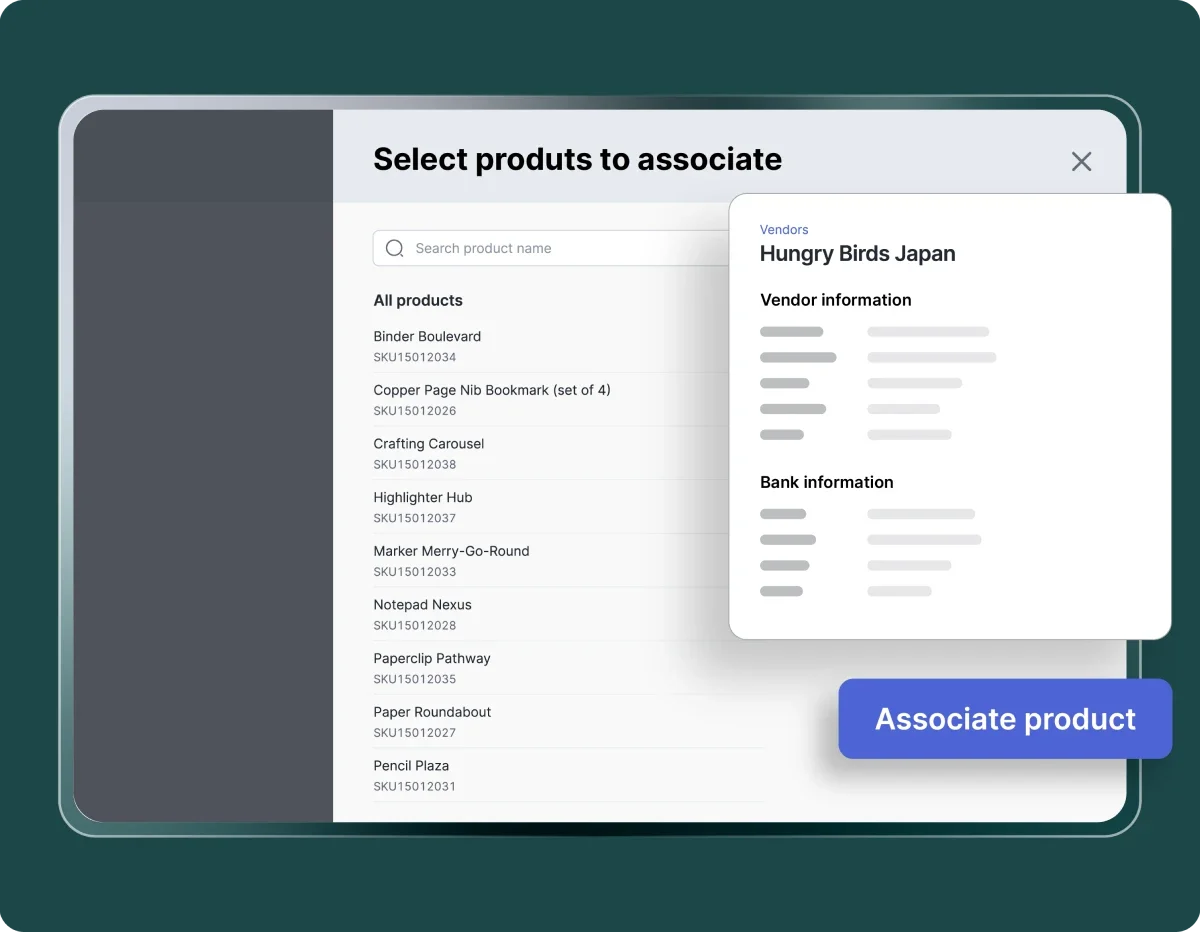
Mekari Expense takes a different approach by embedding Vendor Review Approval directly into the Purchase Quote process. Instead of relying on separate systems or manual checks, supplier verification becomes a built-in part of procurement.

Key benefits include:

  • Automated vendor review workflows triggered whenever a new supplier is added to a Purchase Quote.
  • Configurable document requirements covering legal, tax, financial, contractual, and transactional records.
  • Flexible onboarding options, allowing businesses to choose between strict full onboarding or lightweight pre-approval for faster sourcing.
  • Multi-layer approval controls with support for up to 10 approval levels and backup approvers.
  • Custom due diligence questionnaires to collect supplier information based on company policies and risk requirements.
  • Greater visibility and governance through centralized vendor records, approval history, and status tracking.
  • Improved compliance and audit readiness with documented approval decisions and validated vendor master data.

By combining vendor verification, procurement workflows, and approval management in a single platform, Mekari Expense helps organizations onboard suppliers faster while maintaining the controls needed to reduce fraud, prevent duplicate vendors, and support long-term compliance.

Ready to bring vendor verification into your procurement process? Explore how Mekari Expense can help your team validate suppliers before every purchase.

References and methodology

Methodology

Methodology

Articles published by Mekari are developed using trusted sources, including official data, company reports, academic research, and insights from industry practitioners. Whenever possible, we refer directly to primary sources before drawing conclusions. Our editorial team reviews and verifies the information to ensure accuracy and relevance. All references are listed so readers can trace each piece of information back to its original source.

Our editorial standards

Our editorial standards

  • Primary source first: We consult official product documentation and pricing pages directly, not secondhand summaries or aggregator sites.
  • Fact-checking: All product features, pricing, and claims are cross-verified against each platform’s official website at the time of writing.
  • No paid placement: Tools are selected based on relevance and fit for Indonesian businesses, not commercial arrangements. Mekari Expense is included as a first-party product and is transparently labeled as such.
  • Regular review: Articles are periodically updated to reflect product changes or shifts in market relevance.
References

References

PwC. ‘’Global Economic Crime Survey 2024.’’
Technologymatch. ‘’The Vendor Onboarding Process: 5 Stages, Best Practices, and a Checklist for IT Teams’’

FAQ

1. What is vendor verification software?

1. What is vendor verification software?

Vendor verification software checks a vendor’s legal, tax, and financial documents against company requirements and routes them through an approval workflow before they can be used in transactions, reducing the risk of fraudulent, duplicate, or non-compliant vendors entering your procurement process.

2. Why do businesses need to verify vendors before payment?

2. Why do businesses need to verify vendors before payment?

Unverified vendors increase exposure to duplicate vendor records, blacklisted entities, and payment redirection fraud. Verifying vendors before any purchase order or payment ensures that funds only go to legitimate, properly documented suppliers.

3. What documents are typically required for vendor verification?

3. What documents are typically required for vendor verification?

Common categories include administrative and legal entity documents (business registration, articles of incorporation, director ID), tax and finance documents (tax registration, bank account proof), legal agreements (NDAs, integrity pacts, service agreements), and transactional documents (purchase orders, delivery receipts, tax invoices).

4. Can vendor verification be customized per company policy?

4. Can vendor verification be customized per company policy?

Yes. Admins can configure which document categories are required, set up custom due-diligence questionnaires with multiple question types, and define approval rules that match the company’s internal hierarchy and compliance standards.

5. How does Mekari Expense handle vendor approval workflows?

5. How does Mekari Expense handle vendor approval workflows?

When a new vendor is added during Purchase Quote creation, Mekari Expense automatically triggers a review. The vendor moves through Draft, Awaiting Review, and then Approved, Awaiting Revision, or Rejected, with approval routing configurable by approval line or Employee ID across up to 10 layers, including backup approvers.

WhatsApp Icon WhatsApp sales