





SaaS Spend Management Guide: 8 Ways to Manage Subscription Costs Efficiently


Mekari Insight
- Unmanaged SaaS is money quietly walking out the door. Unused licenses, redundant tools, and missed auto-renewals can silently eat up to 30% of your software budget before anyone notices.
- The antidote is visibility and centralization. Regular audits, usage tracking, contract consolidation, and clear approval policies give companies the control they need to connect SaaS spending to real business value.
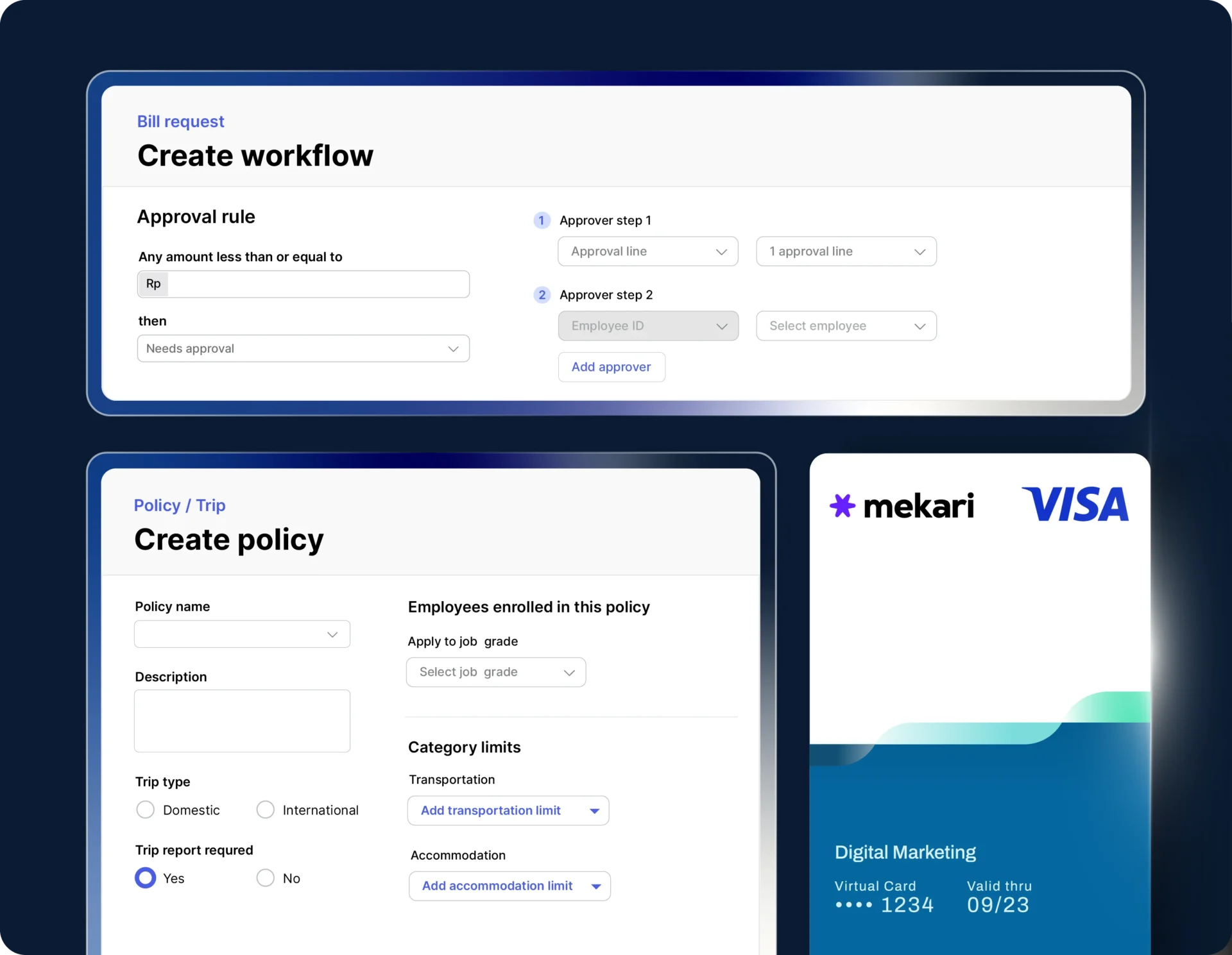
- That’s where SaaS Spend Management Mekari Expense comes in. With a real-time dashboard, built-in approval workflows, and automated recordkeeping, Mekari Expense takes the guesswork out of SaaS spend management, making it more controlled, efficient, and strategically sound.
SaaS spending grows a little more every year. With each new tool added to the stack, more budget gets absorbed, and without proper oversight, waste quietly compounds. Unused licenses, overlapping tools, and forgotten auto-renewals have a way of turning into significant hidden costs over time.
It’s no wonder that software spend optimization has shot to the top of the agenda for IT and Finance teams everywhere. But how do you actually get SaaS costs under control?
This guide walks you through practical, effective strategies for SaaS spend management, so your software investments are more transparent, more purposeful, and better aligned with where the business is headed.

What is SaaS spend management?
SaaS spend management is the practice of monitoring, controlling, and optimizing everything a company spends on cloud-based software subscriptions. But it’s not just about cutting costs. The real goal is making sure every tool you’re paying for is genuinely being used, and delivering a return that justifies the spend.
Done well, SaaS spend management helps companies:
- Spot duplicate or underutilized applications
- Track usage, costs, and contracts from a single dashboard
- Connect software spending to tangible business outcomes
- Give IT, product, and finance teams a shared, consistent view of the stack
In practice, it covers four key areas:
- Usage monitoring: Keeping tabs on how software is actually being used, flagging inactive licenses, redundant tools, or features that overlap across platforms.
- Cost analysis & allocation: Breaking down SaaS costs by team or department to bring clarity and accountability to the budget.
- Contract analysis & negotiation: Reviewing contract terms and making the most of renewal windows to secure better pricing or conditions.
- Business alignment: Making sure every software investment is pulling in the same direction as the company’s broader strategy and goals.
Why SaaS spend management matters
The global SaaS market is on track to reach $1.13 trillion by 2032 (CloudZero), and spending shows no signs of slowing down. SaaS spending increased 9.3% year-over-year in 2024, with the average spend hitting $8,700 per employee (Digital Silk).
Yet a significant chunk of that investment is going to waste. According to Zylo’s 2025 SaaS Management Index, organizations are wasting an average of $21 million annually on unused SaaS licenses, a 14.2% increase year-over-year.
Much of this stems from SaaS sprawl: the gradual, often invisible spread of software subscriptions across departments with no central oversight keeping things in check.
The warning signs are familiar:
- Overlapping tools: Multiple applications doing essentially the same job, running side by side.
- Fragmented data: Each team working in its own system, with no shared visibility across the organization.
- Tool overload: A constant stream of new software adoptions that disrupts workflows instead of improving them.
- Poor integration: Disconnected systems that breed data duplication, manual workarounds, and avoidable errors.
Left unchecked, SaaS spending has a tendency to grow faster than the value it delivers. That’s precisely what makes SaaS spend management so important.
Read more: Spend Data Management Guide: Reduce Manual Work by 60%
The most common SaaS spending challenges
Managing SaaS subscriptions is a lot more involved than just processing monthly invoices. Without a centralized approach, companies tend to run into the same recurring problems:
- No visibility: Nobody has a clear, complete picture of which apps are active, who’s using them, or what the total bill adds up to each month.
- Shadow IT: Employees subscribe to tools on their own, using personal or company cards, without going through IT or Finance, creating blind spots in the budget.
- Unused licenses: Too many seats get purchased, or access isn’t revoked when employees leave, meaning the company keeps paying for users who don’t exist anymore.
- Auto-renewals on autopilot: Contracts roll over automatically without anyone stopping to ask whether the tool is still worth keeping.
- Duplicate tools: Different departments independently adopt tools that do the same thing, leading to redundant costs and siloed data.
- Disconnected systems: Apps that don’t integrate well with each other create data silos, extra manual effort, and a higher chance of things falling through the cracks.
How to manage SaaS spending effectively
Getting SaaS costs under control, and keeping them there, comes down to a handful of disciplined practices:
- Start with a full audit: Map out every application in use, including anything lurking in shadow IT. Dig through credit card statements, SSO logs, invoices, and expense claims, and make sure every tool has a clearly assigned owner.
- Prioritize your biggest spends: Find out which tools are taking the largest bite out of your budget. Those are the ones where optimization will have the greatest impact.
- Track usage and right-size your licenses: Set a clear inactivity threshold, say, no login in 30 days, and use it as a trigger to downgrade, reduce, or revoke licenses that aren’t pulling their weight.
- Cut the redundancy: Group tools by function and identify where you’re paying for overlap. Consolidate where you can, and eliminate what you don’t need.
- Get your contracts in one place: Centralize all contract data, pricing, SLAs, renewal dates, and actually read the fine print. Know your exit clauses, understand how prices can escalate, and check your minimum commitments before signing anything new.
- Let data drive your negotiations: Walk into renewal conversations armed with usage data and market benchmarks. That’s what gets you better pricing, fairer terms, and more flexibility.
- Build a proper procurement process: Set up a clear request and approval workflow for any new SaaS purchase. It’s the most effective way to prevent shadow IT and keep unplanned spending from creeping in.
- Consider a dedicated platform: Spreadsheets don’t scale. Once you’re managing dozens or hundreds of subscriptions, a purpose-built SaaS spend management platform can automate tracking, surface usage insights, and take the stress out of renewal management.
Read more: 7 Practical Ways to Reduce Company Spending & Best Software
What good SaaS spend management actually delivers

When SaaS spend management is done right, the benefits go well beyond trimming a few line items:
- Real cost savings: Cutting unused licenses, downsizing bloated packages, and eliminating redundant tools adds up fast, often to significant savings year over year.
- Sharper budget planning: Centralized data gives IT, Finance, and Procurement the foundation they need to forecast accurately based on actual usage, not estimates.
- Smarter resource allocation: Investment flows toward the tools that genuinely move the business forward, not the ones that just keep getting renewed out of habit.
- Less shadow IT: When you have full visibility into your software landscape, unapproved spending becomes much harder to hide, and much easier to prevent.
- Stronger security and compliance: Monitored applications mean you’re consistently meeting security standards, honoring contractual obligations, and protecting data, reducing the risk of costly violations.
- Renewal decisions grounded in reality: No more renewing on autopilot. Every decision is backed by current usage data, so you’re never paying for something that’s no longer earning its place.
- A cleaner, more manageable tech stack: Fewer redundant tools means a simpler, better-integrated environment that’s easier for IT to manage and for everyone to work in.
- Budget freed up for what matters: The savings from optimizing SaaS can be redirected toward initiatives that actually drive growth, digital transformation, AI adoption, product development, and beyond.
Read more: 10 Best Enterprise Budgeting Software for Cost Control
Take control of SaaS spending with Mekari Expense
Once you’re managing tens or even hundreds of SaaS subscriptions, spreadsheets simply can’t keep up. Renewals get missed, hidden costs go undetected, data is always a step behind, and the margin for human error is uncomfortably high.
Mekari Expense is built to solve exactly that. As a best-in-class spend management solution, it gives companies the structure and real-time control they need to manage SaaS spending with confidence.
Here’s what Mekari Expense brings to the table:
- A centralized dashboard that puts all your SaaS subscription spending in one clear view.
- Built-in approval workflows that ensure every purchase goes through the right channels before money moves, keeping shadow IT and impulse buys in check.
- Automated invoice recording and reconciliation that feeds directly into financial reporting, cutting out manual effort.
- Real-time, per-department visibility that makes it easier for Finance and IT to collaborate and make smarter budget calls together.
If you’re looking for a spend management solution that doesn’t just track costs but actually helps you control them, Mekari Expense is the right tool for the job.
References
Zylo. “What Is SaaS Spend Management? (+ 9 Proven Optimization Tips)”
BILL. “SaaS Spend Management: A Guide To Save Money and Max Value”
Cledara. “SaaS Spend Management: Optimizing your Tech Stack”
FAQ
1. When should a company start implementing SaaS spend management?
1. When should a company start implementing SaaS spend management?
The right time is when your application count starts growing faster than your ability to track it, when costs are hard to reconcile, or when tools keep getting purchased without anyone coordinating across teams. If you can’t get a real-time view of your total SaaS spend, that’s a strong signal it’s time to act.
2. How do you know if your SaaS spend management is working?
2. How do you know if your SaaS spend management is working?
Look for a drop in unused licenses, fewer duplicate tools, no missed renewals, and a SaaS budget that’s consistently accurate and under control.
3. What should you look for in a SaaS spend management solution?
3. What should you look for in a SaaS spend management solution?
Prioritize a centralized dashboard, real-time visibility, pre-approval workflows, contract and renewal tracking, and solid integration with your financial systems. Ease of use and scalability matter too, the platform needs to grow with you.
4. What's the best SaaS spend management solution for companies?
4. What's the best SaaS spend management solution for companies?
The best solution doesn’t just log your spending, it actively helps you control, approve, and streamline the entire process. Mekari Expense checks all those boxes. With a centralized dashboard, approval workflows, automated recordkeeping, and real-time visibility broken down by department, it’s one of the most complete spend management solutions available.