





Corporate Travel Insurance for Employees: Complete Guide


Mekari Insight
- Corporate travel insurance is a critical part of modern business risk management, protecting both employees and companies from disruptions, medical emergencies, and financial losses during business trips.
- The right policy should align with your company’s travel profile, include strong medical and evacuation coverage, and support duty-of-care responsibilities with features like emergency assistance and real-time alerts.
- To build a complete travel risk strategy, companies need more than just insurance coverage. They also need full financial visibility and control over how travel budgets are used in real time.
- Spend management software with corporate travel management feature, Mekari Expense, help close this gap by enabling structured travel planning, enforcing approval workflows, tracking every transaction as it happens, and reducing risks such as overspending or fraudulent claims.
Business travel is becoming increasingly unpredictable. Zurich Insurance’s 2026 study shows that 4 in 5 business travelers faced disruptions in 2025, with more than half experiencing emergencies abroad.
This makes corporate travel insurance more than just an HR perk. It is a core part of a company’s duty of care and risk management strategy.
In this guide, we’ll cover what corporate travel insurance is, what it includes, why it matters, and how HR and Finance teams can choose the right policy.

What is corporate travel insurance for employees?
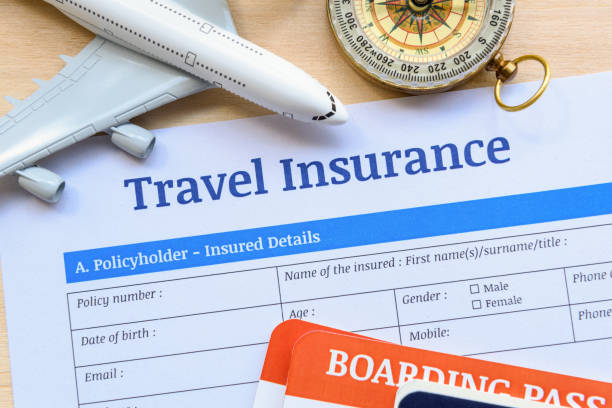
Corporate travel insurance is an employer-sponsored policy designed to protect employees from financial losses and health risks that may arise during business travel. Instead of individuals purchasing their own coverage, the company provides a centralized policy that applies to all employees or specific roles that require travel.
This type of insurance is different from personal travel insurance. It is managed at the company level, tailored to business-related risks, and aligned with corporate travel policies and duty-of-care responsibilities. Coverage is typically broader and more structured to support both employee safety and organizational risk management.
In practice, corporate travel insurance generally comes in two main types based on duration:
- Single-trip policies, which cover one specific business trip and are suitable for occasional travelers
- Annual multi-trip policies, which provide ongoing coverage for multiple trips within a year, ideal for frequent business travelers
As companies place greater emphasis on employee safety and risk mitigation, adoption continues to grow. Corporate travel policies now account for around 18% of the global travel insurance market (Coinlaw), reflecting their increasing role as part of standard employee benefits.
Key coverage types in corporate travel insurance
Corporate travel insurance typically includes several core protections designed to address both employee safety and financial risk during business trips:
- Emergency medical coverage
Covers hospitalization, medication, surgery, and emergency evacuation abroad. This is one of the most essential benefits. - Trip cancellation and interruption
Reimburses prepaid, non-refundable expenses if a trip is canceled or cut short due to illness, natural disasters, or other unexpected events. This is the most commonly claimed benefit, accounting for over 40% of all claims. - Baggage and equipment protection
Covers loss, theft, or damage to personal luggage as well as business assets such as laptops, documents, and work equipment. - Travel delay compensation
Provides reimbursement for additional costs like accommodation and meals caused by flight delays or cancellations. - Personal accident coverage
Offers a lump-sum payout in the event of accidental death or permanent disability during the trip. - Personal liability coverage
Covers legal expenses if an employee unintentionally causes injury to others or damages third-party property while traveling.
Why companies need to provide corporate travel insurance
Providing corporate travel insurance is no longer optional. It plays a critical role in protecting employees while safeguarding the business from operational and financial risks.
- Duty of care obligation
Companies have a legal and ethical responsibility to ensure employee safety during business travel. Guidelines such as those from OSHA reinforce that employers remain accountable for worker safety, even when employees are traveling for work. - Rising travel disruptions
Travel uncertainty continues to increase. Nearly 1 in 5 U.S. travelers have lost money due to not having insurance, while airline delay claims rose 15% year-over-year in 2024 (Upgraded Points). This highlights how common and costly disruptions have become. - Escalating medical costs
Healthcare expenses are rising globally. Without insurance, even a single incident abroad can result in significant financial burden. - Talent attraction and retention
Corporate travel insurance is increasingly seen as a valuable employee benefit. Offering it signals that the company prioritizes employee wellbeing, which can strengthen employer branding and improve retention. - Business continuity
Unexpected incidents during business travel can disrupt critical activities such as meetings, negotiations, or project timelines. Insurance helps mitigate these risks and ensures operations can continue with minimal impact.
Read more: 12 Business Travel Cost Saving Techniques for Companies
How to select the right corporate travel insurance policy
Choosing the right policy starts with understanding your company’s travel patterns and risk exposure.
- Assess your travel profile
Evaluate how often employees travel, destinations (domestic vs. international), number of travelers, trip duration, and whether bleisure travel is common. - Determine minimum coverage requirements
For international travel, a baseline of at least USD 50,000 for emergency medical coverage and USD 100,000 for medical evacuation is generally recommended (Worktrips). - Choose the right policy structure
Select between single-trip, annual multi-trip, or a Controlled Master Program (CMP) for multinational companies that need global consistency with local compliance. - Check duty-of-care features
Look for 24/7 emergency assistance, real-time travel alerts, telemedicine access, and mental health support. These features are increasingly important, with telemedicine included in around 85% of policies in 2025 (UrgentDoc). - Review exclusions carefully
Pay attention to limitations such as pre-existing conditions, high-risk activities, and gaps in bleisure coverage. - Ensure system integration
Integrating insurance with your travel management system helps streamline policy issuance, tracking, and claims processing.
Read more: Top 10 Business Travel Tools for Small Business
Corporate travel insurance vs. personal travel insurance
While both types of insurance aim to protect travelers, corporate travel insurance is structured around business needs, whereas personal travel insurance is designed for individual use.
| Aspect | Corporate travel insurance | Personal travel insurance |
|---|---|---|
| Coverage scope | Covers groups of employees under a company-wide policy | Purchased individually for personal use |
| Cost | Paid or subsidized by the employer | Fully paid out-of-pocket by the traveler |
| Risk management | Integrated with company policies and duty-of-care strategy | Based on individual choice and preferences |
| Claims handling | Dedicated support with faster, managed resolution | Standard consumer claims process |
| Coverage limits | Higher limits for business equipment and high-value trips | Typically lower limits for leisure travel |
Read more: AI for Corporate Travel Management: 10 Key Strategies
How Mekari Expense supports managed business travel and spend control
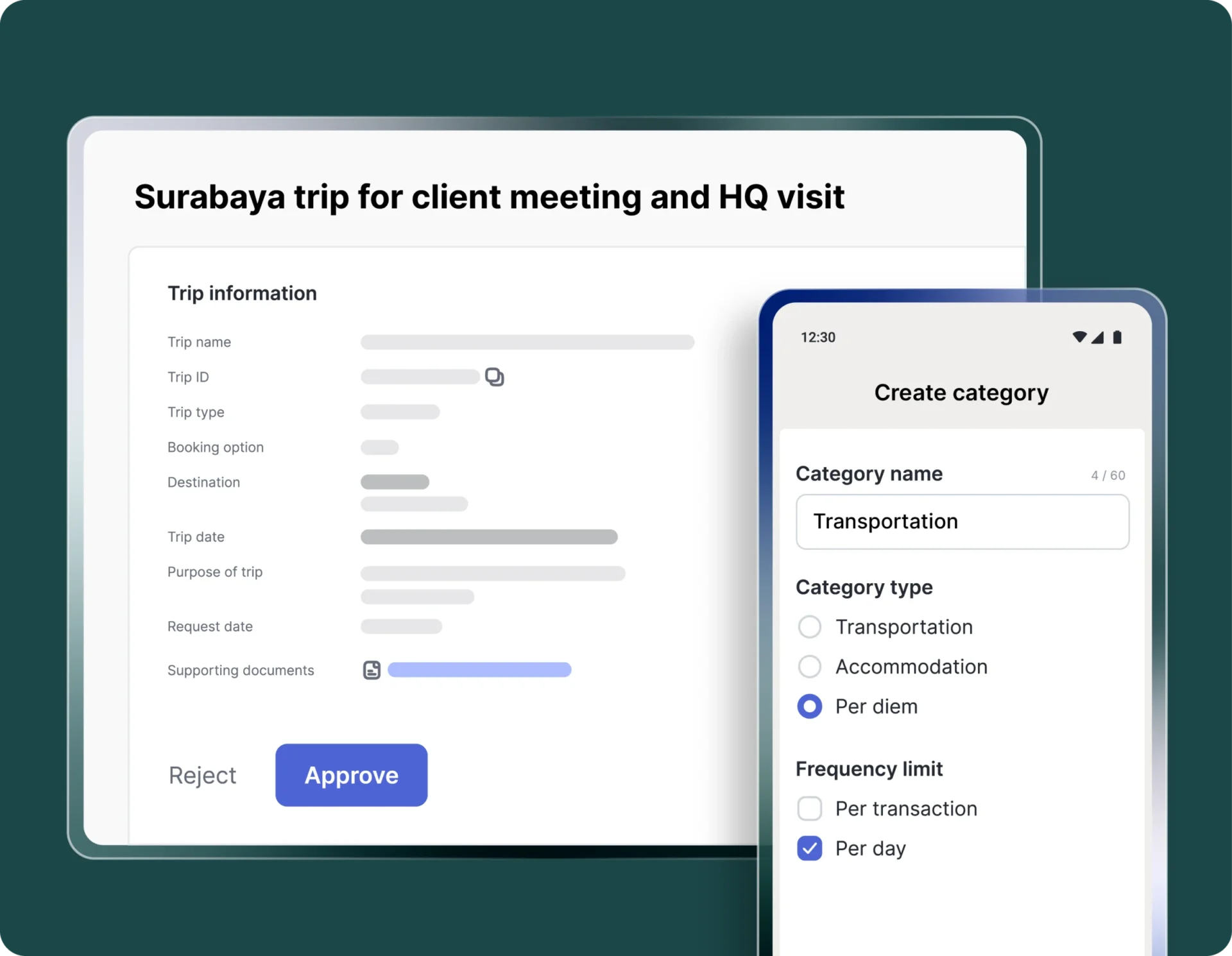
Corporate travel insurance is essential for protecting employees from unexpected disruptions, medical emergencies, and financial risks. However, insurance alone is not enough. Companies also need strong internal controls to ensure that every business trip is well-managed, policy-compliant, and financially transparent.
Mekari Expense is not an insurance provider, but it plays a crucial role in completing the corporate travel risk picture by giving companies full visibility and control over business travel spending.
Mekari Expense is a spend management software equipped with comprehensive travel and expense management, it is designed to support companies operating in Indonesia.
By combining structured travel management with financial oversight, Mekari Expense helps strengthen overall risk management through:
- Centralized management of all business trip expenses from request to reimbursement
- Mekari Limitless Card (Virtual & Physical) to eliminate cash advances and reduce fraudulent claims
- Automated, multi-level approval workflows aligned with company policies
- Real-time transaction monitoring for full visibility and faster control
- Streamlined reimbursement processes with reduced manual work
With this integrated approach, companies can go beyond insurance, ensuring not only employee protection but also stronger financial control and more resilient business travel operations.
FAQ
1. Is corporate travel insurance mandatory for companies?
1. Is corporate travel insurance mandatory for companies?
It is not always legally mandatory, but companies have a duty of care to protect employees during work-related travel, making insurance highly recommended.
2. What is the difference between travel insurance and corporate travel insurance?
2. What is the difference between travel insurance and corporate travel insurance?
Corporate travel insurance is managed and paid by the employer, covers multiple employees, and is tailored to business risks, while personal travel insurance is purchased individually for leisure or personal trips.
3. Does corporate travel insurance cover international trips only?
3. Does corporate travel insurance cover international trips only?
No, it can cover both domestic and international travel, but coverage limits and benefits are typically higher for international trips due to greater risks.
4. Can corporate travel insurance cover business equipment like laptops?
4. Can corporate travel insurance cover business equipment like laptops?
Yes, most policies include baggage and equipment protection, covering loss, theft, or damage to business-related items during travel.
5. How can companies reduce travel-related financial risks beyond insurance?
5. How can companies reduce travel-related financial risks beyond insurance?
In addition to insurance, companies can implement travel and expense management systems to monitor spending, enforce policies, and prevent fraud in real time.